What Materials Are Used in Hastelloy Alloys? What Are Their Properties?
Hastelloy alloys are a family of nickel-based corrosion-resistant superalloys engineered for environments that destroy ordinary stainless steel within weeks: hot hydrochloric and sulfuric acids, chlorine-bearing media, mixed acids, and oxidizing-reducing cycles at elevated temperature. Their resistance is not a single property — it is a chemical composition decision. By balancing nickel with chromium, molybdenum, tungsten, iron and carefully controlled trace elements, each Hastelloy grade is tuned to a specific class of corrosive threat.
This guide explains the materials behind Hastelloy alloys — the element roles, the three alloy families, grade-by-grade compositions with typical values, and how to match a grade to a service environment.
What Is Hastelloy? Three Families, Three Defense Strategies
Hastelloy grades group into families defined by their main alloying elements:
| Family | Core System | Corrosion Strategy | Representative Grades |
|---|---|---|---|
| Ni-Mo series | Nickel + molybdenum | Resistance to reducing acids (hydrochloric, dilute sulfuric) | B-2, B-3 |
| Ni-Cr-Mo series | Nickel + chromium + molybdenum (+ tungsten/copper) | Balanced resistance to oxidizing and reducing media, pitting and crevice attack | C-276, C-22, C-2000, G-30 |
| Ni-Si series | Nickel + silicon | Resistance in hot concentrated sulfuric acid service | D-family (minor grades) |
Molybdenum defends against reducing acids; chromium builds the protective oxide film for oxidizing media; balancing the two creates alloys that handle both — which is why the Ni-Cr-Mo C-family is the most widely used.
The Role of Each Element
| Element | Role | Notes |
|---|---|---|
| Nickel (Ni) | Matrix, base of the alloy — usually over 50% | Provides phase stability, ductility, workability and resistance in reducing media |
| Chromium (Cr) | Oxidation resistance — forms the protective Cr₂O₃ film | Essential in oxidizing media (nitric, concentrated sulfuric); with Mo, resists composite acids |
| Molybdenum (Mo) | Localized-corrosion resistance — pitting and crevice attack, especially chlorides | Also slows attack in reducing acids (hydrochloric, phosphoric) |
| Tungsten (W) | Added in selected grades (C-276, C-22) | Boosts high-temperature strength and intergranular resistance — not present in C-2000, which uses copper instead |
| Copper (Cu) | Added in C-2000, G-30 | Improves resistance in sulfuric acid service |
| Iron (Fe) | Structural support and cost control | 15–25% in the G and X series; too much lowers corrosion resistance |
| Cobalt (Co) | Trace (≤1%) or small addition in special grades | Improves high-temperature behavior; not a corrosion element |
| Silicon / manganese / carbon | Strictly controlled | Si ≤1%, Mn ≤1.5%, C ≤0.01–0.015% in most grades — low carbon is essential to avoid intergranular corrosion and carbide precipitation |
Two common misunderstandings are worth flagging: tungsten is not in every C-series grade — C-2000 deliberately replaces it with copper — and carbon limits are much lower than in stainless steels (typically ≤0.01–0.015%, not 0.08%), because carbide precipitation at grain boundaries is the enemy of intergranular corrosion resistance.
Grade-by-Grade Composition and Properties
| Grade | UNS | Typical Composition (wt.%) | Key Characteristics | Typical Use |
|---|---|---|---|---|
| B-2 | N10665 | Ni bal., Mo 26–30, Fe ≤2, C ≤0.01 | Top-class resistance to reducing acids; susceptible to grain-boundary precipitation during welding | Hydrochloric acid service, evaporators, reactors |
| B-3 | N10675 | Ni bal., Mo 27–30, Fe ≤1.5, C ≤0.01 | Improved thermal stability and weldability over B-2 | Same environments as B-2, with better fabrication reliability |
| C-276 | N10276 | Ni bal., Cr 14.5–16.5, Mo 15–17, W 3–4.5, Fe 4–7 | The universal grade — oxidizing and reducing media, chlorides, mixed acids | Reactors, heat exchangers, flue-gas scrubbers, offshore |
| C-22 | N06022 | Ni bal., Cr 20–22.5, Mo 12.5–14.5, W 2.5–3.5 | Higher chromium → better oxidizing resistance than C-276 | FGD systems, oxidizing chloride service |
| G-30 | N06030 | Ni bal., Cr 28.5–31.5, Mo 4–6, W 1.5–4, Fe 13–17, Cu 1–2.4 | High chromium for strong oxidizing acids | Wet-process phosphoric acid, nitric-hydrofluoric mixtures |
| X | N06002 | Ni bal., Cr 20.5–23, Mo 8–10, Fe 17–20 | High-temperature strength and oxidation resistance, easily welded | Combustion chambers, furnace and gas-turbine components |
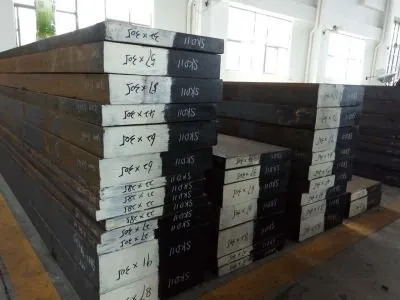
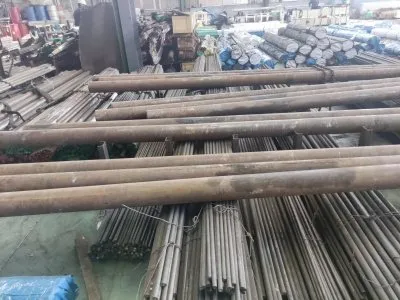
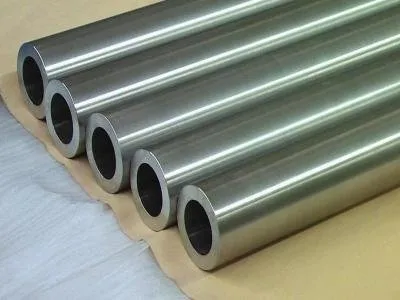
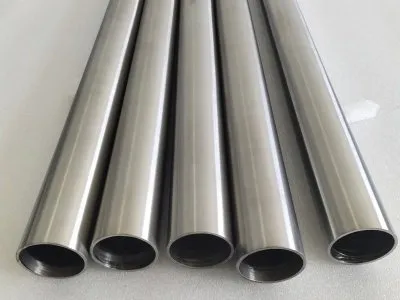
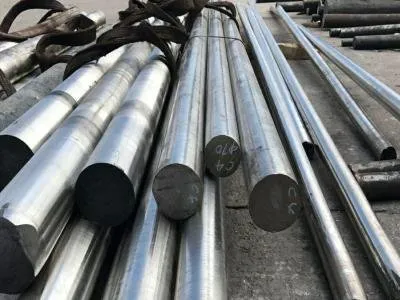
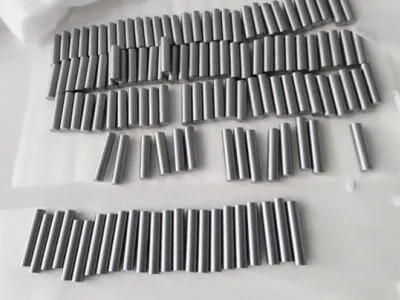
Dura Alloy supplies the working versions of these grades directly: Hastelloy C-276, Hastelloy C-22, Hastelloy B-2, Hastelloy B-3 and Hastelloy G-30 in plate, sheet, bar, pipe and fittings.
Key Applications by Environment
| Industry | Service | Typical Grade |
|---|---|---|
| Chemical and petrochemical | Reactors, heat exchangers, pipelines handling sulfuric/nitric acids, strong alkalis, chlorine (PVC production) | C-276, B-3 |
| Environmental control | Wet flue-gas desulfurization — absorption towers, spray pipes against flue-gas sulfates and chlorides | C-22, C-276 |
| Oil and gas | Casings and wellhead hardware in sour wells (H₂S/CO₂); acidizing with injected hydrochloric acid | C-276 |
| Aerospace and high-temperature | Rocket nozzles, combustion hardware where heat and corrosion meet | X |
| Fertilizer / paper | Wet-process phosphoric acid plants, bleaching equipment | G-30 |
The grade follows the environment: pure reducing acid points to the B-family; mixed oxidizing-reducing service points to C-276; strongly oxidizing acid plants point to the high-chromium grades; high-temperature structural duty points to the X series.
How to Select the Right Grade
Selection follows an “environment-matching” logic, never a price-first habit:
- Define the media — acid, base, salt, chlorides, sulfides; identify oxidizing vs reducing character.
- Define the envelope — concentration, temperature, pressure, and whether oxidizing and reducing conditions alternate.
- Check the failure modes — pitting/crevice risk points to Mo; intergranular risk points to low-carbon, stabilized grades; high-temperature creep points to the X series.
- Verify, don’t assume — for borderline cases, run corrosion immersion tests or consult the supplier with full service conditions before committing.
The cost of a wrong grade is not the material — it is the unplanned shutdown when the equipment fails in service.
FAQ
Q: What is Hastelloy alloy made of? A: Nickel as the base (usually over 50%), combined with chromium, molybdenum, tungsten, iron and copper in different balances — the exact mix defines the grade and its corrosion profile.
Q: What is the difference between Hastelloy B and C series? A: The B-family (B-2, B-3) is molybdenum-dominant for reducing acids; the C-family (C-276, C-22, C-2000) balances chromium and molybdenum to handle both oxidizing and reducing media.
Q: Does every Hastelloy grade contain tungsten? A: No. C-276 and C-22 contain tungsten (about 3–4%); C-2000 contains no tungsten and uses copper instead to improve sulfuric acid resistance.
Q: Why is the carbon content of Hastelloy so low? A: Carbon at grain boundaries precipitates as carbides and destroys intergranular corrosion resistance, so most grades are limited to ≤0.01–0.015% carbon — far tighter than stainless steel limits.
Q: Which Hastelloy grade resists hydrochloric acid best? A: The molybdenum-rich B-2 and B-3 grades are the reference materials for pure reducing hydrochloric acid service; B-3 adds better weldability and thermal stability.
Q: How do I choose between C-276 and C-22? A: C-276 is the universal workhorse for mixed and chloride media; C-22’s higher chromium gives superior resistance in strongly oxidizing, chloride-containing service such as FGD scrubbers.
Source Grade-Certified Hastelloy Products
Dura Alloy’s one-stop line supplies Hastelloy C-276, C-22, B-2, B-3 and G-30 in plate, sheet, bar, seamless pipe and fittings — with guaranteed composition, non-destructive testing and full heat traceability. Send your media, temperature and concentration for a confirmed grade recommendation and quote.
nicholas.zhu1212@gmail.com · WhatsApp 8618921275456 · Request a quote