Too Many High-Temperature Alloy Grades? A Table to Help You Choose
Hundreds of high-temperature alloy grades exist, and most of them look similar on paper: nickel-rich, strong at temperature, corrosion-resistant. Yet the right grade for a combustion-chamber liner is wrong for a turbine disc, and wrong again for a furnace conveyor. The difference is not quality — it is fit. Grade selection is a matching problem, and it becomes tractable when you work through temperature capability, environment, mechanical loading and cost in a fixed order.
This guide gives you the comparison table that most such articles promise but omit, the families behind it, and a four-step method to reach a defensible grade decision.
Selection Starts With the Operating Window
The first filter is always temperature:
| Service Temperature | Typical Alloy Strategy | Example Grades |
|---|---|---|
| 600–800 °C | Cost-effective iron-based and moderate nickel grades | GH2747, GH3039, stainless-based grades |
| 800–1,000 °C | Precipitation-hardened nickel superalloys (γ′-strengthened) | GH4169 (718-equivalent), Nimonic-type grades |
| >1,000 °C | Solid-solution and refractory-bearing alloys; single crystals for the hottest duty | GH3128, GH3044, cobalt-based grades, single-crystal superalloys |
Nickel-based superalloys dominate the 800–1,000 °C band because coherent γ′ (Ni₃(Al,Ti)) precipitates deliver strength exactly in that window. Above 1,000 °C the γ′ particles coarsen too fast, and designers move to solid-solution-strengthened grades, cobalt-based alloys, or cooled single-crystal components.
The Comparison Table: Major Alloy Families at a Glance
| Alloy Family | Strengthening Mechanism | Typical Service Range | Key Characteristic | Typical Applications |
|---|---|---|---|---|
| Nickel-based, precipitation-hardened | γ′ (Ni₃(Al,Ti)) precipitates | 650–1,000 °C | Best balance of strength, creep and corrosion resistance | Turbine discs and blades, fasteners, hot-section hardware |
| Nickel-based, solid-solution | Solid-solution elements (Mo, W, Co) | 800–1,100 °C | Good strength with excellent fabricability and weldability | Combustion liners, ducting, furnace parts |
| Cobalt-based | Carbides + solid-solution | 800–1,100 °C | Outstanding hot-corrosion resistance, high-temperature strength | Land-based gas turbines, vanes, chemical-processing hardware |
| Iron-nickel-based | Moderate γ′ or solid-solution | 600–900 °C | Cost-effective for moderate duty | Turbine casing parts, boiler hardware, general heat service |
| Nickel-copper | Solid-solution | up to ~500 °C (corrosion focus) | Marine and acid corrosion resistance rather than extreme temperature | Marine hardware, heat exchangers |
| Low-CTE precision alloys | Controlled-expansion phases | up to ~450–700 °C | Near-zero thermal expansion for dimensional control | Seals, casings, precision instrument parts |
Keep this table as your route map; the sections below give the selection logic behind each row.
Nickel-Based Alloys: The Workhorse
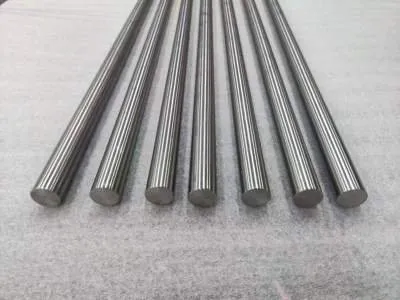
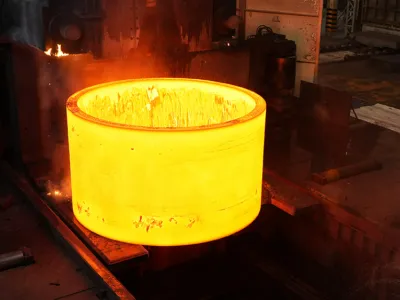
Precipitation-hardened nickel alloys are the default choice for rotating and heavily loaded hot-section parts. Chromium provides oxidation resistance, aluminum and titanium form the γ′ precipitates, and additions like molybdenum, niobium and cobalt tune creep strength. The production workhorse is GH4169 — the Chinese designation of Inconel 718 — with its double-aging treatment delivering high strength in discs, shafts and fasteners: Dura Alloy supplies GH4169 in forged bar, plate and sheet with full heat treatment.
For the highest operating temperatures, solid-solution grades take over: GH3128, strengthened mainly by tungsten and molybdenum in solution, serves combustion-chamber liners and furnace hardware where weldability matters more than precipitate strength.
Cobalt-Based Alloys: Hot Corrosion Champions
Cobalt-based alloys (for example GH5188, the Chinese designation of GH188) keep useful strength at temperatures above many nickel grades, and their resistance to sulfidizing, hot-corrosion atmospheres is their signature advantage — which is why they serve land-based gas-turbine vanes and chemical-processing hardware in sulfur-bearing service.
One chemistry note matters here: hot-corrosion resistance is governed mainly by chromium, not by molybdenum or tungsten. Molybdenum is added to many alloys for solid-solution strengthening and high-temperature strength, but high molybdenum actually reduces hot-corrosion resistance — so the alloy choice for hot-corrosion duty favors chromium-rich grades, not simply “more alloying elements.” GH5188, with its chromium and tungsten carbide strengthening, is a classic example of the right combination for such service.
Iron-Based Alloys: The Cost-Effective Middle Ground
Iron-nickel-based grades offer a lower-cost entry into high-temperature service. They carry substantial nickel and chromium — plus molybdenum, niobium or titanium additions — giving useful strength to about 900 °C at a fraction of the raw-material cost of nickel-cobalt systems. The trade-off is temperature capability: above their range, they degrade much faster than nickel or cobalt grades. For furnace parts, boiler hardware and general heat service, this trade is usually the right one. GH2747, an iron-nickel-chromium grade, is a practical example: cost-effective, processable, and adequate for moderate-temperature industrial duty.
Where the need is corrosion rather than temperature, the nickel-copper family is the classic answer — Monel 400 trades extreme temperature capability for outstanding marine and acid resistance.
Beyond Temperature: Corrosion, Cycling, CTE and Fabrication
Temperature is only the first filter. Four more checks complete the picture:
- Environment — oxidizing, sulfidizing or carburizing atmospheres; chlorides; molten salts. Chromium content governs oxidation and hot-corrosion resistance; aluminum builds protective oxides; carbon-rich gas demands carburization-resistant grades.
- Thermal cycling — start–stop duty drives thermal fatigue; cycling severity favors lower coefficient of thermal expansion and tougher microstructures.
- Thermal expansion compatibility — CTE must match adjoining materials to avoid mismatch stress in joints and sealed assemblies. This is where low-CTE precision alloys earn their place: 4J36 (Invar), with a coefficient near 1–2 ×10⁻⁶/K, is used where dimensional stability across temperature is the priority — the classic example being casings and seals, rather than blades.
- Fabrication — weldability, machinability and formability vary widely; a stronger alloy that cannot be welded into your assembly is not an option.
A Four-Step Selection Method
- Define the operating conditions — temperature range, environment, loading type (static, cyclic, impact), required service life.
- Prioritize the essential properties — creep, fatigue, rupture, corrosion, weight; rank them for the application.
- Identify candidate grades — from the comparison table, narrowed by temperature band and environment.
- Evaluate and verify — compare fabrication and cost, check available test data, and confirm against the supplier’s certified properties before committing.
The table shortlists; the four steps decide. For borderline cases, run the service conditions past the mill — a wrong grade fails as an unplanned shutdown, and that cost dwarfs the material price.
FAQ
Q: What is the most widely used high-temperature alloy grade? A: Inconel 718 (GH4169) is the most extensively used precipitation-hardened nickel superalloy — the default for discs, shafts and fasteners in the 650–1,000 °C range.
Q: What is the difference between nickel-based and cobalt-based superalloys? A: Nickel-based alloys balance strength, creep and corrosion via γ′ precipitation; cobalt-based alloys rely on carbide and solid-solution strengthening and have superior hot-corrosion resistance, especially in sulfur-bearing service.
Q: When should I choose an iron-based high-temperature alloy? A: When maximum service temperature stays below roughly 900 °C and cost matters — iron-nickel grades deliver useful strength at a fraction of the nickel-cobalt cost.
Q: Why is chromium important in hot-corrosion service? A: Chromium forms the protective oxide scale that resists molten-salt and sulfidizing attack; molybdenum — often added for strength — actually reduces hot-corrosion resistance, so chromium-rich grades win in such environments.
Q: What are low thermal expansion alloys used for? A: For dimensional stability across temperature — casings, seals, precision instrument parts — where CTE mismatch with adjoining materials must be minimized, e.g., Invar-type 4J36.
Q: How do I know which grade fits my application? A: Work through temperature, environment, loading and cost in order; shortlist from a comparison table, then verify candidate grades’ certified data with the supplier before committing.
Source the Grade You Choose
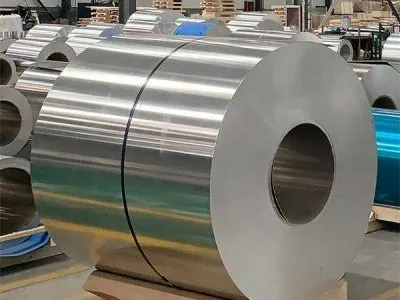
Dura Alloy supplies GH4169, GH5188, GH3128, GH2747, 4J36 and Monel 400 in forged bar, plate, sheet, strip and seamless pipe — with guaranteed composition, heat treatment, non-destructive testing and full heat traceability. Send your operating conditions for a confirmed grade recommendation and quote.
nicholas.zhu1212@gmail.com · WhatsApp 8618921275456 · Request a quote