Titanium Alloy Melting Process and Techniques
Titanium melting is less about reaching temperature and more about what the metal touches and what is allowed in. Titanium attacks refractories, absorbs oxygen and nitrogen, and carries inclusions that kill fatigue lives. Therefore, the three industrial routes exist for one reason: controlled contamination and inclusion removal. This guide compares the routes, governs the inclusions, and corrects three common errors.
The Three-Route Comparison
| Route | Principle | Inclusion Control | Scrap Use | Best Duty |
|---|---|---|---|---|
| VAR | Vacuum arc remelting of a pre-alloyed electrode, 1–3 melts | Float/settle — good, not absolute | Limited | The standard for aerospace-grade ingots |
| EBCHM | Electron-beam cold hearth | Removes HDI and LDI | Excellent | Inclusion-critical hardware, scrap recycling |
| PAM | Plasma arc cold hearth | Removes HDI/LDI; good chemistry control | Good | Specialty grades, recycle programs |
The H/L Inclusion Governance Table
| Inclusion | What It Is | Why Dangerous | Which Route Removes It |
|---|---|---|---|
| HDI — high-density inclusions | Dense particles (e.g., tungsten-carbide contamination) | Fatigue-initiation sites in rotating hardware | Cold hearth (EBCHM / PAM) |
| LDI — low-density inclusions | Nitrogen-stabilized pores, α-stabilized particles | Cracking nuclei, property scatter | Cold hearth (EBCHM / PAM) |
The discipline: cold-hearth melting exists to take out what VAR cannot reliably remove — which is why fatigue-critical titanium goes through a hearth, and why melt route selection is a design decision.
The Process Flow
- Feed — titanium sponge (Kroll route) plus alloying elements, cleaned and blended.
- Electrode fabrication — the blend is compacted and welded into an electrode; composition is fixed here, not in the melt.
- Melting — VAR (standard) or cold-hearth EB/PAM; vacuum or inert atmosphere; pure titanium melts at ~1,668°C, with practical melt/superheat practice up to ~1,900°C.
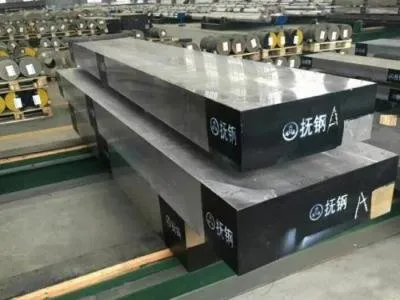
- Solidification — the ingot forms in a water-cooled copper crucible — no refractory contact, because titanium reacts with refractories.
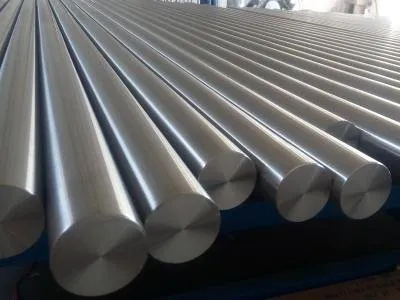
- Conditioning — ingot conditioning, homogenization and downstream processing prepare billet.
- QC — spectroscopic analysis, radiography/ultrasonics and mechanical testing against spec.
The Correction Box
| Claim in Circulation | The Accurate Statement |
|---|---|
| “Vacuum degassing removes hydrogen and nitrogen” | Half-true: hydrogen is removed in vacuum; oxygen and nitrogen cannot be degassed out of molten titanium — they are excluded at input and governed by melting practice |
| “Melt is poured into molds” | Steel practice — titanium ingots solidify in water-cooled copper crucibles without refractory contact |
| “Elements are added during refining” | Wrong sequence — composition is fixed at electrode fabrication; VAR remelts a pre-alloyed electrode |
FAQ
Q: Why can’t titanium be melted like steel? A: It attacks refractories and absorbs O/N — hence vacuum, cold crucibles and cold-hearth routes.
Q: What are the three titanium melting routes? A: VAR (standard), EBCHM and PAM (cold hearth) — hearth routes remove HDI/LDI inclusions.
Q: What are HDI and LDI? A: High- and low-density inclusions — fatigue killers in rotating hardware, removed by cold-hearth melting.
Q: At what temperature does titanium melt? A: Pure titanium melts at ~1,668°C; practical melt and superheat practice reaches ~1,900°C.
Q: How is titanium ingot formed? A: In a water-cooled copper crucible — no refractory contact, unlike steel casting.
Q: When is composition set? A: At electrode fabrication — the melt remelts a pre-alloyed electrode, it does not add elements.
Need high-purity specialty alloys with certified melt history for demanding programs? Contact Dura Alloy at nicholas.zhu1212@gmail.com for Hastelloy C-22, 253MA, Alloy 20 and 4J36 — with mill certificates and heat traceability on request.