Understanding the Hardness of Titanium Alloys: A Comprehensive Guide
Hardness — resistance to indentation, scratching and plastic deformation — is one of the first numbers engineers ask for, and one of the easiest to misread. Titanium alloys span a wide hardness band depending on class, composition and heat treatment, and that band must be quoted in the right units and compared on the right scale. This guide covers the alloy classes, the real hardness ranges, the factors that move hardness, and — just as important — what hardness does not tell you.
The Alloy Classes (There Are Three, Not Two)
Titanium’s room-temperature structure is set by whether the high-temperature beta phase (body-centered cubic) survives to room temperature. Classifying titanium as simply “alpha and beta” misses the workhorse of the industry — the alpha+beta grades.
| Class | Representative Grades | Structure Logic | Typical Vickers Hardness (HV) |
|---|---|---|---|
| Alpha (CP / near-alpha) | CP grades 1–4, TA1/TA2/TA3 | Fully alpha; β stabilizers absent | ~120–200 HV |
| Alpha+beta | Ti-6Al-4V (TC4/GR5), Ti-6Al-4V ELI | Room-temperature mix of α + retained β; the volume workhorse | ~300–360 HV (annealed) |
| Beta (metastable/stable) | Ti-15V-3Cr-3Al-3Sn, Ti-10V-2Fe-3Al class | β retained by stabilizers; ageable to high strength | ~320–460 HV (solution + aged) |
One persistent error: quoting hardness in MPa. Hardness is measured in Vickers (HV), Brinell (HB) or Rockwell (HRC) units. The values sometimes quoted for titanium as “270–330” or “450–600” are strength-scale numbers, not hardness — CP titanium sits near 120–200 HV, and even hard alpha+beta grades rarely exceed ~360 HV in the annealed condition.
The Temperature Story Behind the Classes
The alpha phase is stable at room temperature; the beta phase of pure titanium is only stable above the beta transus of about 882 °C. Below that, pure beta transforms on cooling. What allows beta to exist at room temperature is not a fixed “475 °C threshold” but beta stabilizers — vanadium, molybdenum, iron, chromium, niobium — which lower the transus and retain beta to RT. The “475 °C” figure sometimes quoted has no general meaning as a stability boundary: it is stabilizer chemistry, not temperature, that decides whether beta survives.
What Moves Titanium Hardness
- Composition — aluminium strengthens and stabilizes alpha; vanadium and molybdenum strengthen via beta retention and aging response. Each addition raises hardness within its class.
- Microstructure — fine, equiaxed microstructures give higher hardness and strength (Hall-Petch); coarse, lamellar structures trade hardness for creep resistance and fracture toughness.
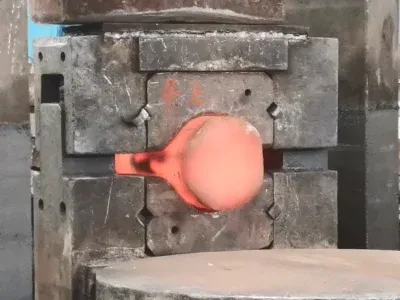
- Processing and heat treatment — rolling/forging schedules set grain size; solution treatment plus aging drives beta grades to their peak hardness; cold work raises hardness at the cost of ductility.
The Hardness Scale in Perspective
| Material Example | Typical Hardness |
|---|---|
| Soft CP titanium | ~120–190 HV (~110–180 HB) |
| Annealed Ti-6Al-4V | ~300–360 HV |
| Aged beta titanium | ~320–460 HV |
| Structural alloy steel (30CrMnSiA) | ~250–330 HB as hardened-tempered |
| Cold-work die steel (DC53) | ~58–62 HRC (~600+ HV) |
| High-speed steel (W6Mo5Cr4V2) | ~63–66 HRC (~780–850 HV) |
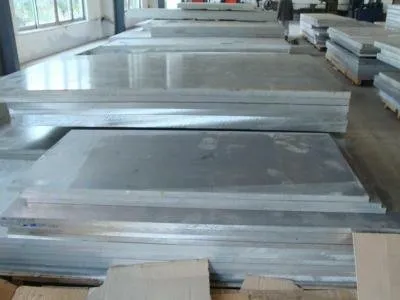
| Aerospace aluminum (7075) | ~150–175 HB |
Titanium’s practical hardness band overlaps the softer steels — its fame comes from strength-to-weight and corrosion resistance, not from being the hardest metal in the room.
What Hardness Does — and Doesn’t — Guarantee
Hardness genuinely supports:
- Wear and abrasion resistance — high hardness resists cutting and galling in abrasive service; fretting resistance on titanium fasteners and bearings improves with surface hardness.
- Surface integrity under contact — hardened surfaces resist denting, which protects components under point loads.
Hardness does NOT by itself deliver:
- Corrosion resistance — that is governed by composition and the protective oxide film, not hardness. A harder titanium part is not automatically more corrosion-resistant; mechanical wear resistance can preserve the film, but that is a wear effect, not a corrosion effect.
- Fatigue life — fatigue is controlled by microstructure, defect population and surface condition. Surface hardening (e.g., shot peening, nitriding) helps by introducing compressive residual stress and hardening the surface layer — not because bulk hardness alone prevents crack initiation. Excess hardness can even reduce toughness and hurt damage tolerance.
- Creep performance — the coarse, softer-looking microstructures often creep better than the hardest fine ones.
Why Hardness Data Is Bought With Context
A hardness number is only meaningful with: the scale and condition (HV30 vs HV1 vs HRC), the heat-treatment state (annealed / solution-treated / aged), and the orientation if the product is directionally worked. On a material certificate, hardness should be quoted alongside tensile data — never instead of it.
FAQ
Q: What is the hardness of CP titanium? A: CP titanium grades run roughly 120–200 HV (~110–180 HB), depending on grade and condition — far lower than commonly quoted “MPa” numbers.
Q: What hardness does Ti-6Al-4V achieve? A: Annealed Ti-6Al-4V runs about 300–360 HV; heat-treated alpha+beta conditions can raise it within this general band.
Q: Why are beta titanium alloys harder? A: Beta stabilizers (V, Mo, Fe) retain beta to room temperature and enable solution + aging strengthening, typically reaching ~320–460 HV aged.
Q: Is hardness measured in MPa? A: No — hardness uses Vickers (HV), Brinell (HB) or Rockwell (HRC); MPa values describe strength. Comparing hardness as “MPa” is a units error.
Q: Does higher hardness improve corrosion resistance? A: Not directly — corrosion resistance comes from composition and the oxide film; hardness helps wear and film preservation, which is a different mechanism.
Q: Does higher hardness improve fatigue life? A: Only via surface treatments that add compressive stress (shot peening, nitriding); bulk hardness alone can even reduce toughness and damage tolerance.
Ready to source titanium and hardenable alloys? Contact Dura Alloy for 7075 Aluminum, 30CrMnSiA, DC53 and W6Mo5Cr4V2 with full certification — nicholas.zhu1212@gmail.com · WhatsApp 8618921275456 · Request a quote