Custom Nickel Alloy Orders: Lead Times and MOQs Explained
If you are buying Inconel, Hastelloy, Monel or other nickel-based alloys for the first time, two questions come up before anything else: how long will my order take, and how much do I have to order? Both are controlled by more variables than most buyers expect — grade availability, product form, manufacturing route, testing and quantity all move the timeline and the minimum order quantity (MOQ).
This guide breaks down what actually determines lead times and MOQs for custom nickel alloy orders, what typical timelines look like, and how to plan your order so it ships faster and costs less.
What Is a Custom Nickel Alloy Order?
A custom order is any purchase that is not cut directly from standard off-the-shelf stock. Common examples:
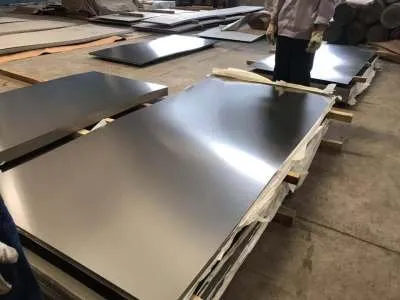
- Plate, sheet or strip cut to non-standard sizes and tolerances
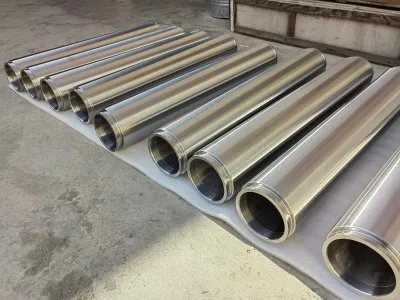
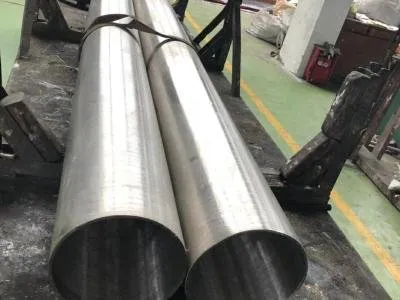
- Seamless pipe or tube in specific outer diameter and wall thickness combinations
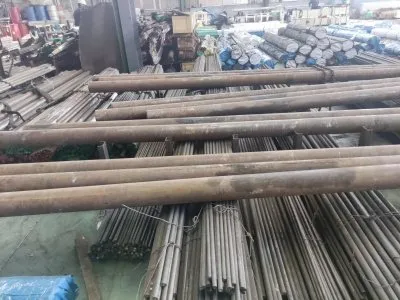
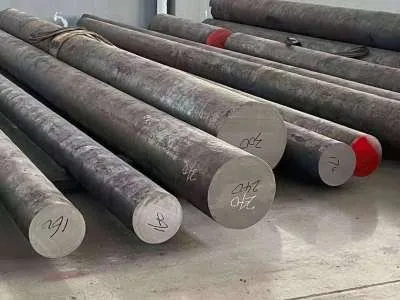
- Round bar or forgings ordered as special-dimension blanks
- Machined components — flanges, rings, shafts, fasteners — made from alloy stock
- Material melted to order under a customer specification or project heat
Custom orders matter because most nickel alloy applications — chemical reactors, oil and gas equipment, aero-engine hardware, nuclear components — do not accept standard stock sizes without modification. Understanding how the supplier fulfills these orders is the fastest way to control your schedule and budget.
What Determines Nickel Alloy Lead Times?
Lead time starts at order confirmation and ends at readiness for shipment. It is driven by four main groups of factors:
| Factor | How It Affects Lead Time |
|---|---|
| Grade availability | If the grade is in stock, lead time is days. If the grade or specification must be melted or rolled to order, add weeks. |
| Manufacturing route | Stock cutting is fastest; cold rolling or forging adds process time; a custom vacuum-melted heat (VIM + ESR/VAR) is the slowest route. |
| Product form and size | Seamless pipe needs drawing and annealing cycles; large forgings need heating, upsetting and ring-rolling time; thick plate takes more rolling passes. |
| Processing and inspection | Heat treatment, surface finishing, machining, and testing (mechanical tests, PMI, ultrasonic, third-party inspection) each add calendar days. |
| Quantity | Larger tonnage can actually shorten per-piece time but extends total mill occupancy; very small quantities queue behind standard production. |
| Shipping | Factory lead time is separate from freight: sea freight typically adds 2–5 weeks, air freight 3–7 days depending on destination. |
A supplier with its own ingot inventory and an integrated line — from vacuum melting and electroslag remelting through forging, heat treatment, rolling and machining — removes the handoff delays between separate mills. That is one of the reasons a one-stop supplier can quote shorter custom cycles.
Typical Lead Times at a Glance
The ranges below reflect typical practice for nickel alloy supply. Always confirm the current schedule with your supplier, since mill occupancy changes by season and grade.
| Order Type | Typical Lead Time |
|---|---|
| In-stock grade, ready inventory | Same-day to 1 working day dispatch |
| Stock plate/strip/bar cut to size | 2–5 working days |
| Rolled plate, strip or bar from stocked ingot | 2–4 weeks |
| Seamless pipe/tube (drawn, annealed, pickled) | 4–6 weeks |
| Custom remelted heat + forging (VIM/ESR) | 6–10 weeks |
| Machined components with full NDT and inspection | 8–12 weeks or longer |
Two practical takeaways: plan custom melting and forging orders at least 2–3 months ahead, and keep a 1–2 week buffer for testing and third-party inspection if your project contract requires certificates beyond the standard mill test certificate.
What Is the MOQ for Nickel Alloy Products?
MOQ — minimum order quantity — is the smallest quantity a supplier will accept for a given product form and specification. It exists because every order consumes setup, testing and logistics cost. MOQ depends more on product form than on the alloy itself:
| Product Form | Typical MOQ Behavior |
|---|---|
| Round bar, plate, pipe from stock | Cut orders accepted — often from 1 piece or roughly 50–500 kg |
| Strip and wire | Coil-based, typically 50–500 kg per coil |
| Custom-rolled sizes | Usually 500–1,000 kg per grade and size to justify a production lot |
| Custom-melted heats | Effectively multi-ton minimums, since a melt and remelt cycle is fixed-cost heavy |
| Forgings and machined parts | Piece-based (1 pc possible), but tooling or setup cost may apply to small runs |
Two points buyers frequently miss:
- MOQ is not the same as cost efficiency. A small cut order is accepted, but per-kg cost is higher because the material test certificate, handling and packing are shared over fewer kilograms.
- Specification breadth raises MOQ. If you split one order into three grades and five sizes, each line carries its own lot and testing — total MOQ and cost climb accordingly. Consolidating into one grade and fewer sizes is the single most effective way to buy small.
How to Shorten Nickel Alloy Lead Times
- Buy from stock grades. Grades held in regular inventory — such as Inconel 601 sheet, Inconel 617, seamless Inconel pipe and Hastelloy X — ship far faster than melted-to-order materials. Ask the supplier for its current stock list before freezing your specification.
- Freeze the specification completely and early. Grade, UNS number, standard (ASTM, GB, DIN or JIS), dimensions, tolerances, quantity and required certificates should all be locked at inquiry stage. A specification change mid-production restarts the clock.
- Choose standard sizes and full lengths. Non-standard widths and short lengths create extra cutting passes, waste and setup time.
- Consolidate orders. One grade, fewer sizes, one heat or one production lot — this shortens both lead time and per-kg cost.
- Book production slots. If your project timeline is fixed, tell the supplier your target date up front. Suppliers that hold large raw-material ingot inventory can often fit you into rolling or forging schedules much sooner than a mill that must first buy raw material.
How to Reduce MOQ and Total Cost
- Request cut-to-length service from stock instead of committing to a full mill run when your usage is small.
- Minimize the number of grades and specs per purchase order.
- Plan annual demand with phased releases — committing to a volume with scheduled deliveries can secure better per-kg pricing than repeated spot orders.
- Scope testing to what the application requires. Standard mill test certificates are non-negotiable; extra testing such as ultrasonic, PMI or third-party witness adds cost and days. Use it where the standard demands it, not by default.
What to Include in Your Nickel Alloy RFQ
A complete inquiry gets you a complete quote faster. Include:
- Alloy grade and UNS number (e.g., Inconel 625 / N06625, Monel 400 / N04400, Hastelloy C276 / N10276)
- Governing standard: ASTM, GB, DIN or JIS
- Product form: plate, sheet, strip, seamless pipe, tube, round bar, wire, forging, flange or machined part
- Dimensions and tolerances (OD × wall thickness, thickness × width × length)
- Quantity in pieces or kilograms
- Delivery state: solution annealed, annealed and pickled, or aged condition
- Required testing and certificates: mill test certificate, PMI, ultrasonic, third-party inspection
- End-use application (helps the supplier flag material or tolerance risks)
- Destination port and Incoterms, plus any hard deadline
Custom Nickel Alloy Orders: FAQ
Q: What does MOQ mean for nickel alloys? A: It is the smallest quantity a supplier accepts for one grade and specification. Stock materials can usually be cut in small orders (often from one piece), while custom-rolled lots typically require 500–1,000 kg and custom-melted heats are effectively multi-ton.
Q: How long does a custom nickel alloy order take? A: Stock cut orders typically ship within 2–5 working days; rolled products take 2–4 weeks; seamless pipe 4–6 weeks; and custom melting plus forging 6–10 weeks. Confirm the current schedule at inquiry.
Q: Can I order small quantities for prototyping? A: Yes, for grades available from stock. Expect a higher per-kg price because test certificates and handling are fixed costs spread over fewer kilograms.
Q: Why do lead times differ so much between suppliers? A: The main drivers are stock levels, whether the grade must be melted or rolled to order, the product form, and the testing and inspection scope. A one-stop supplier with its own ingot inventory shortens the chain considerably.
Q: Does MOQ include test certificate costs? A: Material test certificates are normally included with the order, but small orders carry proportionally higher certificate cost. Extra testing — ultrasonic, PMI, third-party witness — is usually quoted separately.
Q: How can I get a faster quote? A: Send a complete specification as described above. One-on-one account support with fast response is standard practice at Dura Alloy, so a complete RFQ usually returns a quote the same working day.
Get a Quote for Your Custom Nickel Alloy Order
Dura Alloy is a nickel-based alloy manufacturer and stockist in Wuxi, China, with over 1,000 tons of inventory across nickel-based alloy products — Inconel, Hastelloy, Monel, high-temperature alloys, precision alloys, Waspaloy and titanium alloys — plus ingots, plates, strips, seamless pipes, round bars, capillary tubes, wire, flanges and pipe fittings.
Need a lead time for your specification? Send your RFQ with grade, form, dimensions and quantity, and get a confirmed schedule and quote. In-stock items can ship the same day.
📞 +86-18921275456 · WhatsApp 8618921275456 · Request a quote