Inconel 625 vs Inconel 718: Which Nickel-Based Alloy Should You Choose?
Choosing between Inconel 625 and Inconel 718 comes down to one question: is your component limited by corrosion or by strength? These two nickel-based superalloys share the same base elements, appear on the same purchase orders, and are frequently substituted for one another in specification documents. They are not interchangeable. One is a corrosion-resistant grade; the other is a high-strength grade. Specifying the wrong one is the most common purchasing error we see in nickel alloy enquiries, and it is usually made for the wrong reason — because 718 is stronger, engineers assume it is the safer choice.
This comparison covers composition, mechanical properties from cryogenic to 800 °C, corrosion resistance by PREN value, the applicable standards, and the fabrication differences that determine which grade a part should be made from.
| If your service condition is | Choose | Because |
|---|---|---|
| Seawater, wet chlorine, mixed acids, sour gas | Inconel 625 | PREN ≈ 50, immune to chloride stress-corrosion cracking |
| Above 650 °C under sustained load | Inconel 718 | Aged yield strength reaches 1035 MPa |
| Heavy welding with no ageing step available | Inconel 625 | No post-weld heat treatment required |
| High-strength fasteners, springs, seals | Inconel 718 | Yield strength above 1000 MPa |
| Turbine discs and hot-section parts | Inconel 718 | Creep and fatigue resistance to 700 °C |
What the two grades actually are
Both alloys belong to the nickel-based superalloy family, but they belong to different strengthening families. That single distinction drives nearly every downstream difference in performance, fabrication and cost.
Inconel 625 (UNS N06625, W.Nr. 2.4856, Chinese grade GH3625) is a solid-solution-strengthened wrought alloy. Molybdenum and niobium are dissolved directly into the nickel-chromium matrix. No aging step is required to develop strength, and there is no strengthening precipitate to embrittle a weld. Our GH3625 product entry lists the full parameter set.
Inconel 718 (UNS N07718, W.Nr. 2.4668, Chinese grade GH4169) is a precipitation-hardened nickel-iron-chromium alloy containing niobium, molybdenum, titanium and aluminium. Solution annealing followed by double ageing produces a fine dispersion of gamma-double-prime and gamma-prime precipitates. It is the same grade sold as GH4169 in China.
Chemical composition comparison
| Element | Inconel 625 (N06625) | Inconel 718 (N07718) | Why it matters |
|---|---|---|---|
| Nickel | Balance (58.0 min) | 50.0 – 55.0 | Base matrix; high Ni stabilises the austenite and supports corrosion resistance |
| Chromium | 20.0 – 23.0 | 17.0 – 21.0 | 625 forms a more protective passive film in oxidising media |
| Molybdenum | 8.0 – 10.0 | 2.8 – 3.3 | The decisive difference — Mo drives pitting and crevice corrosion resistance |
| Niobium | 3.15 – 4.15 | 4.75 – 5.50 | In 718 it forms gamma-double-prime; in 625 it contributes solid-solution strength |
| Titanium | 0.40 max | 0.65 – 1.15 | Contributes gamma-prime in 718 |
| Aluminium | 0.40 max | 0.20 – 0.80 | Contributes gamma-prime in 718 |
| Iron | 5.0 max | Balance | 718 is a nickel-iron-chromium alloy, not a pure nickel alloy |
| Carbon | 0.10 max | 0.08 max | Low carbon limits carbide precipitation and sensitisation |
| Copper | 0.07 max | 0.30 max | Improves resistance to reducing acid attack |
| Cobalt | 0.10 max | 1.0 max | Bounded in 625 for nuclear code cases |
Read the molybdenum row twice. At roughly 9%, Inconel 625 carries about three times the molybdenum of Inconel 718. This single fact explains the entire corrosion gap between the two grades and cannot be compensated for by any other design decision.
Specification note: minimum values above are stated per ASTM B443 and B446 for Inconel 625, and ASTM B637 for Inconel 718. GB/T 20878 for GH3625 lists slightly lower annealed minimums (Rm 760 MPa, Rp0.2 345 MPa) than ASTM. Confirm the governing standard and the delivery condition on the purchase order — the same grade name can arrive with different minimums depending on which standard is written into the contract.
How the strengthening mechanisms differ, and why it matters
Inconel 625 relies on solid-solution strengthening. Molybdenum and niobium sit in the lattice and slow dislocation movement. Three practical consequences follow:
- Strength is delivered in the supplied condition. No aging cycle is required, and properties do not depend on thermal history.
- The alloy is comparatively ductile and stable, making it far more forgiving of welding and hot forming.
- Long-term exposure between roughly 550 °C and 850 °C can precipitate undesirable intermetallic phases. If the grade is used at high temperature, specify a solution-annealed condition and avoid prolonged dwell in that band.
Inconel 718 relies on precipitation hardening. After solution annealing, a two-step age — typically 718 °C for 8 hours, furnace cooling to 621 °C, then holding to a total precipitation time of 18 hours with an air cool — precipitates gamma-double-prime and gamma-prime. The consequences are equally clear:
- Strength is the highest of any wrought nickel alloy below 650 °C, with a minimum yield of 1035 MPa in the aged condition.
- The gamma-double-prime phase loses stability above 650 °C, which caps the useful load-bearing service temperature.
- Welding deposits the alloy in a softer condition, so post-weld ageing is normally required to restore full strength.
- Machining the aged condition is demanding, because gamma-double-prime is extremely hard and the material work-hardens rapidly.
For the wider family picture, our guide to nickel-based superalloys covers the other strengthening classes. For those still framing the choice as metal versus non-metal, high-temperature alloy versus stainless steel settles that comparison first.
Mechanical properties
Room temperature, minimum values
| Property | Inconel 625, annealed | Inconel 718, solution annealed | Inconel 718, aged |
|---|---|---|---|
| Tensile strength Rm (MPa) | 827 | 965 | 1275 |
| Yield strength Rp0.2 (MPa) | 414 | 550 | 1035 |
| Elongation A5 (%) | 30 | 30 | 12 |
| Hardness (HB) | 220 max | 363 max | approx. 331 |
| Density (g/cm³) | 8.4 | 8.24 | 8.24 |
| Melting range (°C) | 1290 – 1350 | 1260 – 1320 | 1260 – 1320 |
The annealed 718 column is what you receive before ageing. The aged column is what goes into a turbine disc. That gap — roughly 485 MPa of additional yield strength — is what buyers are paying for when they order aged material.
Strength at temperature
| Condition | Inconel 625 | Inconel 718 |
|---|---|---|
| Room temperature | Baseline | 1035 MPa yield, aged |
| 650 °C | Approx. 600 MPa tensile | Approx. 1100 MPa tensile |
| 800 °C | Approx. 350 MPa tensile | Approx. 500 MPa tensile, aged condition exceeded |
| Long-term load-bearing limit | Approx. 650 °C | Approx. 700 °C |
| Maximum oxidation resistance | 980 °C | 980 – 1000 °C |
| Cryogenic lower limit | -196 °C (pressure vessel rating) to -253 °C | -253 °C |
Above roughly 650 °C the two curves converge and 718 loses its advantage as the gamma-double-prime phase destabilises. Below 650 °C, 718 pulls away sharply.
Heat treatment routes for Inconel 718
| Specification | Solution anneal | Age cycle | Typical use |
|---|---|---|---|
| ASTM B637 Route A | 924 – 1010 °C, 30 min min | 718 °C 8 h, furnace cool to 621 °C, 18 h total, air cool | Oilfield and general engineering, higher room-temperature strength |
| AMS 5662 | 927 – 1010 °C | Not aged | Parts to be formed and aged after machining |
| AMS 5663 | 927 – 1010 °C | 718 °C 8 h then 621 °C to 18 h total | Aerospace, turbines, jet engines |
| AMS 5664 | 1021 – 1052 °C, 1 h | 760 °C 10 h then 649 °C to 20 h total | Higher stress-rupture life above 650 °C |
The AMS 5664 route dissolves delta phase and coarsens the grain, which costs ductility but gains stress-rupture life in rotating gas turbine hardware. Our Inconel 718 forging article covers melting practice and forging detail if you are specifying billet rather than finished bar.
Corrosion resistance and PREN
PREN (Pitting Resistance Equivalent Number) is calculated as Cr + 3.3 × Mo + 16 × N, and it is the standard shorthand for ranking alloys against localised corrosion. It does not replace a corrosion engineer, but it tells you which of two grades starts from a better position.
| Grade | Typical PREN | Chloride service rating |
|---|---|---|
| 316L | approx. 24 | Poor in warm seawater |
| 904L | approx. 35 | Good, but limited in hot chloride |
| 2507 super duplex | approx. 43 | Very good, strength-limited |
| 254SMO | approx. 43 | Excellent |
| Inconel 718 | approx. 29 | Good, but below the super austenitic grades |
| Inconel 625 | approx. 50 | Excellent in seawater, wet chlorine and mixed acids |
The gap between 625 at roughly 50 and 718 at roughly 29 is the single most useful number in this article. It is why 625 is specified for seawater heat exchangers, flue gas desulfurization spray systems and sour gas equipment, and why 718 generally is not.
Inconel 625 also complies with NACE MR-01-75 and ISO 15156 for sour gas service, resists chloride-induced stress-corrosion cracking, and handles mixed oxidising and reducing acid environments that defeat most stainless steels. It carries a pressure-vessel code rating from -196 °C to 450 °C.
Inconel 718 offers good resistance to stress-corrosion cracking and pitting at both high and low temperature, plus reliable high-temperature oxidation resistance. It is a competent corrosion-resistant alloy. It is simply not in the same class as 625 when the medium is aggressive chloride.
Application matching
| Industry and service | Recommended grade | Why |
|---|---|---|
| Seawater heat exchangers, piping | Inconel 625 | PREN approx. 50, immune to chloride SCC |
| Flue gas desulfurization absorption towers, spray headers | Inconel 625 | Wet chlorine and acid condensate attack |
| Sour gas production, API 6A equipment | Inconel 625 or 718 per NACE | 718 where strength governs, 625 where corrosion governs |
| Chemical reactors, acid transfer, sulphuric acid condensation | Inconel 625 | Broad acid resistance, no post-weld heat treatment |
| Jet engine discs, turbine blades | Inconel 718 | Creep and fatigue at 650 – 700 °C |
| Gas turbine combustors and hot section parts | Waspaloy or Nimonic 80A | Higher temperature capability than either 625 or 718 |
| High-strength fasteners, springs, seals | Inconel 718 | Yield strength above 1000 MPa |
| Steam turbine components | Inconel 718 | High-temperature strength with creep resistance |
| Rocket engine parts, liquid fuel systems | Inconel 718 | Cryogenic stability combined with strength |
| Pulp and paper digesters, bleaching tanks | Inconel 625 | Chloride and hypochlorite attack |
| Nuclear components | Inconel 625 or 718 per code case | 625 for corrosion, 718 for structural |
| Marine hardware, seawater-exposed fasteners | Inconel 625 | Long-term immersion, no crevice pitting |
Both grades are frequently used on the same project. A subsea tieback might use 625 for the flowline and 718 for the high-stress connector tooling.
Fabrication, welding and machinability
Welding. Inconel 625 is the easier alloy. It has no post-weld cracking susceptibility, requires no post-weld heat treatment, and is widely used as a dissimilar-metal filler choice with matching ERNiCrMo-3 consumables. It is routinely welded to 316L flanges in heat exchanger fabrication.
Machining. Both grades work-harden aggressively and need rigid setups, sharp carbide tooling and abundant coolant. Inconel 625 machines moderately. Inconel 718 in the aged condition is markedly harder because of the gamma-double-prime phase, and is the more expensive option to machine. Budget machining time accordingly.
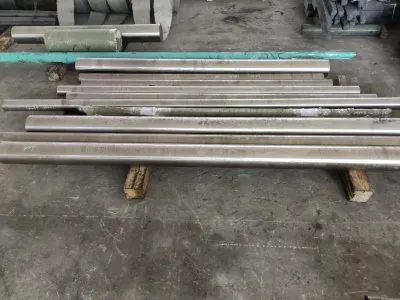
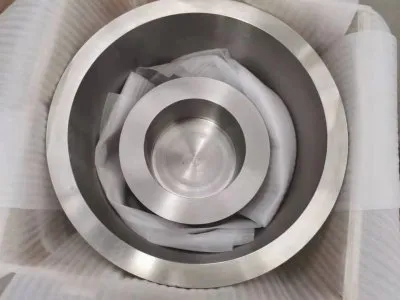
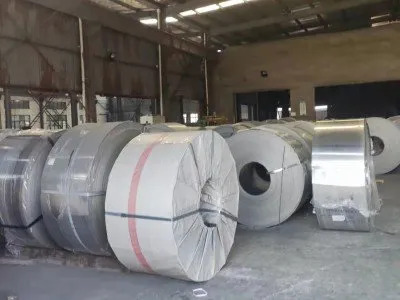
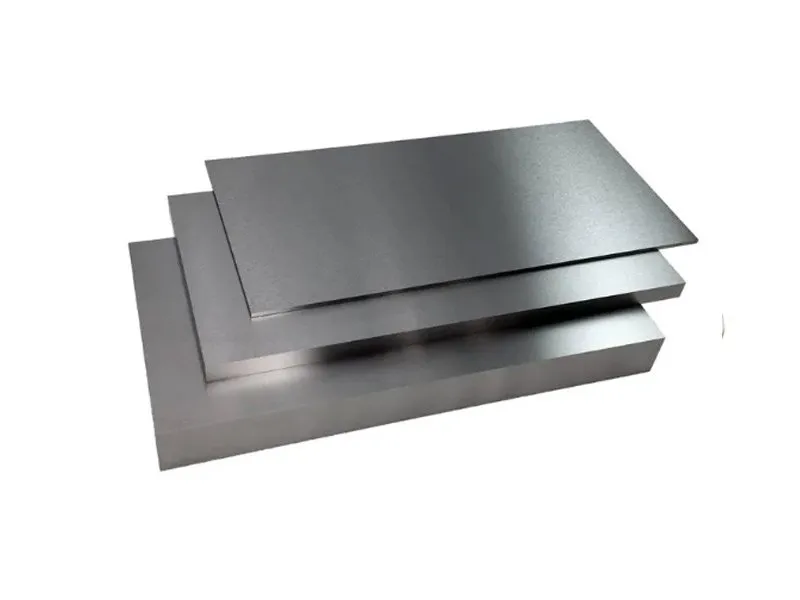
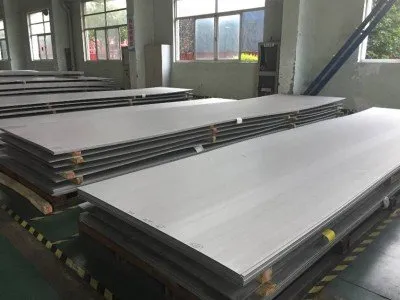
Availability. Both grades are supplied in round bar, forging billet, plate, sheet, strip, seamless pipe, tube, wire and fittings, with non-standard sizes and cut-to-length service available. Our in-stock inventory page lists current stock, and the full product range covers the grades beyond these two.
How to choose: a five-question checklist
If the component is still being specified, these five questions resolve the choice in the order that matters most.
- What is the medium, and is it chloride-bearing? If yes, Inconel 625. This is not a close call.
- What is the working temperature, and is the component load-bearing? Above 650 °C under sustained stress, Inconel 718. Below that with corrosion concerns, 625.
- Is the part welded, formed or machined after delivery? If yes and there is no ageing step available, 625 avoids post-weld heat treatment entirely.
- What does the governing standard require? AMS 5663 or ASTM B637 Route A for 718 in aerospace; ASTM B443, B446 or B444 for 625. If your specification allows both, choose on the criteria above rather than habit.
- What does the total cost of ownership look like? 718 commands a higher material price and higher processing cost. If the service environment is severe enough to demand 625, the premium is smaller than the cost of a failure-driven replacement.
If your component combines high stress with an aggressive chloride environment, contact our team with the medium composition, concentration, temperature, pressure and stress level. We will confirm the grade and the delivery condition against the batch material test certificate before you commit.
Frequently asked questions
Is Inconel 718 the same as Inconel 625?
No. They share the nickel-chromium base and both are nickel-based superalloys, but they belong to different strengthening families. 625 is solid-solution strengthened and optimised for corrosion resistance; 718 is precipitation hardened and optimised for strength at elevated temperature. They are not interchangeable.
What is the Chinese equivalent of Inconel 625?
GH3625, also written GH625 or NS336, corresponding to W.Nr. 2.4856 and UNS N06625.
What is the Chinese equivalent of Inconel 718?
GH4169, also written GH169, corresponding to W.Nr. 2.4668 and UNS N07718. GH4169 is one of the most widely specified superalloy grades in China.
Can Inconel 625 and Inconel 718 be welded together?
Yes, with matching ERNiCrMo-3 consumables and a qualified procedure. This is a common repair combination for dissimilar assemblies.
Which is more expensive?
Inconel 718 is generally more expensive per kilogram, driven by niobium, titanium and aluminium content and by the mandatory double-age cycle. Material prices for both track the nickel market.
Can Inconel 625 be used at 980 °C?
For oxidation-only service, yes. For load-bearing service, the creep limit applies and the allowable stress must be de-rated above roughly 650 °C. Above that, Inconel 617 or Incoloy 800H are the usual substitutes.
Key takeaways
- Inconel 625 and Inconel 718 are both nickel-based superalloys, but 625 is a corrosion grade and 718 is a strength grade.
- Molybdenum at roughly 9% versus roughly 3% produces a PREN of about 50 versus about 29. That single row explains the corrosion gap.
- Inconel 718 reaches 1035 MPa minimum yield in the aged condition and dominates below 650 °C under load.
- Inconel 625 needs no ageing cycle, needs no post-weld heat treatment, and is markedly easier to fabricate.
- Both are available from Dura Alloy in bar, forging billet, plate, sheet, pipe, tube, wire and fittings, with EN 10204 3.1 and 3.2 certification.
Ready to price your project? Send your drawings, the working medium and the service temperature to our team, and we will confirm the grade, delivery condition and certification package before you order.