Gas Turbine High-Temperature Alloy Working Blade: Material Properties and Applications
The working blade — or moving blade — is the component where a gas turbine’s design constraints collide most violently. It rotates at thousands of RPM while facing gas temperatures that exceed the melting point of the alloy it is made from, for tens of thousands of hours in power plants and thousands of flight cycles in aircraft engines. Every blade is a materials problem before it is a mechanical problem: the alloy must resist creep, oxidation, hot corrosion and thermal fatigue simultaneously, survive thermal cycling, and be castable to the complex shapes with internal cooling passages that make modern turbines possible.
This guide covers the real material requirements of gas turbine blades, how blade alloys evolved from equiaxed to single-crystal structures, the cooling and coating systems that let alloys survive beyond their melting point, and how a materials supplier supports blade manufacturing.
What Gas Turbine Working Blades Actually Experience
- Gas temperature — 1,200–1,600 °C depending on engine class, above the melting point of nickel superalloys (~1,300–1,400 °C).
- Metal temperature — held at 950–1,100 °C by internal cooling air and thermal barrier coatings, still near the alloy’s creep limit.
- Mechanical load — centrifugal stress from 10,000+ RPM rotation, plus vibration and thermal-gradient strain.
- Environment — oxidizing and sulfidizing combustion gas, salt in marine air, start–stop thermal cycling.
The blade survives because of a layered system: alloy capability + internal cooling + coating. But the alloy is the foundation — everything else is built on what the material can sustain at temperature.
Blade Alloy Properties That Really Matter
| Property | Why It Matters | Design Consequence |
|---|---|---|
| Creep and rupture strength | Blades hold centrifugal load at temperature for design life | Determines blade section and life |
| Oxidation and hot-corrosion resistance | Gas-path surfaces degrade continuously | Coatings may be required; alloy chromium level matters |
| Thermal-fatigue resistance | Start–stop cycles crack the surface | Grain structure and surface quality control |
| Microstructural stability | γ′ must resist coarsening for long lives | Refractory additions (Re, Ru) in modern grades |
| Castability | Complex internal cooling passages and SX/DS structures | Foundry practice defines what is possible |
| Weldability | Repair of service damage | Restricted for some high-refractory grades |
Two claims about blade alloys are repeated in online copy and are simply wrong:
- “Excellent thermal conductivity” — nickel superalloys conduct heat poorly (roughly one-fifth of carbon steel). Low conductivity is a real design problem: it worsens internal cooling and raises thermal-gradient stress. It is managed by cooling design, not celebrated as a virtue.
- “Low thermal expansion for aerodynamic stability” — blade alloys expand like other superalloys (CTE ~12–15 ×10⁻⁶/K). The low-expansion role in a turbine belongs to casing and seal alloys (controlled-expansion superalloys), which keep blade-tip clearances tight. Blades themselves are not low-expansion materials.
Correcting these matters because engineering buyers will spot the error and discount everything else on the page.
From Equiaxed to Single Crystal: How Blade Alloys Evolved
The defining trajectory of blade metallurgy is the elimination of grain boundaries, because grain boundaries are the weak link at high temperature.
| Structure Type | Representative Alloys | Key Benefit |
|---|---|---|
| Equiaxed cast | IN738, GTD-111, René 80 | Cost-effective; good all-round blade for moderate temperatures |
| Directionally solidified (DS) | DS GTD-111, DS René 80H | Columnar grains aligned with stress reduce transverse boundaries |
| 1st-generation single crystal (SX) | CMSX-2, SRR99 | No grain boundaries at all; higher temperature capability |
| 2nd–3rd generation SX | CMSX-4, René N5, René N6 | Rhenium and ruthenium slow γ′ coarsening and creep |
| 4th generation SX (emerging) | Ru-bearing experimental alloys | Further temperature margin for next-gen engines |
Each generation buys roughly 20–30 °C of usable metal temperature — and with it, turbine efficiency. This is why single-crystal casting, not alloy tweaking alone, has driven the last forty years of gas turbine progress.
Cooling and Thermal Barrier Coatings
Alloys alone cannot reach modern firing temperatures. Two supporting systems are mandatory:
- Internal cooling — air bled from the compressor flows through cast-in serpentine passages and exits through film-cooling holes, lowering the metal surface temperature by hundreds of degrees. Blade casting exists to make these internal passages possible.
- Thermal barrier coatings (TBC) — a ceramic (yttria-stabilized zirconia) topcoat over an MCrAlY bond coat insulates the metal surface by roughly 100–200 °C and protects against oxidation and hot corrosion.
The blade’s design life is set by the interaction of all three: alloy creep strength, cooling effectiveness, and coating durability — including coating spallation, which is a leading reason blades are retired.
Power Generation vs Aerospace: Different Design Priorities
| Priority | Power-Generation Blades | Aerospace Blades |
|---|---|---|
| Design life | 50,000–100,000+ hours baseload | Thousands of flight cycles, shorter hot time |
| Temperature strategy | Conservative firing temperature, proven alloys (IN738, GTD-111) | Higher temperature, SX alloys, aggressive cooling |
| Failure driver | Long-term creep and coating life | Thermal fatigue and hot-section cycling |
| Repair | Blades routinely repaired and re-coated | Repair limited; replacement more common |
| Cost pressure | Strong — alloy cost is a plant economics issue | Strong — but performance wins over cost |
Industrial gas turbines and aero engines use the same material science but opposite economics. A power-plant operator buys a blade to run for years; an airline buys one to be as light and hot-running as certification allows.
How a Materials Supplier Supports Blade Manufacturing
Blade makers do not melt their own alloys from scrap — they buy vacuum-induction-melted master alloy ingots (for investment casting) and wrought bar and billet (for forged blades, vanes and discs), with strict requirements:
- Clean melting — VIM plus ESR/VAR routes control gases, sulfur, inclusions and trace elements; inclusion control is fatigue life.
- Tight chemistry — aluminum, titanium, niobium, boron windows verified top/middle/bottom of each ingot.
- Full traceability — heat number, melting route and test data on the mill test certificate.
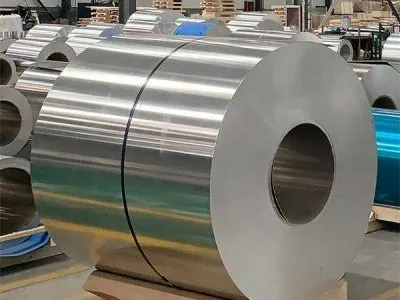
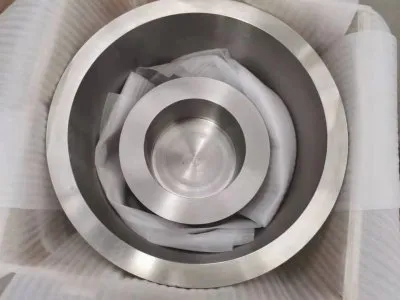
- Forms — master alloy ingots, precision bar, plate and sheet for the supporting hardware.
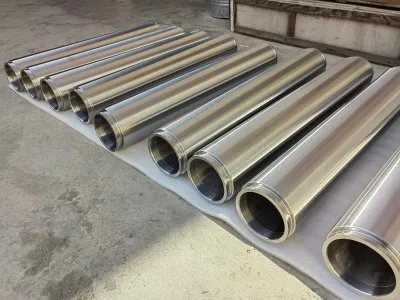
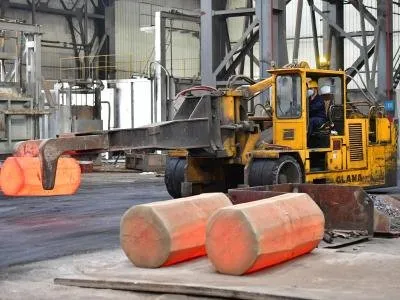
Dura Alloy’s one-stop line — vacuum melting, vacuum electroslag, forging, heat treatment, rolling and machining — supplies high-temperature alloys and Inconel as billets, bars, plates, strips, seamless pipes, flanges and fittings, with guaranteed composition and non-destructive testing.
FAQ
Q: What alloys are gas turbine blades made of? A: Nickel-based superalloys — equiaxed and directionally solidified grades like IN738 and GTD-111 for industrial turbines, and single-crystal grades like CMSX-4 and René N5 for the hottest aero-engine stages.
Q: Why are modern turbine blades single crystal? A: Eliminating grain boundaries removes the weakest high-temperature path — boundaries slide and crack under creep and thermal fatigue. Single-crystal blades run hotter and longer.
Q: Do blade alloys have low thermal conductivity? A: No — nickel superalloys conduct heat poorly (about one-fifth of carbon steel). Low conductivity complicates cooling and increases thermal stress; it is a design challenge, not a benefit.
Q: Do blade alloys have low thermal expansion? A: No. Blade superalloys expand at 12–15 ×10⁻⁶/K like other nickel alloys. Low-expansion materials in a turbine are used in casings and seals to control blade-tip clearance.
Q: How do blades survive gas hotter than their melting point? A: Internal cooling air plus a ceramic thermal barrier coating keep the metal surface at 950–1,100 °C while combustion gas reaches 1,400–1,600 °C — hundreds of degrees below the alloy’s melting point.
Q: Where can I source high-temperature alloys for blade manufacturing? A: From suppliers with a documented clean-melting line and full traceability — Dura Alloy supplies high-temperature alloys and Inconel master ingots, bars, plates and seamless products with mill test certificates.
Source Blade-Grade High-Temperature Alloys
Tell Dura Alloy your grade, form and specification — master alloy ingot, bar, plate or sheet — for a confirmed supply of nickel-based alloy products with guaranteed composition, non-destructive testing and full heat traceability.
nicholas.zhu1212@gmail.com · WhatsApp 8618921275456 · Request a quote