Titanium Alloy Nozzle for Rocket Engine Performance and Efficiency
Titanium alloys have real and valuable roles in rocket propulsion — but not every role. A nozzle’s hot throat sits in combustion gas at roughly 2,000–3,000 °C, and titanium’s usable metal temperature is around 500–600 °C. No alloy, including titanium, survives that heat unprotected; real throats are built from regeneratively cooled copper, niobium-based C-103, carbon-carbon composites or ablative liners. The engineering question is therefore not “is titanium hot enough for a rocket nozzle?” but “which nozzle zones and which engine classes can titanium carry?” Answering that correctly separates weight savings and mission success from a rapid oxidation failure on the pad.
The Capability Envelope: Where Each Nozzle Material Operates
| Material | Practical continuous-use limit | Role in rocket nozzles |
|---|---|---|
| Titanium alloys (TA3, TA18, Ti-6Al-4V) | ~400–600 °C (oxidation/creep bound) | Nozzle extensions at moderate heat, ablative-lined nozzles of small engines, structural adapters, interfaces |
| Copper alloys (Cu-Cr-Zr, NARloy-Z) | Cooled walls, throat | Regeneratively cooled throat and nozzle body of large liquid engines |
| Niobium C-103 | ~1,200–1,300 °C, radiation-cooled | Radiation-cooled nozzle extensions of upper-stage engines |
| Carbon-carbon / SiC | ~1,600 °C+ | Extreme hot sections, reusable thermal structures |
| Tantalum alloys | ~2,000 °C class | Severe high-heat inserts, specialized thruster hardware |
Titanium’s strength-to-weight ratio, corrosion resistance and manufacturability are excellent — but they operate below the thermal frontier of the nozzle. Selection is zone-by-zone, not material-by-nostalgia.
What Titanium Genuinely Offers Rockets
- Best strength-to-weight in its temperature band — titanium structural parts weigh roughly 43% of equivalent steel. Every kilogram saved on the nozzle assembly is payload or propellant.
- Cryogenic + ambient structural reliability — titanium keeps toughness at liquid-oxygen and liquid-hydrogen temperatures, which is why it carries tankage interfaces, ducting and adapters.
- Corrosion and passivity — a stable TiO₂ film resists launch-site marine atmosphere, propellant residuals and handling damage.
- Additive manufacturability — Ti alloys are the most mature aerospace AM metals; complex nozzle-extension contours and integrated cooling features are printed, not welded.
- Well-understood qualification base — Ti-6Al-4V, TA18-type grades carry decades of aerospace pedigree and existing AMS/military specifications.
Where Titanium Is the Right Nozzle Material
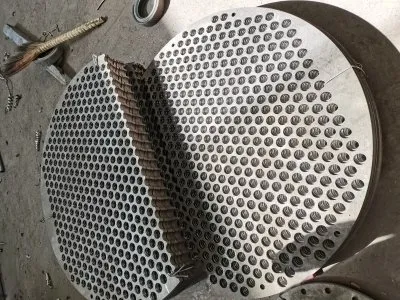
- Ablative-lined nozzles of small engines — small liquid and solid-propellant engines, missile thrusters and attitude-control systems run moderate heat flux; a titanium shell with an ablative liner handles both structure and thermal duty, and titanium’s low weight directly stretches vehicle performance.
- Moderate-temperature nozzle extensions — extensions downstream of the throat see falling gas temperature; where peak wall temperature stays inside titanium’s envelope, a titanium extension beats heavier superalloy or niobium designs on weight and cost.
- Structural interfaces and adapters — flanges, bolts, brackets and gimbal attachments between nozzle assemblies and vehicle structure are classic titanium territory, exploiting its strength, fatigue resistance and cryogenic toughness.
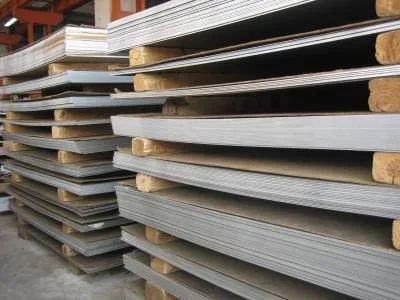
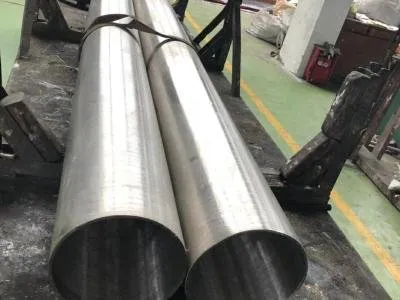
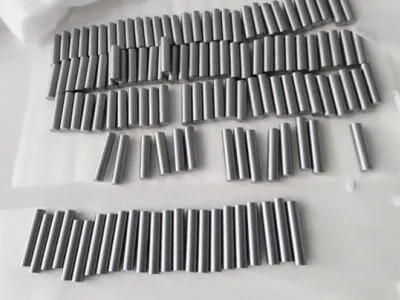
Typical feedstock for these parts: TA18 (Ti-3Al-2.5V) seamless tube and pipe for ducting and nozzle-extension structures, TA3 commercially pure titanium for corrosion-critical hardware, and the wider Ti-6Al-4V family for load-bearing structural adapters.
Where Titanium Must NOT Be Used
- Throat and near-throat zones of large engines — combustion temperatures exceed titanium’s melting point by over 1,000 °C; unprotected titanium oxidizes rapidly above ~500 °C and loses creep strength before that.
- Long-duration high-heat radiation-cooled extensions — beyond ~600 °C wall temperature, titanium yields to niobium C-103 or coated refractory metals.
- Any hot zone relying on titanium’s “high melting point” — the 1,668 °C melting point is irrelevant when oxidation destroys the surface at a third of that temperature.
The honest engineering conclusion: titanium is not a hot-throat metal. It is a structural and moderate-heat metal, and nozzles designed around that truth perform best.
Design, Manufacturing and Efficiency
Nozzle efficiency follows the classic de Laval logic: the convergent-divergent contour accelerates combustion gas past Mach 1, and the expansion ratio (exit area / throat area) sets how completely pressure converts into exhaust velocity and thrust. Titanium’s contribution is enabling that geometry cheaply and lightly:
- Forging + machining for small- and mid-size nozzle shells;
- Hydroforming and spin forming for thin-wall extensions;
- Laser powder-bed fusion for printed contours with integrated stiffening and cooling features;
- EBW/TIG welding with strict inert-gas shielding to avoid oxygen pickup embrittlement.
Each route must control dimensional precision and surface finish: throat-area tolerance and surface roughness directly shift delivered thrust and specific impulse.
Testing and Qualification
A titanium nozzle component is qualified before it flies:
- Tensile, elevated-temperature creep and fatigue testing at design wall temperatures;
- Oxidation exposure tests confirming the oxide behavior at the part’s actual service limit;
- Cryogenic testing for propellant-wetted hardware;
- Hot-fire static testing of the assembled nozzle on the engine;
- NDT: ultrasonic and X-ray for printed or welded structures, penetrant for surface integrity.
FAQ
Q: Can titanium be used for a rocket engine nozzle throat? A: No. Throat temperatures reach ~2,000–3,000 °C; titanium oxidizes and loses strength above ~500–600 °C, so throats use cooled copper, niobium C-103, carbon-carbon or ablative liners.
Q: Where is titanium actually used on rocket nozzles? A: In ablative-lined nozzles of small engines, moderate-temperature nozzle extensions, and structural adapters, flanges and interfaces where its strength-to-weight ratio pays off.
Q: Is titanium’s melting point high enough for nozzles? A: Melting point (~1,668 °C) is not the governing limit — oxidation and creep set the real service boundary near 500–600 °C, far below combustion gas temperature.
Q: Why use titanium instead of steel or superalloy for nozzle hardware? A: About 57% weight saving versus steel plus good cryogenic toughness, corrosion resistance and mature AM/weld manufacturing — ideal where heat duty is moderate.
Q: What titanium grades suit rocket nozzle components? A: Ti-6Al-4V for load-bearing structure, TA18 (Ti-3Al-2.5V) tube for ducting and extensions, and commercially pure grades (TA3) for corrosion-critical hardware.
Q: How are titanium nozzle parts manufactured? A: Forging plus machining, hydro/spin forming for thin extensions, laser powder-bed fusion AM for complex contours, followed by inert-gas-shielded welding and full NDT.
Ready to source rocket-grade titanium and refractory feedstock? Contact Dura Alloy for TA18, TA3, niobium tubes and tantalum rod with full chemistry certification and heat traceability — 📞 +86-18921275456 · WhatsApp 8618921275456 · Request a quote