Durability and Performance of Dura Alloy in Industrial Applications
Industrial equipment fails for a handful of predictable reasons: corrosion, wear, thermal degradation and creep. “Durability” is not a property a metal is born with — it is the match between an alloy’s real capabilities and the specific failure modes of the service environment. A pump impeller in hot sulphuric acid fails for a completely different reason than a furnace roller at 900 °C, and no single alloy serves both. This guide, written from a materials supplier’s perspective, pairs each major industrial failure mode with the alloy families that defeat it — and ends with the checklist a buyer should apply to any supplier, including us at Dura Alloy.
Failure Mode 1: Corrosion — and the Alloy Defense
The failure: general wastage, pitting, crevice attack and stress-corrosion cracking in process fluids. The cost is not the part — it is the leak, the shutdown and the safety event.
The defense: match the alloy’s passivation chemistry to the medium. For sulphuric and phosphoric acid service, nickel-base and iron-nickel grades with molybdenum additions — Alloy 20 for moderately aggressive acids, Hastelloy C-4 where chloride and reducing-oxidizing swings demand maximum stability — carry the load. Zirconium rod extends that logic into the most demanding acid and nuclear chemistries, where few metals maintain passivity at all.
Selection rule: identify the exact medium, temperature and oxidizing potential first; then choose the passivation system that survives it — never “the most expensive alloy”.
Failure Mode 2: Wear and Erosion — and the Alloy Defense
The failure: abrasion, erosion and galling in moving parts — pumps, valves, conveyors and agitators — thinning walls and widening clearances until efficiency collapses.
The defense: wear is managed by surface hardness, toughness and, where needed, coatings or hardfacing — not by a generic “low friction” claim. Alloys with high hardness and stable work-hardening behavior, or parts with engineered surface treatments, extend life where slurry and contact dominate. The substrate still needs the corrosion resistance of the environment behind it.
Selection rule: pair a corrosion-appropriate substrate with a wear-appropriate surface; document hardness and erosion data instead of trusting brochure adjectives.
Failure Mode 3: Thermal Degradation — and the Alloy Defense
The failure: oxidation scale spallation, carburization and loss of strength in furnaces, heat exchangers and hot-gas hardware.
The defense: alloys that form stable, adherent oxide scales — chromium for chromia formers, aluminium for alumina formers. 310S stainless is the workhorse heat-resistant grade for furnace fixtures and radiant hardware up to roughly 1,100 °C in clean environments; where load, cycling or aggressive atmospheres appear, nickel-base grades take over.
Selection rule: separate “can it survive the temperature” from “can it hold load at that temperature for years” — the second question is the one that buys durability.
Failure Mode 4: Creep and Thermal Fatigue — and the Alloy Defense
The failure: slow permanent deformation under sustained load at high temperature (creep), or cracking from repeated heating-cooling cycles (thermal fatigue). Both are silent: nothing looks wrong until the component is scrap.
The defense: creep resistance comes from solid-solution and precipitation strengthening — gamma-prime in nickel superalloys, refractory additions in heat-resistant steels. Thermal-fatigue resistance comes from ductility, low thermal expansion mismatch and stable microstructure. Choose by duty cycle: steady base-load favors creep strength; cycling service favors fatigue tolerance.
Selection rule: state the design life in hours, the wall temperature and the cycle count — suppliers can then name a grade, not a guess.
The Supplier Checklist: What Durability Claims Must Be Backed By
Whatever the alloy, durability is only as real as its documentation. Before committing a material to service, demand:
- Full chemistry certification against the governing standard — not “similar to” data.
- Mechanical test reports — tensile, hardness, impact, and elevated-temperature creep data where the service is hot.
- Corrosion validation — pitting/crevice data for the specific medium where available.
- NDT records — ultrasonic, eddy current or penetrant results for critical stock.
- Heat traceability — melt-to-shipment records linking the part to its lot.
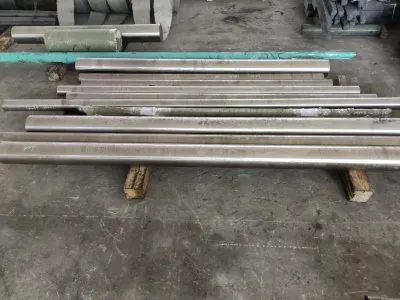
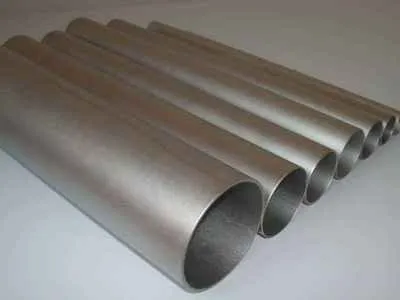
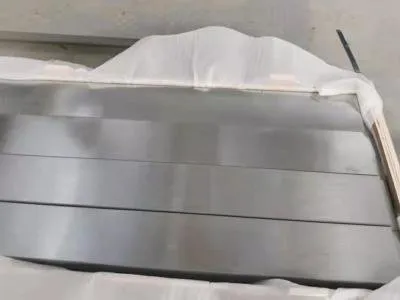
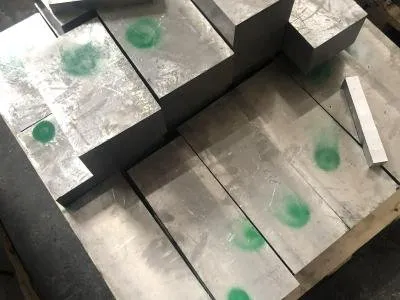
- Stock-form coverage — bar, plate, tube, sheet and forgings so the grade stays procurable for years.
At Dura Alloy, every shipment of Alloy 20, Hastelloy C-4, 310S stainless and zirconium rod ships with these records — because durability claims without traceable data are just marketing.
FAQ
Q: What causes industrial alloy failure most often? A: Corrosion, wear/erosion, thermal degradation and creep — and mismatches between the chosen alloy and the actual service environment.
Q: Which alloy resists sulphuric acid best? A: For hot, aggressive sulphuric service, nickel-base alloys such as Alloy 20 and Hastelloy C-4 are standard; zirconium handles the most severe reducing-acid conditions.
Q: Is 310S stainless good for furnace service? A: Yes, up to about 1,100 °C in clean oxidizing environments for low-stress fixtures; nickel-base grades are needed where load, cycling or aggressive atmospheres dominate.
Q: What does “durable alloy” actually mean in engineering terms? A: It means the alloy’s corrosion, creep, fatigue and oxidation performance match the service envelope — durability is a match, not a material property.
Q: Why do suppliers need to provide test certificates? A: Chemistry, mechanical and NDT records prove the material meets specification — without traceable data, performance claims cannot be verified.
Q: How should I choose between alloy families for industrial parts? A: Identify the medium, temperature, load and cycle count; match the failure mode to the alloy defense, then verify with documented test data.
Ready to source documented industrial alloys? Contact Dura Alloy for Alloy 20, Hastelloy C-4, 310S Stainless and Zirconium Rod with full certificates and heat traceability — nicholas.zhu1212@gmail.com · WhatsApp 8618921275456 · Request a quote