Nickel-Based Superalloys: Properties, Applications, and Manufacturing Processes
Nickel-based superalloys are not one material — they are a family of families, and nearly every property or process question in the industry is really a question about which branch you mean. A precipitation-hardened wrought disc alloy, a solid-solution sheet alloy and a single-crystal blade alloy share the base element but differ in hardening mechanism, product form, process route and service window. This guide maps the family so the properties, applications and manufacturing processes read as one coherent picture.
The Family Tree — Two Axes Decide Everything
Axis 1: Hardening mechanism
| Branch | How It Gets Strength | Typical Grades | Temperature Window |
|---|---|---|---|
| Solid-solution strengthened | Mo/W/Co in solution; slower diffusion; modest but stable strength | Inconel 600/601, Hastelloy X, Inconel 617 | Up to ~1,050 °C continuous |
| Precipitation-hardened (γ′) | Ni₃(Al,Ti) precipitates block dislocations; strongest class | Inconel 718, Nimonic 80A, Waspaloy, René 88 | 650–1,100 °C by grade |
Axis 2: Product form
| Form | How It Is Made | Where It Serves |
|---|---|---|
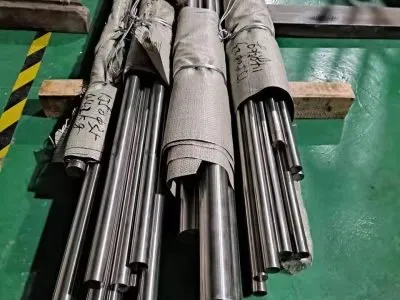
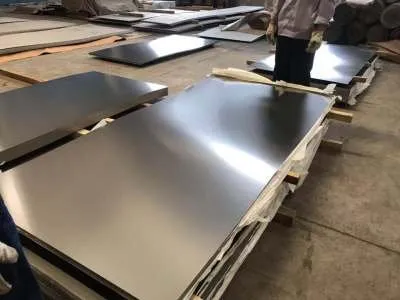
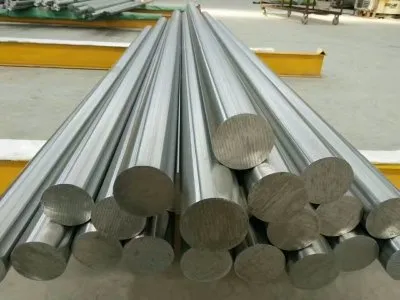
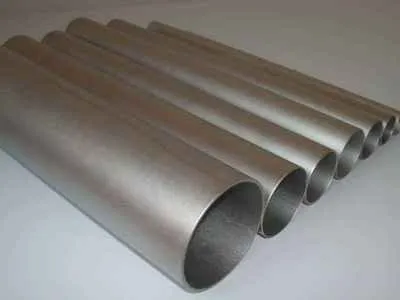
| Wrought | Ingot → forge/roll → heat treat | Discs, shafts, rings, sheet, fasteners |
| Cast (equiaxed) | Investment casting | Complex static shapes, nozzles, casings |
| Cast (DS/SX) | Directional/single-crystal casting | The hottest blade and vane stages |
Everything else — chemistry, cleanliness, heat treatment — is detail on top of these two axes.
The Property Story: What Nickel Buys
- A stable FCC matrix that stays ductile and non-magnetic from cryogenic to ~1,000 °C — no phase-transformation embrittlement on the way up.
- The γ′ phase (precipitation-hardened branch): coherent precipitates that block dislocation glide — the origin of the class’s strength.
- A self-healing chromia scale (via chromium) that resists oxidation and hot corrosion in the hot-gas world; aqueous corrosion is a separate branch served by Ni-Cr-Mo chemistry (see the corrosion-resistance guide).
- Low thermal conductivity by design — the same property that helps turbine cooling systems work, not a weakness.
Manufacturing Route: From Heat to Part
1. Melting — cleanliness is set here. Vacuum induction melting (VIM) protects reactive elements (Al, Ti, Nb) and limits gas and inclusion content; critical-rotating hardware adds vacuum arc remelting (VAR) or ESR for a tighter defect distribution — fatigue life is decided at this step, not at inspection.
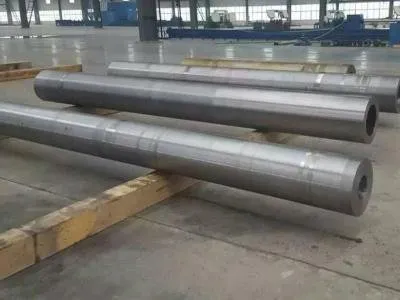
2. Wrought route: ingot → homogenization → conversion (forging/rolling) → part forging → heat treatment (solution + age) → machining. Each step refines the structure the chemistry promised.
3. Cast route: investment casting (wax, shell, dewax, pour) → solidification control (equiaxed, DS or single-crystal) → HIP to close porosity → heat treatment → NDT.
4. Heat treatment: solution treatment dissolves unwanted phases and homogenizes; aging grows the γ′ population to the right size; cooling rate and multiple aging steps set the final strength/ductility balance.
Application Zones
| Zone | Duty | Form Preferred | Example |
|---|---|---|---|
| Turbine blades / vanes | Hottest metal, creep-limited | DS / single-crystal cast | First-stage nozzle and blade |
| Discs / rotors | High stress, fatigue-limited | Wrought, γ′-hardened | Compressor and turbine discs |
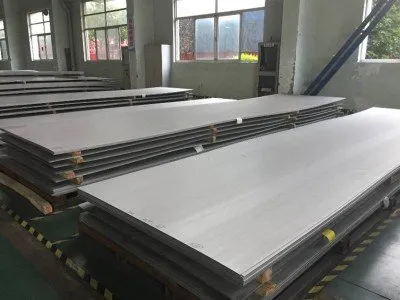
| Combustor / casing | Sheet, oxidation + thermal fatigue | Solid-solution sheet | Combustor liners, transition ducts |
| Fasteners / springs | 650–750 °C, relaxation | Wrought, γ′-hardened | Bolts, springs |
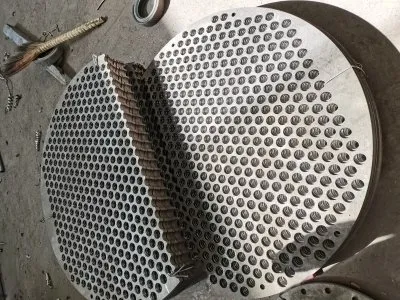
| Process equipment | Corrosive + hot | Solid-solution Ni-Cr-Mo | Heat exchangers, reactor internals |
The rule of thumb: the hotter and more creep-dominated the duty, the further the design moves from wrought to cast to single-crystal; the more fatigue-dominated, the more it stays wrought and clean.
FAQ
Q: What are the two main families of nickel-based superalloys? A: Solid-solution-strengthened grades (stable strength via Mo/W/Co) and precipitation-hardened grades (γ′ Ni₃(Al,Ti) precipitates) — the strongest class.
Q: Why are superalloys melted in vacuum? A: VIM protects reactive elements like Al, Ti and Nb from oxygen and nitrogen and controls inclusions; VAR/ESR further tighten cleanliness for fatigue-critical parts.
Q: Are turbine blades forged or cast? A: The hottest blade stages are cast — equiaxed, directionally solidified or single-crystal; discs and rotors are normally wrought forgings.
Q: What is the γ′ phase? A: Ni₃(Al,Ti) precipitates grown by aging that block dislocation motion — the source of precipitation-hardened superalloy strength.
Q: Are nickel-based superalloys corrosion-resistant? A: They resist hot-gas oxidation and hot corrosion via a chromium oxide scale; aqueous corrosion resistance is a separate Ni-Cr-Mo branch, not guaranteed by “superalloy” alone.
Q: What does heat treatment do to a superalloy? A: Solution treatment homogenizes and dissolves harmful phases; aging grows the γ′ population to the right size and sets the strength-ductility balance.
Need nickel-based superalloy supply in the right family and form? Contact Dura Alloy at nicholas.zhu1212@gmail.com for Inconel 600, Inconel 601, Nimonic 80A and Hastelloy C-276 — with mill certificates and heat traceability on request.