Strategies for Specialized Enterprises in High-Temperature Alloy Development and Innovation
High-temperature alloy innovation is not a laboratory abstraction — it is a production discipline. The enterprises that move the industry forward are the specialized mills and processors that translate metallurgical science into clean-melted, precisely processed, certifiable material, heat after heat. Their innovation plays out on four fronts: composition design, advanced manufacturing, computational modeling, and industrial collaboration — and increasingly on a fifth, sustainability.
This guide explains the development strategies that specialized high-temperature alloy enterprises actually use, the metallurgical levers behind them, and how the resulting material reaches the aerospace, power and automotive applications that demand it.
What “Specialized Enterprise” Innovation Means in Superalloys
For a specialized enterprise — as distinct from a research institute — innovation has to survive a production floor. It means:
- New or refined grades with better creep, oxidation or fatigue capability.
- Process innovation — cleaner melting, tighter forging and heat-treatment windows, more repeatable microstructure.
- Application engineering — adapting material and process to a customer’s exact operating envelope.
- Quality-system innovation — traceability, testing and certification that make the material usable in safety-critical supply chains.
The measure of success is not a paper property but a documented heat that performs identically in the field. Dura Alloy’s one-stop line — vacuum melting, vacuum electroslag, forging, heat treatment, rolling and machining — is the industrial expression of this model.
The Core Development Goal: Mechanical Performance and Microstructure
The target properties of superalloy development are:
- High-temperature strength and creep resistance — the load-bearing capability at 650–1,000 °C.
- Fatigue resistance — cyclic durability for rotating and cycled hardware.
- Oxidation and hot-corrosion resistance — survival of the gas-path environment.
- Microstructural stability — γ′ that resists coarsening, and freedom from embrittling phases over design life.
Note what is not on the list: thermal conductivity. Nickel-based alloys conduct heat poorly by design, and no development program targets it as a goal — cooling systems are engineered around the material’s low conductivity. The microstructure levers that do matter are γ′ fraction and size, grain structure, and inclusion cleanliness — all set by composition and process.
Strategy 1: Optimize Alloy Composition
Composition design is the oldest and still the most powerful strategy. The element roles are well mapped:
| Element | Role in the Alloy |
|---|---|
| Nickel | The austenitic matrix — the foundation |
| Chromium | Oxidation and hot-corrosion resistance |
| Molybdenum, tungsten | Major solid-solution strengthens — large atoms that harden the matrix (not trace elements) |
| Cobalt | Lowers stacking-fault energy, aids creep resistance |
| Aluminum, titanium, niobium | Form the γ′ (Ni₃(Al,Ti)) strengthening precipitates |
| Rhenium, ruthenium | Slow diffusion and stabilize structure in single-crystal grades |
| Boron, zirconium, carbon | True trace additions — strengthen grain boundaries |
Modern composition design uses thermodynamic calculation (CALPHAD) to place solute levels inside the stable phase field — maximizing γ′ fraction and solid-solution hardening while avoiding brittle topologically close-packed (TCP) phases over the intended life. An example of the resulting grades: Inconel 617 (N06617) balances chromium, molybdenum and cobalt for creep and oxidation resistance to ~1,000 °C.
Strategy 2: Adopt Advanced Manufacturing Processes
Composition sets the ceiling; process decides how much of it is realized:
- Clean melting — vacuum induction melting (VIM) plus electro-slag or vacuum arc remelting (ESR/VAR) removes gases, sulfur and inclusions, the prerequisite for fatigue life.
- Powder metallurgy (PM) with HIP — atomized powder consolidated by hot isostatic pressing gives fine, uniform grain and eliminates the segregation limits of large cast ingots; the route for the toughest disc alloys.
- Additive manufacturing — laser powder-bed fusion and DED produce cooled geometries and repair parts; process control replaces castability constraints.
- Controlled solidification — directionally solidified and single-crystal casting eliminate grain boundaries for blades.
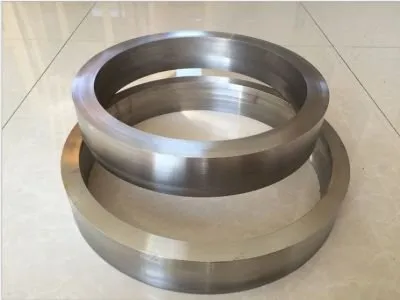
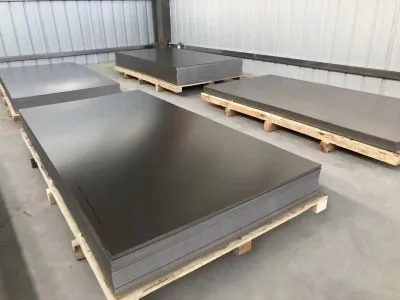
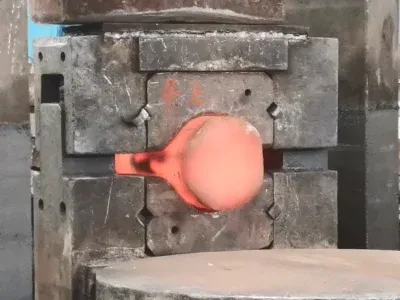
- Precision wrought processing — forging and rolling windows, set against the γ′ solvus, deliver the specified grain structure in strip, bar and plate, while processes like cold drawing produce high-strength wire.
The theme is control: every step is chosen to deliver a repeatable microstructure rather than a lucky one.
Strategy 3: Apply Computational Modeling and Simulation
The trial-and-error era is ending. Development now runs on models:
- CALPHAD — predicts phase stability, γ′ fraction and TCP risk before melting.
- DFT (first-principles) calculations — quantify solute–dislocation interactions and misfit at the atomic level.
- Integrated computational materials engineering (ICME) — couples melting, forging and heat-treatment simulation to predict final properties.
- Machine learning — mines alloy and process databases to propose candidate compositions.
Simulation does not replace testing — it shrinks the number of heats and cycles that must be physically validated, cutting development time and cost while preserving the evidence base certification requires.
Strategy 4: Carry Out Cross-Field Industrial Collaboration
No specialized enterprise innovates alone. The productive collaborations are:
- Mill ↔ aerospace/energy OEMs — OEM operating envelopes set the target; mills translate them into chemistry and process windows.
- Enterprise ↔ research institutions — universities contribute mechanisms and models; enterprises contribute production reality and data.
- Processors ↔ fabricators — forging, heat treatment and welding specialists align windows across the supply chain so that material properties survive fabrication.
- Standards participation — contributing to ASTM, GB/T and AMS revisions lets an enterprise shape the rules it will be measured against.
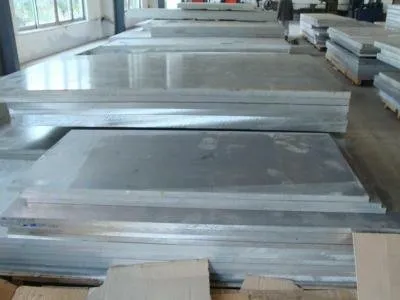
Collaboration also extends across materials: a superalloy producer’s aerospace customers may pair high-temperature alloys with aviation aluminum alloys in the same engine — and the supplier that serves both strengthens its position in the program.
Sustainability: Reducing Rare Elements and Waste
The sustainability agenda is now a development constraint:
- Rare-element reduction — rhenium and ruthenium are expensive and supply-constrained; research focuses on compositions that achieve single-crystal creep life with less of them, and on recycling the elements from revert.
- Process efficiency — energy-intensive melting and heat treatment are being made more efficient; melt-rate control and furnace scheduling reduce both energy and reject rates.
- Life extension — alloys that last longer reduce replacement demand; the most sustainable material is the one that does not need to be made twice.
- Traceability-driven quality — lower defect rates mean less scrapped material and fewer re-orders.
For structural applications beyond the hot section, cost-effective alternatives like alloy structural steel and precipitation-hardened stainless grades carry the same quality discipline at lower environmental and economic cost — matching the material to the duty is itself a sustainability strategy.
Wide Industrial Application Scenarios
- Aerospace — engine hot sections above 1,000 °C, and supporting hardware where weight and strength are balanced; turbine discs, blades, casings and fasteners.
- Power generation — gas turbine components and nuclear hardware requiring documented, traceable material.
- Automotive — turbocharger and exhaust hardware in high-performance engines.
- Oil and gas, chemical — downhole tools, valves and corrosion-critical components where high-temperature alloys meet sour service.
Each application pulls the development agenda in a different direction — and each is where a specialized enterprise proves whether its innovation strategy works.
FAQ
Q: What is the main goal of high-temperature alloy development? A: To deliver repeatable mechanical performance at 650–1,000 °C — strength, creep resistance, fatigue life and oxidation/corrosion resistance — through controlled composition and microstructure.
Q: What elements strengthen superalloys? A: Chromium (oxidation), molybdenum and tungsten (major solid-solution strengthens), cobalt (stacking-fault energy), aluminum/titanium/niobium (γ′ precipitates), and rhenium/ruthenium in single crystals. Boron, zirconium and carbon are trace grain-boundary strengthens.
Q: Why is powder metallurgy used for superalloys? A: PM with HIP gives fine, uniform grain and eliminates cast-ingot segregation — the route for the toughest turbine disc alloys — while maintaining cleanliness through the melt-to-powder chain.
Q: How does computational modeling help alloy development? A: CALPHAD, DFT and ICME predict phase stability, strength mechanisms and final properties before physical heats, shrinking the trial-and-error loop and the cost of development.
Q: Why are rhenium and ruthenium being reduced? A: They are expensive, supply-constrained and heavy; new compositions target equivalent single-crystal creep life with less refractory content, plus recycling from revert.
Q: What does a specialized enterprise contribute that a research lab cannot? A: Repeatable production: clean melting, controlled processing, testing and full traceability that turn a promising composition into certifiable material for safety-critical supply chains.
Source the Material Behind the Innovation
Dura Alloy’s one-stop line — vacuum melting, vacuum electroslag, forging, heat treatment, rolling and machining — supplies the high-temperature alloy products that specialized enterprises and their customers rely on, with guaranteed composition, non-destructive testing and full heat traceability. Share your grade, form and specification for a confirmed quote.
nicholas.zhu1212@gmail.com · WhatsApp 8618921275456 · Request a quote