Interpretation of Policies and Regulations in the High Temperature Alloy Industry
High-temperature alloys are global products governed by a global web of rules. A superalloy plate made under GB/T in China, shipped to a European gas-turbine builder under REACH, and qualified to AMS or ASME for aerospace or pressure service must simultaneously satisfy material standards, quality systems, application codes, chemical regulations and trade rules. For suppliers and buyers alike, “compliance” is not one document — it is a stack of documents, each answering a different regulator’s question.
This guide maps the regulatory landscape for the high-temperature alloy industry in practical terms: which standards govern the material itself, which systems certify the producer, which codes apply to end use, and which environmental and trade rules affect international transactions.
Why Regulations Matter in This Industry
Three features of high-temperature alloys make regulation unusually dense:
- Safety-critical end use — the same alloy family serves jet engines, gas turbines, nuclear hardware and pressure vessels; failure is not a warranty issue but a safety issue.
- Global supply chains — raw materials and finished products cross borders, so multiple national frameworks apply to one order.
- Heavy chemistry — nickel, cobalt, chromium and refractory elements attract environmental, chemical and trade rules that ordinary steels do not face.
For a buyer, the practical consequence is simple: the certificate stack is part of the product. Material without documentation is not cheaper — it is non-compliant.
The Regulatory Landscape at a Glance
| Regulatory Layer | Typical Frameworks | What It Governs |
|---|---|---|
| Material & performance standards | ASTM, GB/T, DIN, JIS, AMS | Grades, chemistry, mechanical properties, testing and delivery states |
| Quality management systems | ISO 9001, AS9100, NADCAP | Producer competence, process control, traceability |
| Application codes | ASME Boiler & Pressure Vessel Code, RCC-M | Design and materials for pressure and nuclear service |
| Chemical & environmental rules | EU REACH, RoHS, emissions and waste rules | Substance restrictions, environmental footprint, carbon reporting |
| Trade rules | Tariffs, trade remedies (e.g., anti-dumping), export controls | Market access, duties, end-use control |
| Supply-chain rules | Conflict-minerals due diligence, supplier declarations | Sourcing ethics and traceability |
Each layer touches a different part of the business — but for a single material order, they meet at the mill test certificate and the supplier’s quality documentation.
Material and Performance Standards
The technical backbone of the industry is the set of material standards that define grades, composition windows and testing:
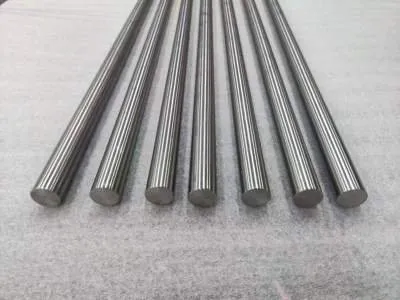
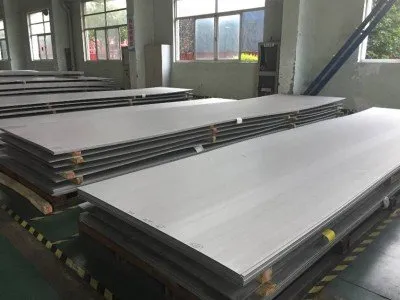
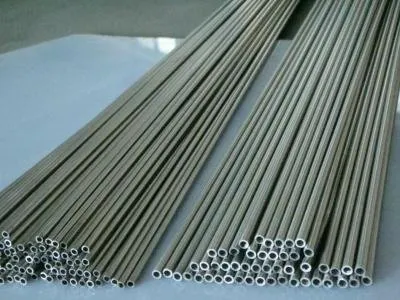
- GB/T standards — the Chinese framework: GB/T 14992 defines superalloy grades (including the GH-series), with product standards for plate, bar, tube and wire.
- ASTM standards — the international benchmark: product specifications such as ASTM B168 (plate/sheet/strip), B167 (seamless pipe/tube), B443/B444 (Inconel 625), B670 (Inconel 718) and B564 (forgings).
- AMS specifications — the aerospace layer, adding tighter composition, cleanliness and testing requirements than commercial grades.
- DIN and JIS — German and Japanese frameworks, relevant for European and Asian supply.
Performance criteria in these standards center on chemistry, tensile and yield strength, hardness, creep or rupture behavior where relevant, and non-destructive testing requirements — not on thermal conductivity, which is a design property rather than a qualification criterion. Conformity is demonstrated by testing to the named standard and recorded on the certificate.
Quality and Certification Systems
Standards qualify the product; quality systems qualify the producer:
- ISO 9001 — the baseline quality management system for alloy producers and traders.
- AS9100 — the aerospace extension of ISO 9001, adding product safety, configuration management and traceability requirements; increasingly a gate for aero supply chains.
- NADCAP — special-process accreditation (melting, forging, heat treatment, NDT) used by aerospace primes to approve sub-tier suppliers.
- In-house controls — PMI (positive material identification) on every delivered piece, heat traceability from melt to shipment, and documented process records.
When a supplier claims “aerospace-grade,” the meaningful proof is an AS9100 or NADCAP scope covering the actual process — not the word itself.
Application-Specific Codes
Beyond general standards, end-use codes add their own requirements:
- Pressure equipment — ASME Boiler & Pressure Vessel Code (Section VIII) and European PED require materials to be qualified and traceable for pressure service.
- Nuclear — ASME Section III (with the associated certification regime) and RCC-M govern nuclear-grade material, with tighter trace-element limits and documentation.
- Aerospace parts — customer engineering specifications layered on AMS grades control cleanliness, melting route and mechanical verification.
This is why “nuclear-grade” or “pressure-grade” is a documented condition, not a material brand — the code defines what the documentation must prove.
Chemical and Environmental Regulations
Chemistry-based rules directly affect nickel, cobalt and chromium products:
- EU REACH — substances such as nickel and cobalt compounds are registered and restricted under REACH; suppliers and importers must hold or reference the appropriate registrations and provide declarations in the supply chain.
- RoHS — relevant where alloys enter electronic products; restricted heavy-metal limits apply.
- Emissions, waste and energy rules — melting and processing facilities face air-emission limits, hazardous-waste management requirements and, increasingly, carbon reporting (for example, carbon border adjustment regimes for imports into the EU).
- Conflict-minerals due diligence — internationally recognized guidance expects smelters and suppliers to demonstrate responsible sourcing of tin, tantalum, tungsten and gold (3TG).
Environmental compliance is both a legal requirement and a market-access factor: many industrial buyers now require environmental declarations as a routine part of supplier approval.
Trade and Supply-Chain Rules
International alloy trade operates inside trade frameworks that change over time:
- Tariffs and trade remedies — duties and anti-dumping measures periodically apply to specific stainless and alloy product categories in major markets; the applicable rate depends on product code, origin and current measures.
- Export controls — aerospace and military-relevant materials can fall under export-control regimes; buyers should confirm end-use and destination restrictions for controlled grades.
- Origin and customs documentation — certificates of origin, import licenses and customs classification are part of routine cross-border supply.
These rules are product-, origin- and time-specific — the correct answer for a given order is always “check the current tariff schedule and control list,” not a blanket rule.
How Buyers Should Verify Compliance
A practical checklist when sourcing high-temperature alloys:
- Mill test certificate — stating the governing standard, chemistry, mechanical test results and melting route.
- Producer quality certificates — ISO 9001 and, where relevant, AS9100/NADCAP scope.
- Chemical declarations — REACH and RoHS conformity statements where the destination requires them.
- PMI verification — documented identification of every delivered piece.
- Traceability — heat number and processing records from melt to delivery.
- Origin and trade documentation — certificates of origin and customs classification for cross-border shipments.
When in doubt, ask the supplier to state the standard and the certificate for every claim — and confirm current regulatory details with the applicable authority or legal counsel, since specific requirements change over time.
FAQ
Q: What standards govern high-temperature alloys? A: Grade and product standards — GB/T (GH-series), ASTM (B168, B167, B443/B444, B670, B564 and others), AMS for aerospace, plus DIN and JIS — define chemistry, properties and testing.
Q: What is the difference between ASTM and GB/T standards? A: They are parallel national frameworks: ASTM is the international benchmark used worldwide; GB/T is the Chinese framework covering the same product forms. Both define grades, composition and testing; most Chinese mills can supply to either.
Q: What is AS9100? A: The aerospace quality management standard built on ISO 9001, adding product safety, configuration management and traceability requirements — a common gate for aero supply chains.
Q: Does REACH apply to nickel alloys? A: Yes — nickel and cobalt substances are subject to EU REACH registration and restriction requirements, and importers need the appropriate compliance declarations in their supply chain.
Q: What documents prove an alloy is compliant? A: The mill test certificate with the governing standard, producer quality certificates (ISO 9001 / AS9100), chemical declarations (REACH/RoHS), PMI records and origin documentation.
Q: How do export controls affect alloy buying? A: Aerospace and military-relevant grades can fall under export-control regimes; buyers should confirm end-use and destination restrictions before ordering controlled grades.
Source Documented High-Temperature Alloys
Dura Alloy supplies high-temperature alloys, Inconel and Hastelloy to national and international standards (including GB/T and ASTM), with mill test certificates, non-destructive testing and full heat traceability from its one-stop vacuum-melting and processing line. Share your standard, grade and destination for a confirmed quote.
nicholas.zhu1212@gmail.com · WhatsApp 8618921275456 · Request a quote