Titanium Alloy Laser Cladding Technology and Applications
Laser cladding deposits a wear-, corrosion- or temperature-resistant coating onto a titanium substrate with a high-energy laser beam. However, titanium makes this process harder than it looks. Molten titanium is highly reactive — it absorbs oxygen and nitrogen in seconds, which embrittles the surface. Therefore, shielding is non-negotiable, and every other process decision follows from that fact. This guide gives the process card: how it works, the titanium-specific challenges, material selection, defects, and the applications that are honest to claim.
How the Process Works — Five Steps
- Prepare the substrate — clean and lightly profile the titanium surface; contamination control starts here.
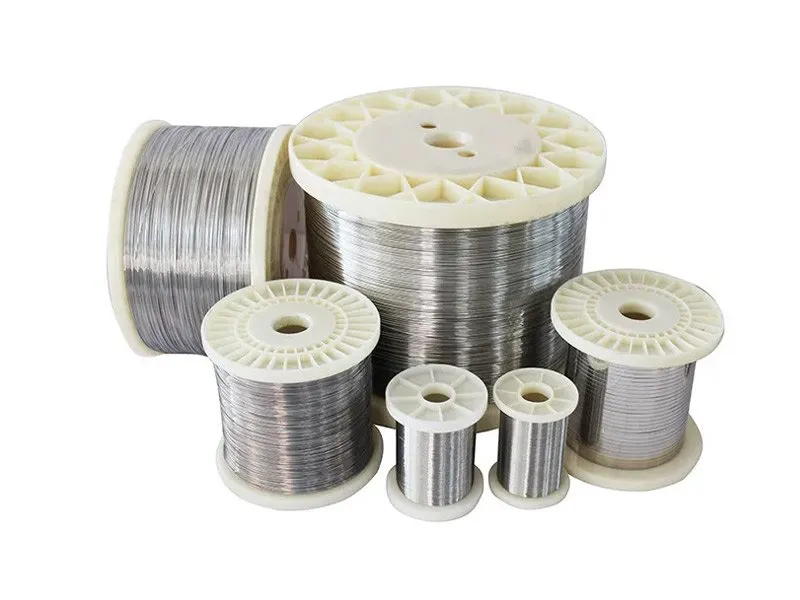
- Feed the coating material — powder or wire, chosen for the target property, metered into the beam.
- Melt and deposit — the laser melts coating material into a molten pool that scans across the surface; overlap builds a continuous layer.
- Solidify rapidly — the small pool cools fast, forming a dense coating bonded to the substrate.
- Finish and inspect — machining, surface finishing, then NDT and microstructure checks.
The Titanium-Specific Challenge Box
| Challenge | Why It Matters | The Countermeasure |
|---|---|---|
| Reactivity (O, N pick-up) | Molten titanium absorbs oxygen/nitrogen; the result is hard brittle α-case embrittlement | Inert-gas shielding (argon) around the pool; controlled atmosphere where needed |
| Heat-affected zone | The substrate changes below the coating, not just at the surface | Low heat input, fast scanning, parameter windows |
| Dilution | Substrate metal mixes into the coating | Controlled dilution to keep coating chemistry intact |
| Residual stress | CTE mismatch between coating and titanium substrate | Parameter control and post-clad stress relief |
| Defects | Porosity, cracking, unmelted particles | Clean feed, shielding, process monitoring |
“Improves the surface without altering the bulk” is true only as a relative statement: the bulk is preserved, but a HAZ, dilution and residual stress exist and must be managed — never assumed away.
Coating Material Selection
| Coating Family | Duty | Typical Use on Titanium |
|---|---|---|
| Cobalt-based (Stellite-class) | Wear, sliding and fretting resistance | Compressor and actuator wear surfaces |
| Nickel-based | Corrosion and moderate wear | Chemical and marine hardware |
| Cermet / carbide-rich | Abrasive wear | Tooling and high-friction contacts |
| Refractory / corrosion grades | Aggressive media | Selected process components |
Selection is by duty, dilution control and CTE compatibility — not by “hardest is best.”
Parameter and Defect Control
- Key parameters — laser power, scan speed, powder feed rate, beam spot and overlap ratio. Each interacts with the next; therefore, process windows are developed per material pair, not copied from datasheets.
- Common defects — porosity (shielding or feed issues), cracks (CTE or stress), unmelted particles (power/feed mismatch).
- Verification — metallography of the coating cross-section, hardness mapping, dilution measurement, and NDT (penetrant, ultrasonic) for critical parts.
Applications — With Honest Scope
- Aerospace — repair of worn titanium components (blades, blisks, landing-gear hardware): repair is the biggest driver, because it restores dimension at a fraction of replacement cost.
- Automotive — wear protection on components exposed to friction and heat.
- Medical — surgical instruments and non-implant hardware gain wear- and corrosion-resistant coatings. Implant biocompatibility is a different story: load-bearing titanium implants rely on native passivation, anodizing or hydroxyapatite surfaces; a metallic cladding layer on an implant carries galvanic and biocompatibility questions and is not the established route.
FAQ
Q: What is titanium laser cladding? A: A surface-engineering process that melts coating powder or wire onto a titanium substrate with a laser, building a bonded wear- or corrosion-resistant layer.
Q: Why is shielding essential? A: Molten titanium absorbs oxygen and nitrogen almost instantly, forming brittle α-case — so inert argon shielding is non-negotiable.
Q: Does cladding change the bulk material? A: Bulk properties are preserved in relative terms, but a heat-affected zone, dilution and residual stress exist and are managed by parameters.
Q: Which coating is best for titanium? A: Cobalt-based (Stellite-class) for wear, nickel-based for corrosion, cermets for abrasion — selected by duty, dilution and CTE compatibility.
Q: What are the common cladding defects? A: Porosity, cracking and unmelted particles — controlled by shielding, parameter windows and clean feed.
Q: Can laser cladding make implants biocompatible? A: Not as an established route. Titanium implants use native passivation, anodizing or HA surfaces; cladding serves wear and repair duty on instruments and hardware.
Need titanium alloy substrate and surface-engineering supply with certified mill identity? Contact Dura Alloy at nicholas.zhu1212@gmail.com for TA1, TA3, GR9 and Zirconium Rod — with mill certificates and heat traceability on request.