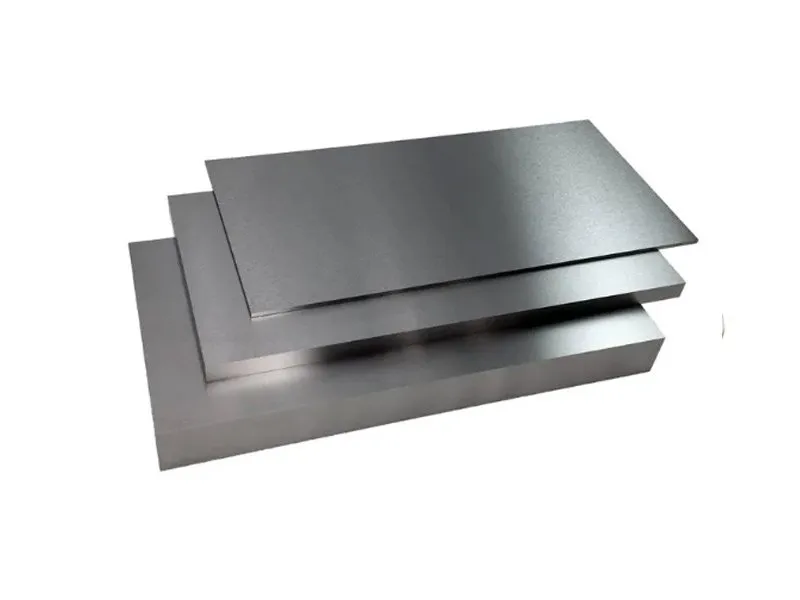
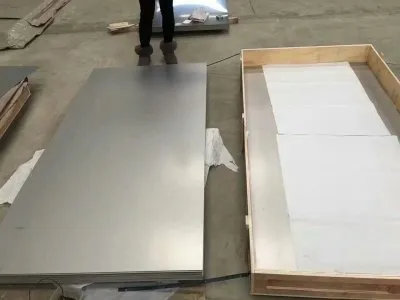
Titanium-Zirconium Alloy Properties and Applications
Titanium and zirconium share one crucial habit: both self-passivate, forming a protective oxide film that shrugs off seawater, acids and bodily fluids. Mix them and you get a solid-solution alloy that keeps titanium’s lightness while zirconium adds strength and corrosion depth. This guide gives the six properties that matter, the real grades on the market, and the claims that need correcting.
The Six-Property Card
| Property | The Accurate Reading |
|---|---|
| Strength | Zr dissolves in the Ti lattice (solid solution) and raises strength and creep resistance |
| Density | Stays titanium-low — the lightweight argument survives |
| Corrosion resistance | Passive-film chemistry inherited from both metals; strong in seawater and acid media |
| Biocompatibility | Real and proven — used in low-modulus implant grades |
| Neutron economy | Zirconium’s low neutron-absorption cross-section is the nuclear enabler |
| Tailorability | Real but bounded — what is sold are specific grades, not infinite blends |
The Real Grades
| Grade System | Family | Duty |
|---|---|---|
| Ti-13Zr-13Nb | Ti-Zr-Nb medical | Low-modulus implants closer to bone stiffness |
| Zircaloy (Zr-rich) | Zr-Sn/Fe/Cr | Nuclear fuel cladding and reactor hardware |
| Industrial Zr (e.g., Zr-702/705) | Unalloyed Zr | Chemical processing, reactive media |
| Ti-Zr binary variants | Niche aerospace / fasteners | Corrosion and heat-resistant hardware |
The Three-Scene Matrix
| Scene | Real Job | Honest Claim |
|---|---|---|
| Nuclear | Fuel cladding, reactor internals | Zr’s low neutron absorption + structural stability under radiation — the genuine enabler |
| Medical | Implants, instruments | Ti-Zr-Nb grades combine biocompatibility with a modulus closer to bone |
| Chemical / marine | Piping, pumps, propeller systems | Passive-film corrosion resistance in seawater and aggressive acids |
The Correction Box
| Claim in Circulation | The Accurate Statement |
|---|---|
| “Primary aerospace structural alloy” | Overclaim — mainstream airframe structure is Ti-6Al-4V territory; Ti-Zr plays niche heat/corrosion hardware |
| “Low thermal expansion for precision optics” | Loose — Ti-Zr’s CTE is moderate; ultra-low-expansion precision belongs to Fe-Ni Invar grades, not Ti-Zr |
| “Unlimited composition tailoring” | Misleading — what is bought is a certified grade, chosen by duty, not a bespoke blend |
FAQ
Q: What makes titanium-zirconium alloys special? A: Solid-solution strengthening from Zr plus passive-film corrosion resistance — lightness and corrosion in one package.
Q: Why is zirconium used in nuclear reactors? A: Its low neutron-absorption cross-section and structural stability under radiation — the genuine nuclear enabler.
Q: What implant grades exist? A: Ti-Zr-Nb grades such as Ti-13Zr-13Nb offer biocompatibility with a modulus closer to bone than Ti-6Al-4V.
Q: Is Ti-Zr a major aerospace structural alloy? A: No — mainstream airframe structure is Ti-6Al-4V; Ti-Zr serves niche heat and corrosion hardware.
Q: Is the composition infinitely tailorable? A: No — buyers specify certified grades (medical, nuclear, industrial), not bespoke blends.
Q: Where does Ti-Zr shine most? A: Nuclear cladding, medical implants and chemical/marine hardware — where corrosion and stability decide life.
Need corrosion- and heat-grade alloys for demanding service with certified mill history? Contact Dura Alloy at nicholas.zhu1212@gmail.com for 601 Sheet (Inconel), Monel K-500, 4J32 Super Invar and 310S — with mill certificates and heat traceability on request.