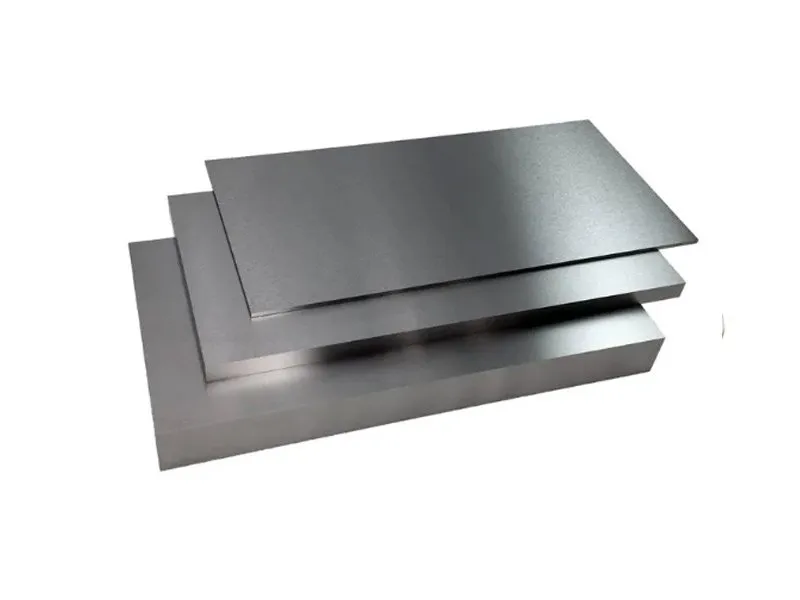
Nickel-Based High-Temperature Alloy Applications and Properties
Nickel-based superalloys are the workhorse of the hottest machinery on Earth. However, they are not one material — they are a family mapped by service zone. Each zone (temperature × stress × environment) selects a different branch of the family: wrought discs for cyclic duty, cast or single-crystal blades for creep, Ni-Cr-Mo grades for corrosion, and long-life grades for casing. This guide draws the map and corrects the physics errors that keep appearing in summaries.
The Service-Zone Map
| Zone | Duty | Component | Grade Branch | Limiting Property |
|---|---|---|---|---|
| 1. Cyclic, moderate heat | Stress + start-stop cycles | Turbine discs, shafts, fasteners | Wrought, γ′/γ″ (718-class), PM grades | Low-cycle fatigue, strength |
| 2. Extreme heat, sustained load | Creep-dominated | Blades, vanes | Cast, DS, single-crystal + cooling + coatings | Creep, oxidation |
| 3. Hot corrosion / chemistry | Aggressive media | Chemical reactors, heat exchangers, piping | Ni-Cr-Mo (C-276, 625-class) | Aqueous corrosion, stress corrosion |
| 4. Long-life, moderate duty | Stable hot service | Casings, combustion chambers, furnace hardware | Solid-solution (X, 617, 600-class) | Stability, fabricability |
The map explains the design: blades are cast because creep duty wants columnar/SX structures; discs are forged because cyclic duty wants wrought strength and cleanliness. They are different alloys, made differently, for different reasons.
The Property Envelope
- Temperature range — sustained capability spans roughly 700 to 1,100 °C by grade, with alumina-forming single crystals and coatings extending the hottest rows further. “1,200 °C” belongs to the hottest coated metal or to the gas path, not to bare alloy service.
- Thermal stability — the FCC matrix plus γ′ precipitation resists creep: diffusion slows in the ordered precipitate, which is why strength survives at high temperature.
- Corrosion resistance — chromium forms the self-healing chromia scale that stays protective at temperature; Ni-Cr-Mo branches extend the family into chemical service.
Three Corrections That Belong in Every Honest Summary
| Claim in Circulation | The Accurate Statement |
|---|---|
| “Nickel alloys are lightweight and improve fuel efficiency” | Wrong reason. Nickel superalloys are dense (8.0–8.9 g/cm³, heavier than steel’s ~7.85). Aero efficiency rises because higher turbine-inlet temperature raises thermal efficiency — enabled by the alloys’ temperature capability, not by weight |
| “Nickel alloys have high thermal conductivity, so turbines run without thermal stress” | Reversed. Nickel alloys conduct heat poorly (about 8–25 W/m·K). Thermal stress is not eliminated — it is managed by cooling design, geometry and material selection |
| “Nickel alloys resist 1,200 °C without degradation” | Nuance. Sustained capability is ~700–1,100 °C by grade; the hottest rows need cooling and coatings, and “metal temperature” differs from “gas temperature” |
Where the Family Earns Its Keep
- Aerospace — turbine blades, discs and combustion hardware: the higher the turbine-inlet temperature, the more efficient the engine; superalloys set that ceiling.
- Power generation — gas and steam turbine hardware in nuclear and fossil plants: creep and hot-corrosion life drive availability.
- Chemical and petrochemical — reactors, heat exchangers and piping handling hot corrosive media: leak risk and replacement cost justify the premium.
- Oil and gas — downhole tools and drilling equipment under high temperature and pressure, including deep-sea service.
How the Family Is Made Reliable
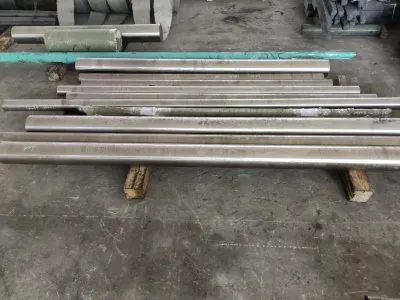
Casting, forging and heat treatment control composition and microstructure. The discipline matters: small chemistry drifts or wrong heat-treatment windows change creep, fatigue or corrosion behavior. Consequently, aerospace and nuclear supply chains run certification, traceability and NDT as part of the product, not as an afterthought.
FAQ
Q: What temperature can nickel superalloys withstand? A: Sustained capability is roughly 700–1,100 °C by grade; the hottest rows add cooling and coatings, and metal temperature differs from gas temperature.
Q: Why are blades cast while discs are forged? A: Blades are creep-duty and want cast, DS or SX structures; discs are cyclic-duty and want wrought strength and cleanliness.
Q: Are nickel superalloys lightweight? A: No — they are dense (8.0–8.9 g/cm³). Aero efficiency improves because hotter engines are more efficient, enabled by temperature capability.
Q: Do nickel superalloys have high thermal conductivity? A: No — they conduct heat poorly (about 8–25 W/m·K); thermal stress is managed by design, not eliminated.
Q: What gives nickel superalloys corrosion resistance? A: Chromium forms a self-healing chromia scale; Ni-Cr-Mo branches extend the family into chemical service.
Q: Where are nickel superalloys used? A: Aerospace blades and discs, gas/steam turbine hardware, chemical reactors and heat exchangers, and oil-and-gas downhole tools.
Need nickel superalloy supply matched to your service zone? Contact Dura Alloy at nicholas.zhu1212@gmail.com for Inconel 625, Inconel X-750, Hastelloy C-276 and Inconel 617 — with mill certificates and heat traceability on request.