Nickel-Based Superalloy: Properties, Applications, and Manufacturing Processes
The nickel-based superalloy is the material that makes a jet engine’s hottest section possible. Its secret is a microstructure: γ′ precipitates that give strength at temperatures approaching 85% of the melting point. However, that microstructure is only as good as the manufacturing route that builds it. Therefore, this guide covers the mechanism first, then the route decision matrix — because the route decides the duty.
The Mechanism Box: Where the Strength Comes From
- The pair — a γ (FCC) matrix strengthened by coherent γ′ (Ni₃(Al,Ti)) precipitates.
- The effect — precipitates block dislocation motion. At high temperature, dislocations either cut through γ′ or bow around it (Orowan bypass), depending on precipitate size and temperature. Therefore, strength survives where conventional alloys soften.
- The numbers — creep-capable to ~85% of melting point, far beyond ordinary engineering materials.
- The second layer — chromium forms the self-healing scale that gives oxidation and corrosion resistance at temperature.
The Melting Chain: Two Melts, Two Jobs
| Stage | Job | Why It Matters |
|---|---|---|
| VIM (vacuum induction melting) | Set the chemistry; protect reactive Al, Ti, Nb | Composition is decided here; one clean primary melt |
| VAR / ESR remelting | Clean the structure; control segregation | Impurity and macro-segregation control for aerospace-grade reliability |
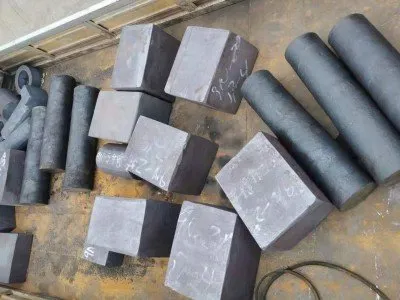
| Hot working (forging/rolling) | Break the cast structure | Sets wrought grain and mechanical properties for discs and hardware |
Heat treatment then does the final tuning: solution treatment resets the matrix, and age hardening grows the intended γ′ population at the designed size.
The Route Decision Matrix
| Route | Structure It Produces | Duty It Serves | The Trade |
|---|---|---|---|
| Conventional casting | Equiaxed grains | Vanes, complex cast hardware | Cheap, but grain boundaries limit the hottest rows |
| Directional solidification (DS) | Columnar grains, no transverse boundaries | High-temperature vanes and blades | Removes the weak boundaries perpendicular to stress |
| Single crystal (SX) | No grain boundaries at all | The hottest blades | Highest capability; orientation-controlled, costly, crack-sensitive |
| Powder metallurgy (PM) | Fine, uniform grain | Cyclic-duty discs | Strength and cleanliness; creep-limited by fine grain |
| Additive manufacturing (SLM/EBM) | Layer-built, near-net | Complex geometry, reduced waste and lead time | Needs per-process qualification, especially for flight hardware |
The rule: blades go hot and creep-dominated (cast/DS/SX); discs go cyclic and strength-dominated (wrought/PM). The route follows the zone, not the fashion.
Where the Family Is Used
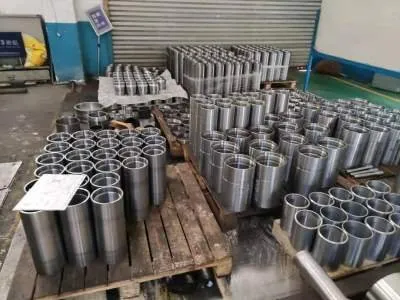
- Aerospace — turbine blades, vanes and combustor liners above 1,000 °C; the engine’s efficiency ceiling is set here.
- Power generation — land-based gas turbines push operating temperature and efficiency with the same hardware logic.
- Oil and gas — downhole tools, valve components and subsea connectors under high pressure, temperature and corrosive media.
- Chemical processing — heat exchangers, reactors and piping where hot corrosive attack is continuous.
The Research Frontier
- Refractory additions — rhenium and ruthenium slow diffusion, lifting high-temperature strength; they are the signature of advanced single crystals.
- Density reduction — new compositions target lower density without sacrificing capability, which directly improves rotating hardware.
- Computational design — modeling and advanced characterization shorten the path from composition to qualified alloy.
FAQ
Q: What strengthens nickel superalloys at high temperature? A: Coherent γ′ (Ni₃(Al,Ti)) precipitates in the γ matrix — they block dislocation motion, either by cutting or Orowan bypass, so strength survives to ~85% of the melting point.
Q: Why are two melting steps used? A: VIM sets the chemistry while protecting reactive elements; VAR/ESR then cleans the structure and controls segregation.
Q: Cast, DS or single crystal? A: Cast equiaxed for cheap complex hardware; DS removes transverse boundaries; SX removes all boundaries for the hottest blades. The route follows the duty.
Q: Why are PM discs fine-grained but not used for blades? A: PM gives uniform fine grains for strength and cleanliness in cyclic duty; fine grains creep worse, so hot blades stay cast/DS/SX.
Q: What do rhenium and ruthenium do? A: They slow diffusion, which raises high-temperature strength — the signature of advanced single-crystal superalloys.
Q: Where are nickel superalloys used? A: Aircraft and gas-turbine hot sections, oil-and-gas downhole and subsea hardware, and chemical processing equipment.
Need nickel superalloy supply across the route matrix — wrought, PM or cast-ready billet? Contact Dura Alloy at nicholas.zhu1212@gmail.com for GH4738, Nimonic 80A, GH3536 and GH901 — with mill certificates and heat traceability on request.