Optimized High-Temperature Alloy Manufacturing Process: A Comprehensive Guide
High-temperature alloy performance is not driven only by chemical formulation. Even with correct alloy chemistry, poor process control can create segregation, grain boundary defects, residual stress, incipient melting and unstable gamma-prime precipitates that ruin creep, fatigue and oxidation resistance. Optimized manufacturing establishes tightly controlled thermal, atmospheric and deformation parameters across the full production workflow, which is mandatory for aerospace turbine discs, combustor liners, power-generation hot-gas hardware and petrochemical reformer components.
Reference Grades for Process Benchmarking
- Waspaloy: Gamma-prime strengthened nickel superalloy for turbine discs and shafts, requiring strict three-stage aging after solution treatment to balance creep and fatigue performance.
- Udimet 720: Premium powder-metallurgy nickel superalloy for high-pressure turbine discs, produced via atomization, HIP consolidation and isothermal forging to minimize segregation and refine grain structure.
- Haynes 230: Solid-solution strengthened nickel-tungsten alloy for combustors and furnace hardware; optimized around controlled grain growth and carbide stability rather than precipitation hardening.
- Hastelloy X: Nickel-chromium-molybdenum-iron alloy widely used for gas turbine combustor cans, designed for weldability and thermal-cycle oxidation resistance with simplified solution annealing.
Full Optimized Manufacturing Workflow
1. Raw Material Batching & Composition Verification
Optimization starts before melting. Each elemental feedstock (nickel, cobalt, chromium, molybdenum, tungsten, aluminium, titanium, boron, zirconium) is sampled and analysed. Trace elements including sulphur, phosphorus and oxygen are capped at ultra-low limits, because minor sulphur segregation degrades hot ductility and accelerates grain-boundary oxidation. Batching follows master-alloy pre-blending rules to reduce melting volatility.
2. Vacuum Melting & Remelting Sequence
Simple air induction or EAF melting is unsuitable for premium high-temperature alloys. The standard optimized route is VIM (Vacuum Induction Melting) followed by VAR (Vacuum Arc Remelting) or ESR (Electro-Slag Remelting).
- VIM homogenizes bulk chemistry and removes volatile impurities such as oxygen, nitrogen and hydrogen.
- Secondary remelting refines ingot solidification structure, reduces macro-segregation and eliminates shrinkage cavities. For powder grades such as Udimet 720, VIM ingots are atomized under inert argon atmosphere to produce spherical, low-oxygen powder.
3. Homogenization Heat Treatment
As-cast ingots contain dendritic segregation. A long high-temperature homogenization hold dissolves refractory element clusters and evens gamma/gamma-prime distribution. Temperature is held just below the alloy’s solvus temperature to avoid incipient melting. This step is frequently overlooked in low-cost workflows and is a leading source of premature component creep failure.
4. Controlled Hot Working
Forging, rolling or extrusion parameters are tuned individually for each grade:
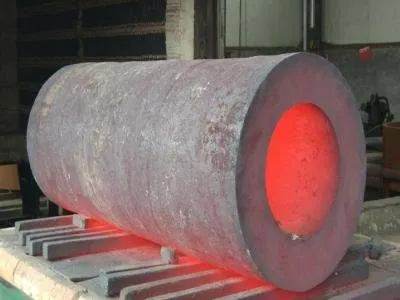
- Waspaloy and Udimet 720 use isothermal forging within a narrow temperature window to prevent cracking and achieve target grain size.
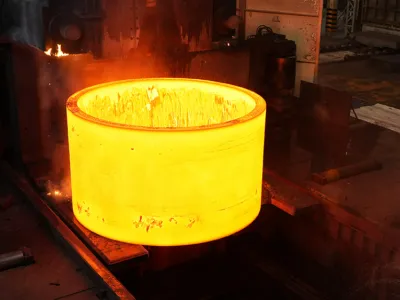
- Haynes 230 and Hastelloy X allow wider hot-working ranges but require controlled strain rates to avoid abnormal grain growth. Deformation amount per pass and inter-pass reheating time are standardized; excessive cold work before heat treatment increases residual stress and strain-age cracking risk.
5. Precisely Scheduled Heat Treatment
This is the core optimization node, and recipes differ fundamentally by alloy strengthening mechanism:
- Precipitation-hardened grades (Waspaloy, Udimet 720): Solution treatment → rapid quench → multi-step aging to precipitate uniform gamma-prime particles. Improper aging creates oversized precipitates and sharp drops in stress-rupture life.
- Solid-solution grades (Haynes 230, Hastelloy X): Single solution anneal followed by air or rapid gas cooling, tailored to stabilize carbides and control grain size without precipitation hardening.
6. Surface Preparation & Protective Coating
Mechanical blasting, alkaline cleaning and acid passivation remove forging scale and surface contamination. For hot-section aerospace hardware, MCrAlY overlay coatings or aluminide diffusion coatings are applied via HVOF, LPPS or pack cementation. Aluminium oxide alone is rarely used for superalloy hot service; molybdenum disulfide is only a temporary machining lubricant and not a high-temperature service coating. Coating adhesion, coating thickness and interdiffusion layer growth must be validated.
7. Precision Machining & Stress Relief
Superalloys are difficult to machine due to work hardening. Optimized workflows use rigid fixturing, controlled cutting speeds, coolant selection and intermediate stress-relief holds to avoid machining-induced surface recrystallization and tensile residual stress. Surface integrity checks are mandatory for rotating turbine parts.
8. Multi-Stage Quality Control & NDT
Optimized QC combines destructive and non-destructive inspection:
- Ultrasonic testing: Detect internal voids, inclusions and lamination.
- X-ray / CT: Check casting and AM component internal defects.
- Metallography: Grain size, carbide morphology, gamma-prime size distribution.
- Mechanical testing: Tensile, stress rupture, low-cycle fatigue, oxidation and hot corrosion coupons.
- Spectroscopy: Final heat-lot composition confirmation. Every heat lot maintains full traceability from raw feedstock to finished part certificate.
9. Final Cleaning, Marking, Packaging & Shipment
Residual machining fluid and chloride-bearing contaminants are fully removed. Parts are labelled with heat number, batch, specification and process traveler data. Anti-corrosion packaging prevents surface contamination during transit, as chloride residues can trigger hot corrosion once the component enters service.
Common Process Defects & Optimization Countermeasures
| Defect | Root Cause | Optimized Control Fix |
|---|---|---|
| Dendritic segregation | Insufficient homogenization, fast ingot cooling | Extend homogenization hold time, reduce remelting solidification rate |
| Strain-age cracking | Improper quenching, excessive cold work before aging | Adjust quench rate, add intermediate stress relief, limit cold reduction |
| Abnormal grain growth | Overheating during hot forging / annealing | Lock furnace temperature tolerances, control per-pass strain |
| Coating spallation | Poor surface preparation, excessive interdiffusion | Standardize grit blast profile, control coating deposition temperature |
| Internal oxide inclusions | Poor vacuum or inert-gas protection during melting/atomization | Tighten vacuum leak limits, upgrade argon purity |
Key Optimization Principles for Production Scaling
- Grade-specific thermal cycles: A heat-treatment recipe validated for Hastelloy X cannot be copied directly onto Waspaloy.
- Traceability at every stage: Each remelt, forging press run and furnace batch is logged.
- Digital process monitoring: Furnace temperature ramps, hold times and cooling rates are logged automatically instead of manual records.
- Material yield improvement: Near-net-shape forging and HIP powder consolidation reduce expensive machining scrap.
- Consistent atmosphere control: Oxygen and water vapour are the primary enemies of high-temperature alloy surface stability.
FAQ
Q: What is the difference between Waspaloy and Udimet 720 manufacturing routes? A: Waspaloy is mostly cast-and-wrought with multi-step aging; Udimet 720 is typically powder-metallurgy, atomized, HIP consolidated and isothermally forged for turbine disc applications.
Q: Why is homogenization such a critical optimized step? A: As-cast superalloys contain heavy-element segregation. Without homogenization, local chemical variation creates early creep failure even if bulk chemistry meets specification.
Q: Are Haynes 230 and Hastelloy X precipitation-hardened alloys? A: No. Both are solid-solution strengthened; their heat treatment focuses on grain and carbide control, not gamma-prime aging.
Q: Can vacuum melting be replaced by air melting to cut cost? A: Not for aerospace-qualified rotating parts. Air melting introduces oxygen, nitrogen and sulphur contamination that cannot be fully removed later.
Q: What causes superalloy strain-age cracking? A: Residual tensile stress combined with gamma-prime precipitation during aging; controlled quenching and intermediate stress relief are the main mitigation.
Q: Is MCrAlY coating part of the base alloy manufacturing process? A: It is a downstream surface engineering step, but it must be included in the full optimized workflow for hot-gas-path components to resist oxidation and hot corrosion.
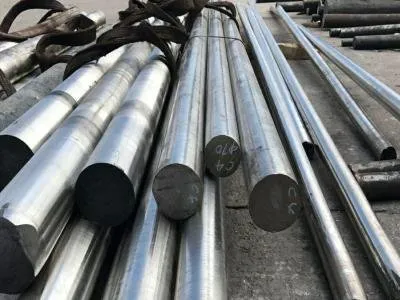
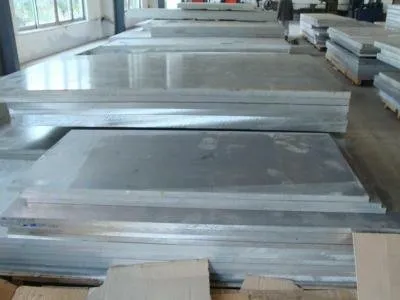
Ready to source superalloy ingot, powder, bar, forging blanks and plate with full process certification? Contact Dura Alloy for Waspaloy, Udimet 720, Haynes 230 and Hastelloy X. 📞 +86-18921275456 · WhatsApp: 8618921275456 · Request a quote