Optimizing Electro-slag Remelting (ESR) High-Temperature Alloy Billets: A Comprehensive Guide
Electro-slag remelting (ESR) is the standard clean-melting route for high-temperature alloy billets used in aerospace, defense, power generation and nuclear hardware. A remelted billet is the raw material for forged discs, rings, shafts and turbine components, so its cleanliness, chemical homogeneity and soundness decide the final part’s life. Optimization of the ESR process therefore means controlling a small set of parameters — melt rate, slag chemistry, cooling and atmosphere — tightly enough to produce a homogeneous, inclusion-free, segregation-free billet every heat.
This guide explains how ESR actually works, which process parameters control billet quality, and how buyers and metallurgists can verify that a billet was remelted correctly.
What Is Electro-Slag Remelting (ESR)?
ESR is a secondary remelting process, not a simple melt-and-pour operation. A pre-alloyed consumable electrode — usually a vacuum-induction-melted (VIM) ingot of the target grade such as Inconel 718 / GH4169, Waspaloy or Inconel 617 — is fed vertically into a water-cooled copper mold containing a molten slag bath of ~1,500–1,800 °C. Current passes from the electrode through the conductive slag, which heats resistively. The electrode tip melts, and the metal droplets fall through the slag, where they are refined — sulfur is removed and non-metallic inclusions are absorbed — before collecting in a shallow molten pool that solidifies progressively from the bottom of the mold upward.
Three features make ESR uniquely suited to high-temperature alloys:
- The slag isolates the metal from the atmosphere and from conventional refractory contamination.
- Refining happens continuously, droplet by droplet, over the whole heat.
- Solidification is directional and steady, suppressing the macrosegregation and center porosity common in large conventional ingots.
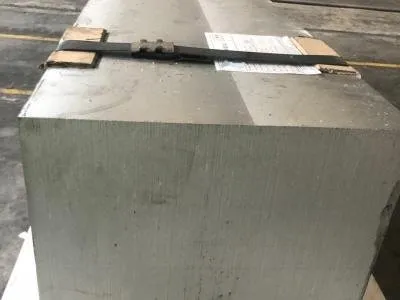
The result is a clean, homogeneous, sound billet that forges and rolls into premium components.
Why ESR for High-Temperature Alloy Billets?
- Sulfur removal — typical sulfur levels drop below 20 ppm, improving hot workability and reducing cracking during forging.
- Inclusion control — oxide and sulfide inclusions are captured in the slag instead of remaining in the metal.
- Chemical homogeneity — uniform composition along length and across the section, including controlled aluminum and titanium levels in γ′-hardened grades.
- Sound ingots — minimized macrosegregation, centerline porosity and shrinkage defects.
- Property consistency — cleaner, more uniform billets produce more repeatable mechanical properties in the final forged part.
For rotating and safety-critical hardware, many specifications require an ESR (or ESR + VAR) remelt step as a clean-melt condition.
Key ESR Process Parameters That Determine Billet Quality
| Parameter | What It Controls | Risk If Wrong |
|---|---|---|
| Melting current / voltage | Melt rate and slag-bath temperature | Excessive current deepens the molten pool, drives segregation and cracking |
| Melt rate (kg/h) | Pool depth and solidification structure | Too fast: macrosegregation, center defects; too slow: poor surface, low productivity |
| Slag composition | Desulfurization, inclusion removal, Al/Ti control | Wrong basicity/resistivity disturbs refining or burns off reactive elements |
| Electrode immersion depth | Stable slag heating and steady melt rate | Shallow immersion causes current instability and erratic melting |
| Mold water cooling and fill ratio | Solidification direction and shell quality | Poor cooling thickens the pool and promotes dendrite coarsening |
| Atmosphere / shielding | Re-oxidation of droplets and slag pickup | Uncontrolled air re-oxidizes the metal and raises inclusion counts |
In practice, melt rate and slag chemistry are the two levers that matter most — and they are linked, because the slag’s electrical resistivity and viscosity set the melting behavior.
Melt Rate Control: The Heart of ESR Optimization
The single most important variable in ESR is melt rate — how many kilograms of electrode tip melt per hour. Melt rate determines the depth of the molten metal pool under the slag:
- Low melt rate → shallow pool → steep thermal gradient → fine dendrite spacing, minimal segregation, sound center. Quality improves.
- High melt rate → deep pool → coarse dendrites, macrosegregation, centerline porosity and a higher risk of hot cracking, especially in alloys with wide freezing ranges such as Inconel 718 / GH4169.
Optimization is therefore a balance, not a race: run the fastest melt rate that still keeps the pool shallow enough for the alloy’s freezing range. In production this is set per grade and per billet diameter, then held constant by closed-loop control of melting current with thermocouple or optical temperature feedback. Melt rate instability — surges and dips — is what creates both segregation bands and inclusion clusters, so stability matters as much as the target value.
Slag Selection and Chemistry
ESR slags are almost always calcium fluoride (CaF₂)-based systems, typically CaF₂–Al₂O₃ (70/30) binary or CaF₂–CaO–Al₂O₃ ternary compositions. The slag has five jobs, and its composition must balance all of them:
- Refining — basic (high CaO) slags remove sulfur efficiently.
- Inclusion absorption — the slag must be able to dissolve the oxides present in the alloy.
- Electrical resistivity — the slag’s resistivity sets the heat generation and therefore the melt rate; composition changes the resistivity.
- Fluidity / viscosity — a stable, suitable-viscosity slag keeps the electrode feeding steadily and the metal droplets small.
- Reactive-element control — for Al- and Ti-bearing γ′ alloys, the oxygen potential of the slag must be controlled so aluminum and titanium are neither lost by oxidation nor picked up from a too-oxidizing slag.
Two practical cautions: CaF₂-based slags are hygroscopic — absorbed moisture brings hydrogen into the metal — so fluxes must be dried (typically baked) before use. And the slag should be treated with a deoxidizer (small aluminum additions) before and during remelting to keep the bath deoxidized and inclusions low.
Inclusion and Sulfur Control
Inclusions — sulfides, oxides and nitrides — are the most common quality defect in high-temperature alloy billets, because they act as crack-initiation sites in fatigue-loaded parts. ESR controls them at three points:
- Clean electrode — start from vacuum-induction-melted (VIM) electrodes; inclusions already present in the electrode are partly removed but the cleaner the feed, the cleaner the billet.
- Refining in the slag — droplets are washed as they pass through; sulfur partitions into the slag, and oxides float or dissolve. Steady, small droplets maximize this effect.
- Protection from re-oxidation — argon or a controlled atmosphere over the mold, plus a deoxidized slag, prevents new oxides from forming at the droplet surface.
The result is verified by ultrasonic inspection and low-magnification (macro-etch) examination, plus inclusion ratings per standards such as ASTM E45 or GB/T 10561.
Solidification Structure and Defects
ESR’s directional solidification produces a billet with a fine, columnar-to-equiaxed structure and tight dendrite spacing when melt rate is controlled. The defects that signal poor optimization are all visible in sectioning:
- Macrosegregation — banding of alloying elements, worst in deep-pool heats.
- Centerline porosity and shrinkage — from a too-deep pool or interrupted melting.
- Hot cracking — in wide-freezing-range alloys run at excessive melt rate.
- Surface defects — laps and roughness from unstable melt rate or wrong fill ratio.
Good billets also arrive at the forge in the right metallurgical state. ESR billets are usually supplied as-forged or as-cast-plus-homogenized; a homogenization treatment before final forging helps dissolve the as-cast segregation bands that even a well-run ESR cannot fully eliminate.
How to Verify Billet Quality Before Processing
Buyers of high-temperature alloy billets should ask for, or verify:
- Full chemical analysis from top and bottom of the billet — confirming homogeneity, with sulfur typically < 20 ppm.
- Ultrasonic testing to the relevant standard (ASTM E114 / E213-type coverage) with the rejection class stated.
- Macro-etch inspection of representative sections for porosity, segregation and cracks.
- Inclusion rating (ASTM E45 or GB/T 10561) where the downstream application is fatigue-critical.
- Mill test certificate with heat number, process route (VIM + ESR), and all heat-treatment records.
FAQ
Q: What is electro-slag remelting (ESR)? A: A secondary remelting process in which a consumable electrode of the alloy is progressively melted through a molten slag in a water-cooled mold; the slag refines the metal (sulfur removal, inclusion absorption) while it solidifies into a clean, homogeneous billet.
Q: Why is ESR used for high-temperature alloy billets? A: It delivers the cleanliness, sulfur control, homogeneity and soundness that aerospace and power-generation components require — and that many specifications make mandatory for rotating parts.
Q: ESR vs VAR — what’s the difference? A: ESR refines through a slag bath (excellent for sulfur and inclusions); vacuum arc remelting (VAR) remelts in vacuum (excellent for volatile-element and low-segregation control). High-integrity grades are often produced by VIM + ESR + VAR in sequence.
Q: Does ESR refine grain size? A: Not directly. ESR optimizes chemical homogeneity, cleanliness and solidification structure. Final grain size is set later by forging and heat treatment — ESR makes those processes repeatable.
Q: What happens if the ESR melt rate is too high? A: The molten pool deepens, dendrites coarsen, macrosegregation and center porosity appear, and wide-freezing-range alloys such as Inconel 718 / GH4169 become prone to hot cracking.
Q: How can I source verified ESR high-temperature alloy billets? A: Choose a supplier with an integrated clean-melting line — from vacuum melting through electro-slag remelting to forging — and demand full mill test certificates and ultrasonic coverage.
Source ESR Billets from a One-Stop Clean-Melting Line
Dura Alloy operates a one-stop route from vacuum melting and vacuum electroslag remelting through forging, heat treatment, rolling and machining, supplying high-temperature alloys, Inconel, Hastelloy and other nickel-based alloy products with full documentation. Share your grade, billet size and specification, and get a confirmed clean-melt route and delivery schedule.
nicholas.zhu1212@gmail.com · WhatsApp 8618921275456 · Request a quote