The Hot Working Process of High-Temperature Alloys and Its Industrial Significance
High-temperature alloys are forged, rolled and extruded — not cast into their final shape — because the hot working process is what converts a coarse, segregated as-cast ingot into a fine-grained, structurally sound component. Everything that makes a superalloy disc, shaft or ring trustworthy in a turbine — creep resistance, fatigue strength, consistency from part to part — is largely decided in the forging shop, long before final machining.
This guide explains the hot working process for high-temperature alloys: how the heating window is set, how deformation refines the microstructure, why grain structure is a deliberate choice rather than an accident, and how quality is verified before a component enters service.
What Is Hot Working of High-Temperature Alloys?
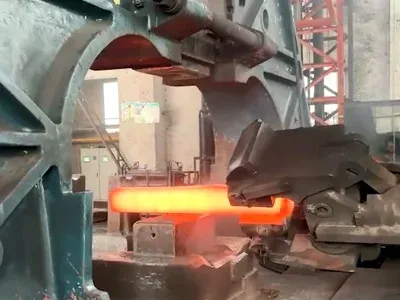
Hot working is plastic deformation performed above the alloy’s recrystallization temperature, typically at 900–1,200 °C for nickel-based superalloys. The main processes:
- Forging — compressive deformation by hammer or press, from open-die ingot breakdown to closed-die precision forging.
- Rolling — converting billets into plate, sheet, strip, bar and seamless tube.
- Extrusion — pushing the heated billet through a die for long, constant-section products.
- Pressing — large-section shaping, often combined with forging.
Hot working sits at the center of the production route: a vacuum-melted and remelted ingot is first homogenized, then hot worked into wrought stock or near-net components, heat treated for final properties, and finally machined. For critical rotating parts, the forged microstructure — not the chemistry alone — determines whether the part meets its design life.
Heating: Setting the Right Working Window
The working temperature window is alloy-specific and bounded by two limits:
- Lower bound — the recrystallization and hot-workability threshold; below it the alloy resists deformation and cracks instead of flowing.
- Upper bound — incipient melting of grain boundaries or low-melting constituents; above it the material overheats and cannot be repaired.
Within this window, the γ′ (gamma prime) solvus is the dividing line: for a given alloy, working above the solvus dissolves the γ′ and promotes grain growth; working below it keeps a fine grain structure. As an example, Inconel 718 / GH4169 is typically hot worked around 950–1,120 °C, with sub-solvus working used to hold fine grain for disc applications.
Heating itself must be uniform and controlled: uneven heating causes inconsistent deformation; excessive soak times grow grains; and prolonged exposure at temperature thickens the oxide scale, which is later removed or must be minimized for surface quality. Induction and controlled gas furnaces with tight soak control are standard.
Deformation: How Forging Builds the Microstructure
| Process | Typical Products | Effect on Microstructure |
|---|---|---|
| Open-die forging | Ingot breakdown, shafts, rings | Breaks down as-cast dendrites; refines coarse structure |
| Closed-die forging | Discs, blades, structural parts | Precise shape + controlled grain flow |
| Rolling | Plate, sheet, strip, bar, seamless tube | Uniform deformation and fine recrystallized grain |
| Extrusion | Bars, tubes, profiles | High deformation ratio, aligned flow structure |
| Isothermal forging | Complex aerospace shapes | Near-constant temperature deformation; fine, uniform grain |
During deformation, the coarse as-cast structure is broken down and replaced by new, recrystallized grains. Three parameters govern the result:
- Strain rate — deformation speed. High rates generate heat and risk local overheating and phase instability; low rates allow recovery and controlled recrystallization. The rate must be matched to the alloy’s deformation-resistance characteristics.
- Total strain and per-pass reduction — enough deformation to drive complete recrystallization, distributed across passes to avoid cracking or excessive temperature rise in the workpiece core.
- Interpass temperature — reheating between passes keeps the material inside its window; drops below it cause partial recrystallization and mixed grain sizes.
High-temperature alloys are among the most difficult materials to hot work: they resist deformation, work-harden rapidly and have narrow windows. That is why superalloy forging is planned pass-by-pass, often with finite-element simulation of temperature and strain before the first hammer falls.
Grain Structure Control: A Deliberate Trade-Off
The most important outcome of hot working is the grain structure — and it is a choice, not a by-product:
- Fine grain — achieved by sub-solvus working with adequate strain and controlled cooling. Fine grain gives higher tensile strength, better fatigue resistance and uniform properties. It is the preferred structure for turbine discs, where cyclic loading dominates.
- Coarse grain — achieved by super-solvus working or subsequent high-temperature treatment. Coarse grain gives better creep resistance, because grain-boundary sliding is reduced. It suits high-temperature creep-dominated parts such as blades and rotors.
Both structures come from the same ingot — the difference is where the working temperature sits relative to the γ′ solvus. Well-controlled forging produces a uniform, fully recrystallized structure; poorly controlled forging produces mixed grain sizes, recrystallization-free “pancake” zones or surface cracks, all of which can fail inspection or reduce service life.
Cooling and Heat Treatment After Hot Working
Deformation is not the end. After the final pass, the part must be:
- Controlled-cooled — to limit thermal stress and locking in the intended structure; cooling rate is chosen per alloy and section size.
- Solution treated — to dissolve precipitates (and optionally adjust grain size) by holding above the solvus, then cooling to a defined state.
- Aged — for precipitation-hardened alloys, to re-precipitate fine γ′. For Inconel 718 / GH4169, a typical schedule is solution treatment around 955–1,010 °C followed by double aging (e.g., 718 °C then 621 °C), producing the high-strength condition used in discs and fasteners.
Heat treatment and hot working are one system: forging sets the grain structure and flow pattern; heat treatment sets the precipitate condition. Neither can compensate for a mistake in the other.
Quality Control and Testing
Forged high-temperature alloy components are qualified by a layered inspection program:
- Ultrasonic testing — internal soundness, inclusion and segregation detection, to the rejection class in the specification.
- Liquid penetrant testing — surface laps, cracks and forging folds.
- Metallographic examination — grain size, recrystallization completeness, phase distribution and macro-etch structure.
- Mechanical testing — tensile, yield, hardness and, where required, creep-rupture and fatigue verification.
- Traceability — heat number, forging record, heat-treatment record and mill test certificate from melt to final part.
Industrial Significance
Hot working is what separates “a piece of metal” from a “component”. Its significance is visible across industries:
- Aerospace — forged Inconel 718 / GH4169 discs, shafts and rings carry the mechanical integrity of jet engines; forged structure is a certification requirement.
- Power generation — gas turbine rotors and blades rely on forged, creep-resistant superalloy stock for higher firing temperatures.
- Oil and gas — downhole tools and valves in age-hardened nickel alloys depend on forged, clean structure for sour-service reliability.
- Nuclear and marine — forged nickel-alloy hardware for high-integrity service.
Compared with casting, forging delivers superior and repeatable mechanical properties, controlled anisotropy and internal soundness — exactly the attributes safety-critical rotating hardware demands.
FAQ
Q: What is the forging temperature for Inconel 718 / GH4169? A: Typically around 950–1,120 °C, with the γ′ solvus (~1,000 °C) as the dividing line: sub-solvus working for fine-grain discs, super-solvus for coarser, creep-oriented structures.
Q: Why are high-temperature alloys forged rather than cast? A: Forging breaks down the coarse as-cast structure, removes center segregation and porosity, and produces a fine, uniform recrystallized grain structure with superior and repeatable mechanical properties.
Q: Does hot working refine grain size? A: Yes, when strain and temperature are controlled: deformation plus recrystallization replaces coarse cast grains with fine, uniform grains. But grain size is also a design choice — coarse grain is deliberately produced where creep resistance dominates.
Q: Fine grain vs coarse grain — which is better? A: Fine grain gives higher strength and fatigue resistance (turbine discs); coarse grain gives better creep resistance (blades and rotors). The right choice depends on the dominant loading mode.
Q: What defects occur during hot working of superalloys? A: Surface cracks and laps from wrong temperature or strain rate, mixed or coarse grain from poor window control, overheating (incipient melting) and excessive oxidation. All are detectable by penetrant, ultrasonic and metallographic inspection.
Q: How is forged superalloy quality verified? A: By ultrasonic and penetrant testing, metallographic grain-size and macro-etch examination, mechanical testing, and full traceability via mill test certificates from the melt through forging and heat treatment.
Source Hot-Worked High-Temperature Alloys from an Integrated Line
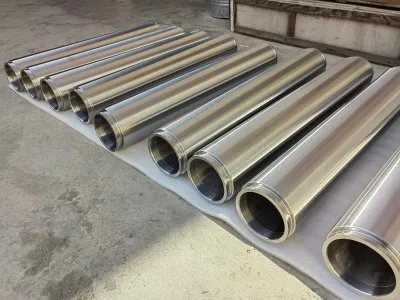
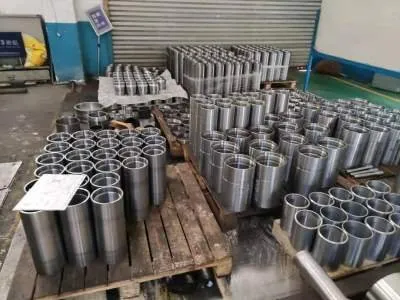
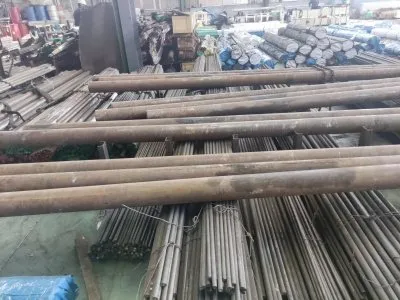
Dura Alloy’s one-stop production — vacuum melting, vacuum electroslag, forging, heat treatment, rolling and machining — turns high-temperature alloys and Inconel into billets, plates, strips, seamless pipes, round bars, flanges and pipe fittings with guaranteed structure, non-destructive testing and full documentation. Share your grade, form and specification for a confirmed quote.
nicholas.zhu1212@gmail.com · WhatsApp 8618921275456 · Request a quote