Methods for Enhancing Oxidation Resistance in High-Temperature Alloys
Oxidation resistance is a system, not a property. A superalloy survives hot gas because four layers work together: the alloy’s own protective scale, microalloying that keeps that scale attached, coatings that carry the load at the highest temperatures, and thermal barriers that reduce the metal’s temperature. Each layer has its own mechanism and its own limits, and the practical question is always the same: which method — or combination — matches your temperature, your cycling and your environment. This guide runs the toolbox, then gives the selection logic.
Method 1: Alloy Design — Grow the Right Scale
Composition decides which oxide the alloy grows:
- Chromia-formers — roughly 15–20% chromium grows a dense Cr₂O₃ scale; the backbone of heat-resistant alloys to ~950–1,000 °C.
- Alumina-formers — aluminium grows Al₂O₃, the slowest-growing, most protective scale, and carries duty above the chromia limit.
- The corollary — minimize volatile-oxide formers: molybdenum and tungsten oxides sublimate at temperature and can destabilize the scale.
Method 2: Reactive-Element Microalloying — Keep the Scale Attached
Small additions — yttrium, hafnium, lanthanum, zirconium, often in the 0.01–0.1% range — transform scale behavior: they improve scale adhesion, suppress spallation under thermal cycling, and slow scale growth. This is one of the cheapest and most overlooked oxidation upgrades: the alloy composition barely changes, but cyclic oxidation life can improve by multiples.
Method 3: Diffusion Coatings — The Aluminium Reservoir
Diffusion aluminide coatings (pack cementation or CVD) enrich the surface layer in aluminium, which then forms Al₂O₃ at temperatures where the base alloy cannot. The coating is metallurgically bonded — no interface to spall — and is the classic protection for turbine airfoils.
Method 4: Overlay Coatings — MCrAlY
MCrAlY overlay coatings (M = Ni, Co or both), applied by plasma spray or EB-PVD, carry a designed aluminium reservoir in a ductile metallic layer. They tolerate thermal cycling, repair-friendly, and serve as the bond coat under thermal barriers. This is the standard system: MCrAlY + TBC.
Method 5: Thermal Barrier Coatings — Lower the Metal Temperature
TBCs — yttria-stabilized zirconia (YSZ) topcoats over an MCrAlY bond coat — insulate rather than oxidize: a 100–200 µm YSZ layer can cut metal temperature by ~100 °C+, directly extending oxidation and creep life. The insulation is the point — YSZ is not itself the oxidation barrier; the bond coat and scale underneath are.
Method 6: Composites, ODS and Computational Design
- Oxide-dispersion-strengthened (ODS) alloys — fine oxide particles stabilize the structure and slow scale-related degradation at extreme temperature.
- Ceramic-fiber composites (CMC) — take the ceramic barrier concept to the component level, with the alloy’s oxidation challenge shifting to interfaces.
- Computational modeling — diffusion-kinetics and oxidation models predict scale growth, spallation and coating life, cutting the experimental search for both composition and coating design.
Selection Matrix
| Service Condition | Primary Method | Supporting Method |
|---|---|---|
| Steady hot gas, ≤1,000 °C | Chromia/alumina alloy design | Reactive elements |
| Cycling, ≤1,000 °C | Reactive-element alloy + overlay | — |
| Airfoils, 950–1,100 °C | Diffusion aluminide or MCrAlY | TBC where temperature is extreme |
| Extreme heat + thermal gradients | MCrAlY + TBC system | Alumina-forming base |
| Research / next-gen | ODS, CMC, computational design | — |
The Alloy Spectrum in Practice
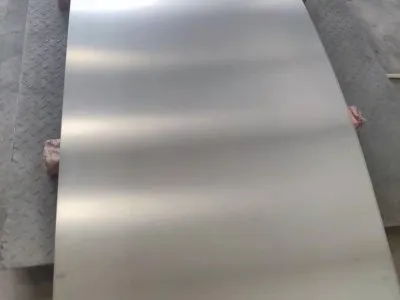
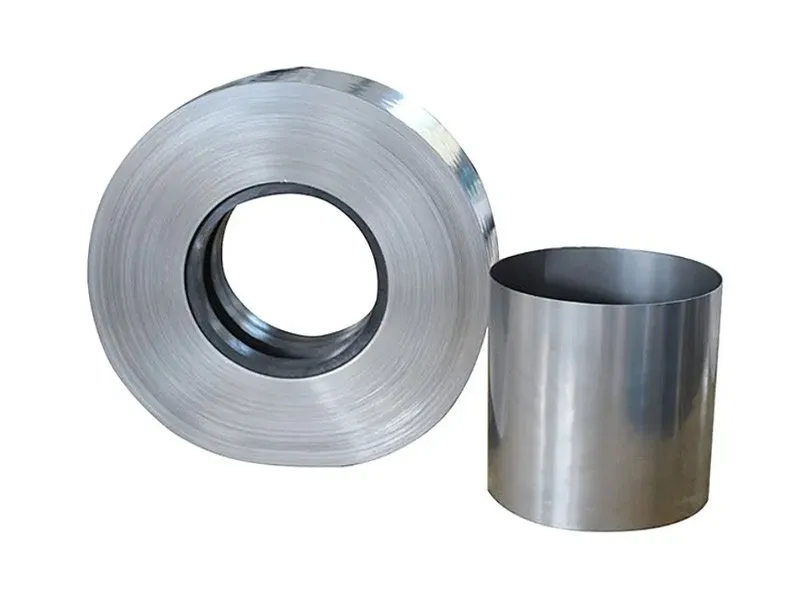
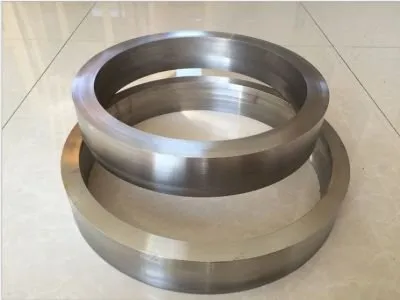
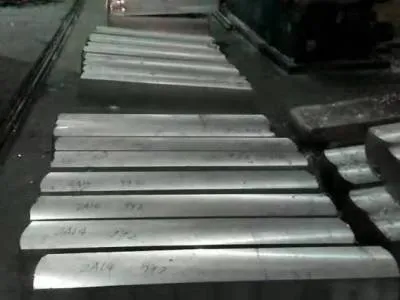
The methods are visible across the whole product spectrum: workhorse GH4169 (Inconel 718-class) earns its oxidation life from balanced chromium chemistry and heat-treatment control; high-temperature GH2747 and sheet-grade GH3044 carry chromia-former logic into combustion-zone duty; and blade-grade GH4141 represents the alloy-design-plus-coating philosophy at the hot end. Buy the alloy with its intended protection system, not just a chemistry.
Testing the Result
- Isothermal oxidation — scale-growth kinetics, weight change.
- Cyclic oxidation — spallation behavior, the test that exposes reactive-element and coating quality.
- Hot-corrosion tests — salt-deposit environments for marine/industrial gas paths.
- Microstructural verification — scale thickness, composition and adhesion after exposure.
FAQ
Q: What is the most effective way to improve oxidation resistance? A: Grow the right protective scale — chromia or alumina — through composition, keep it attached with reactive elements, and add coatings (diffusion, MCrAlY, TBC) where temperature and cycling demand.
Q: Why are yttrium and hafnium added to superalloys? A: These reactive elements dramatically improve oxide-scale adhesion and suppress spallation under thermal cycling, extending cyclic oxidation life at tiny alloy cost.
Q: What is the difference between diffusion and overlay coatings? A: Diffusion aluminide enriches the surface with aluminium and is metallurgically bonded; MCrAlY overlay is a deposited ductile metallic layer with a designed aluminium reservoir.
Q: Is the thermal barrier coating an oxidation barrier? A: No — YSZ TBC insulates and lowers metal temperature; the oxidation barrier is the bond coat and the alloy’s protective scale underneath.
Q: Does molybdenum help oxidation resistance? A: No — molybdenum and tungsten oxides are volatile at temperature; they strengthen the alloy but can destabilize the scale, so they are minimized in oxidation-critical grades.
Q: How is oxidation resistance tested? A: Isothermal and cyclic oxidation tests (weight gain, scale growth, spallation) plus hot-corrosion tests where salt service is expected — matched to real duty.
Need alloys with oxidation-certified data or coating-compatible grades? Contact Dura Alloy at nicholas.zhu1212@gmail.com for GH4169, GH2747, GH3044 and GH4141 — with mill certificates and heat traceability on request.