Intelligent Manufacturing and the Advancement of High-Temperature Alloy Production
Intelligent manufacturing is changing how high-temperature alloys are made — not as a slogan, but in measurable ways. In a superalloy plant, “smart” means closed-loop melt control on vacuum furnaces, AI-assisted defect classification in non-destructive testing, and a digital record that follows every heat from raw material to mill certificate. For buyers, the payoff is concrete: tighter composition, fewer rejected heats, shorter lead times, and material whose documentation is trustworthy enough for aerospace and nuclear supply chains.
This guide explains where intelligent manufacturing genuinely advances high-temperature alloy production, what it delivers, and what still stands in the way.
Why Intelligent Manufacturing Matters in Alloy Production
High-temperature alloys are unforgiving products. A one-degree error in a heat-treatment window, a few parts-per-million of oxygen in the melt, or a missed thermocouple reading can scrap an entire heat worth thousands of dollars. Traditional practice depends on skilled operators and paper records. Intelligent manufacturing replaces dependence with control:
- Data replaces memory — every melt, forge and treatment cycle is logged automatically.
- Models replace guesswork — process parameters are set and adjusted from data, not habit.
- Systems replace paperwork — traceability is built into production, not reconstructed after it.
Therefore, intelligent manufacturing in this industry is less about futuristic robots and more about making the right decisions repeatable.
Smart Melt and Process Control
The first and most valuable application is melt control. Vacuum induction melting (VIM), electro-slag remelting (ESR) and vacuum arc remelting (VAR) are now operated with:
- IoT sensor networks — temperature, pressure, melt rate and gas analysis streamed in real time from the furnace.
- Closed-loop power control — melt rate is adjusted automatically against the target, reducing composition drift and electrode shorting.
- AI process optimization — machine learning models learn from historical heats which parameter combinations produced clean chemistry, guiding setpoints for each new grade.
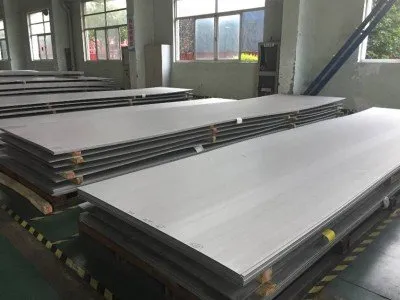
For example, GH3536 (the Chinese equivalent of Hastelloy X) — a grade widely used for combustion hardware — benefits directly from tight melt control, because its strength depends on consistent tungsten and molybdenum levels across the whole heat: Dura Alloy produces GH3536 on a one-stop vacuum line with closed-loop process control.
Traceability and Quality: The Digital Thread
Aerospace and power buyers do not buy material — they buy documentation plus material. Intelligent manufacturing turns traceability from an afterthought into a production by-product:
- Heat genealogy — every billet, bar or plate carries its melt number, remelt route, forging and heat-treatment record.
- Automated mill test certificates — test data flows from the lab directly into the certificate, eliminating transcription errors.
- AI-assisted NDT — ultrasonic and eddy-current inspection now uses machine-learning defect classification, reducing both missed defects and false rejects.
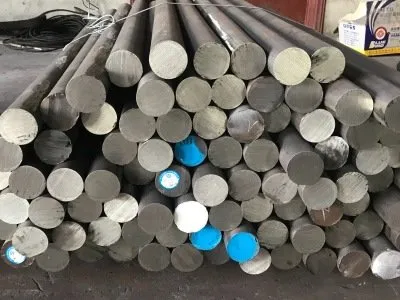
The result is material whose story is complete and auditable. Forged discs from GH901, a turbine-disc alloy, ship with the full digital record — which is exactly what qualification engineers want to see before release.
Digital Twins and Simulation
Simulation has moved from research into production:
- Digital twins of furnaces and presses — a live model of the equipment predicts temperature evolution and deformation, so operators can anticipate deviations instead of reacting to them.
- Process simulation — forging and heat-treatment models forecast final microstructure and properties before the physical run.
- Quality-by-design — parameters are set against predicted outcomes, shrinking trial-and-error and rejected heats.
Consequently, development cycles shorten. A new grade or a new section size can be qualified with fewer physical trial heats — a direct cost and lead-time advantage.
What Intelligent Manufacturing Delivers: A Summary
表格
| Area | Traditional Practice | Intelligent Practice |
|---|---|---|
| Melt control | Operator-set power, manual logs | Closed-loop, IoT-monitored, AI-tuned |
| Quality testing | Human interpretation of NDT signals | AI-assisted defect classification |
| Traceability | Paper records assembled after the fact | Digital thread built during production |
| Certificate | Typed from lab sheets | Generated automatically from lab data |
| Process design | Trial heats and experience | Digital twins and simulation first |
| Yield | Good heats and bad heats sorted after the fact | Deviations prevented before they happen |
Therefore, the headline benefit is not speed but repeatability: the same qualified structure, heat after heat, with the evidence to prove it.
Challenges That Remain
Despite the promise, intelligent manufacturing in alloy plants faces real hurdles:
- Capital cost — furnace and NDT retrofits plus new software are substantial investments, hardest to justify for small-batch, high-mix production.
- Skilled personnel — automation removes manual work but demands engineers who understand both metallurgy and data; this talent is scarce.
- Legacy integration — older furnaces lack sensors and interfaces, so data often requires retrofits or manual capture.
- Cybersecurity — connected plants introduce new attack surface; a compromised melt-control system is a safety issue, not just an IT one.
Hence, most producers adopt intelligent manufacturing selectively — starting with melt control and traceability, where the payback is fastest — rather than as a full plant transformation.
Future Outlook
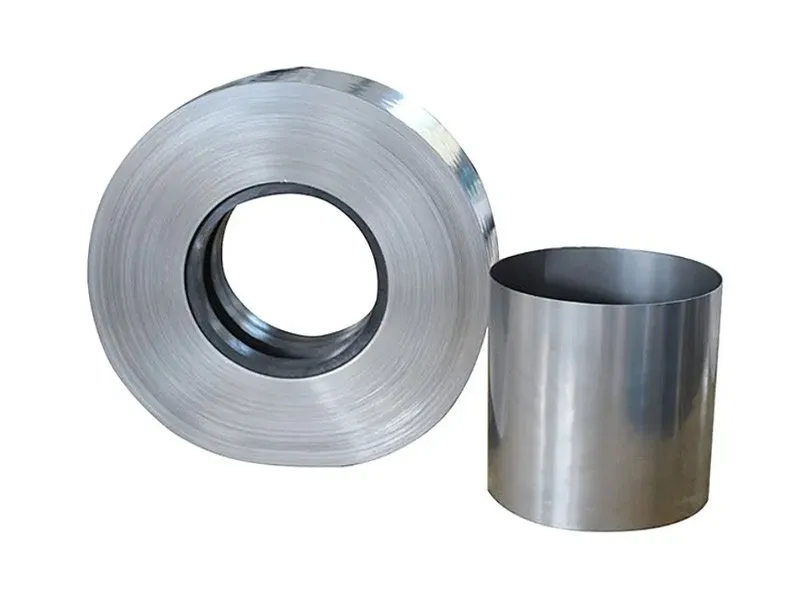
The next stage is a complete digital thread: from order entry to final certificate, every step recorded, simulated and optimized. Advances in additive manufacturing, where powder quality and build parameters are already data-driven, will extend the same logic to new forms — including reactive and refractory metals that are hard to process conventionally, such as niobium tubes and tantalum products used in demanding chemical and electronics applications.
As buyers increasingly demand auditable quality, intelligent manufacturing stops being a competitive advantage and becomes the entry ticket. Producers that build the digital record into their process will win the qualification, not just the quote.
FAQ
Q: What is intelligent manufacturing in alloy production? A: Using sensors, data systems and models to control and document production — closed-loop melt control, AI-assisted NDT, digital traceability and process simulation.
Q: How does AI improve high-temperature alloy quality? A: By learning from historical heats which parameters produce clean chemistry, guiding setpoints and by classifying NDT signals more accurately than manual interpretation.
Q: What is a digital twin in alloy manufacturing? A: A live computer model of a furnace or press that predicts temperature and deformation, letting operators prevent deviations instead of correcting them after the fact.
Q: What are the main challenges of smart alloy plants? A: Capital cost, scarce data-literate metallurgical talent, integration with legacy equipment, and cybersecurity of connected process control.
Q: Does intelligent manufacturing reduce alloy lead times? A: Yes — through fewer trial heats, fewer rejected runs and automated documentation, which shortens both production and qualification cycles.
Q: Where should a producer start with intelligent manufacturing? A: With melt control and digital traceability, where the payback is fastest and the quality evidence matters most to aerospace and power buyers.
Source Data-Driven High-Temperature Alloys
Dura Alloy’s one-stop line — vacuum melting, vacuum electroslag, forging, heat treatment, rolling and machining — produces GH3536, GH901, GH3030 and special-metal niobium tubes with guaranteed composition, non-destructive testing and full heat traceability. Share your grade and specification for a confirmed quote.
nicholas.zhu1212@gmail.com · WhatsApp 8618921275456 · Request a quote