High-Temperature Alloy Die-Casting Process: Techniques and Applications
Steam turbine blades convert the thermal energy of steam into rotation — under some of the most unforgiving conditions in power engineering: steam at 540–620 °C, rotational speeds measured in thousands of RPM, centrifugal loads that multiply blade weight hundreds of times, moisture droplets in the low-pressure stages, and decades of start-stop thermal cycling. Blade material selection and manufacturing determine turbine efficiency, outage intervals and service life. This guide lays out the real material hierarchy (not the idealized one), the two manufacturing routes that actually exist, and how blades fail.
The Material Ladder: What Steam Turbine Blades Are Actually Made Of
| Blade Zone | Typical Service | Dominant Material | Why |
|---|---|---|---|
| HP / IP blades | Steam 540–620 °C, creep + corrosion | 12% Cr martensitic steels (X12CrMoWVNbN10-1-1 family, 9–12Cr grades) | Proven creep strength, steam-side corrosion resistance, cost and weldability — the volume workhorse of modern machines |
| Advanced USC hot stages | Steam ≥600 °C class | Nickel superalloys (718-type, Nimonic-class) | Creep margin and strength retention beyond ferritic ceilings |
| LP last-stage blades | Moderate heat, huge centrifugal load, moisture | 12Cr stainless; titanium alloys for the very longest blades | Strength-to-weight and corrosion-fatigue resistance |
| Bolts, fasteners, discs | Hot joints, preload retention | Precipitation-hardened 718, 17-4PH-type grades | Relaxation resistance at temperature |
Nickel superalloys are the advanced answer, not the default: the 12Cr martensitic family carries the bulk of blade volume worldwide, and nickel grades enter where steam temperature demands their creep margin — or where 17-4PH and SUS631 precipitation-hardening stainless serve structural and moderate-temperature hardware.
Two Manufacturing Routes — Not One
The original picture of “melt → investment cast → forge → machine” does not exist. Blade production follows two independent routes, chosen at design time:
Route A: Wrought Blades (the volume route)
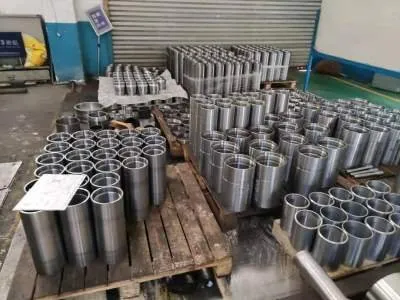
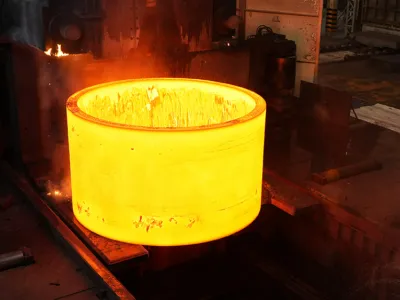
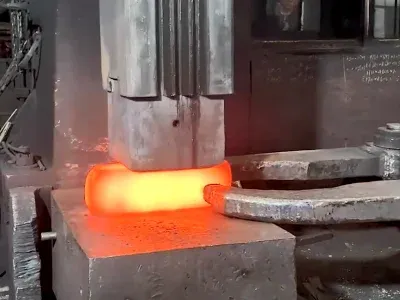
VIM/ESR melt → billet forging → controlled rolling of bar → precision blade forging or machining from bar → heat treatment → finish machining → surface treatment
- Forged blades get refined, directionally worked grain structure — the best combination of strength, toughness and fatigue resistance.
- Heat treatment (quench + temper for 12Cr steels; solution + aging for PH grades) sets the final mechanical condition.
- Used for most HP/IP/LP blades, especially where fatigue and toughness matter.
Route B: Cast Blades (investment casting / directional solidification)
VIM melt → investment cast (equiaxed) or DS casting → heat treatment → finish machining → NDT
- Chosen for complex internal geometries — integral shrouds, cooling features — that cannot be forged.
- Cast blades trade some ductility for shape freedom; DS casting adds columnar grain creep advantage for very hot stages.
- Not followed by forging or rolling: the cast shape is the near-net shape.
Heat treatment follows the route: solution/aging for nickel and PH grades, quench-and-temper for 12Cr steels, with tight time-temperature windows per heat lot.
What Blades Must Survive
- Creep — sustained centrifugal and steam-bending load at temperature slowly stretches blades; 12Cr steels and superalloys are selected on creep-rupture data, not peak temperature.
- Thermal fatigue — start-stop cycles strain blade roots and airfoil transitions; ductility and surface finish govern crack initiation.
- Steam-side oxidation and corrosion — oxide scale thickens and spalls; in wet LP stages, droplet erosion attacks leading edges (cobalt-based hardfacing protects them).
- Vibration and fatigue — blade tuning, damping and material fatigue limits keep natural frequencies away from excitation.
- Stress-corrosion / corrosion-fatigue in wet zones — the reason LP hardware often moves to higher-alloy or titanium solutions.
The Supporting Alloy Cast Around the Blades
Blades do not work alone. The hot-gas hardware around them carries its own material logic: Hastelloy X for severe-temperature components and welded hot-zone fabrications, 2520Si2 for furnace-grade heat resistance in auxiliary systems — each chosen for the same discipline of creep, corrosion and fabricability.
Applications Across Industries
- Power generation — fossil and nuclear steam turbines driving generators; blade upgrades deliver efficiency, fuel savings and lower emissions.
- Oil & gas — steam turbines for compression and pumping in harsh, often sour service.
- Marine propulsion — steam plants and turbine-driven systems where reliability and maintenance intervals dominate.
- District heating and industrial power — smaller turbines with the same material logic scaled down.
Development Direction
Ongoing blade R&D targets higher steam temperatures (advanced USC), longer 12Cr steel alloy life, titanium last-stage blades for longer LP stages, and additive manufacturing of complex blade geometries — with qualification evidence (creep, thermal cycling, oxidation, full NDT certification) still the gate for every new material and process.
FAQ
Q: What alloy are steam turbine blades made of? A: Mostly 12% Cr martensitic steels for HP/IP/LP blades, with nickel superalloys (718/Nimonic class) for advanced ultra-supercritical hot stages and precipitation-hardening stainless for structural hardware.
Q: Are steam turbine blades forged or cast? A: Both routes exist and are exclusive: most blades are forged (or machined from forged bar); investment casting and DS casting are chosen for complex geometries that cannot be forged.
Q: Why are nickel superalloys not used for every steam turbine blade? A: Cost. 12Cr steels carry the volume duty with proven creep and corrosion performance; nickel grades enter where steam temperature exceeds ferritic capability.
Q: What causes steam turbine blade failure? A: Creep stretching, thermal fatigue cracking, stress-corrosion in wet stages, droplet erosion on LP leading edges, and vibration-induced fatigue.
Q: Can steam turbine blades be repaired? A: Yes — tip rebuild by welding, leading-edge hardfacing renewal and surface re-finishing are common, provided qualified procedures and NDT verification are used.
Q: What materials protect last-stage blade leading edges? A: Cobalt-based hardfacing (Stellite-type) protects LP blade leading edges against water-droplet erosion.
Ready to source steam turbine blade and hardware alloys? Contact Dura Alloy for 17-4PH, SUS631, Hastelloy X and 2520Si2 in bar, plate, sheet and forgings with full certificates — 📞 +86-18921275456 · WhatsApp 8618921275456 · Request a quote