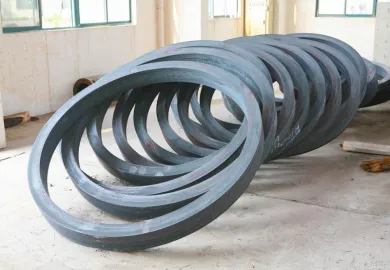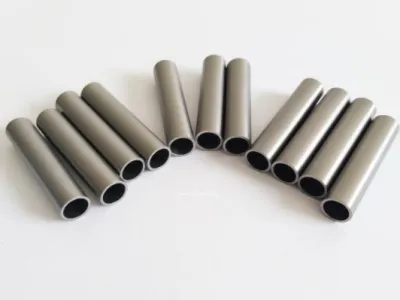
Aerospace Standard High-Temperature Alloy With Complete Material Test Certificates
Aerospace engineering is essentially a relentless battle against thermodynamics and chemistry. When you push a turbine blade or a deep-sea submersible hull to its absolute limits, the material holding it all together is the only thing standing between operational success and catastrophic failure. We often talk about the macro-level design, the aerodynamics, the thrust-to-weight ratios, but the real magic happens at the microscopic level. It is all about grain boundaries, precipitate distributions, and how a specific lattice structure behaves when the temperature spikes to 980°C or drops to -196°C.
Let us talk about the unsung hero of the chemical and aerospace crossover: the low-carbon nickel-chromium-molybdenum-niobium family. You might know it by its UNS designation N06625, or the international equivalents like Inconel 625 or GH3625. This is not just a metal; it is a carefully orchestrated symphony of elements. With nickel sitting at a minimum of 58%, backed by 20-23% chromium, 8-10% molybdenum, and a touch of niobium, it laughs at pitting, crevice corrosion, and chloride stress corrosion cracking. It handles inorganic acids, mixed acids, and even hydrochloric acid environments below 40°C without breaking a sweat. But having the right chemical composition on paper is only half the story. The real challenge is proving it, batch after batch, with absolute certainty.
This is where the paperwork becomes just as critical as the metallurgy. In the aerospace sector, a piece of metal without a complete, traceable material test certificate is essentially a very expensive paperweight. You need to know the exact thermal history, the tensile strength, the hardness numbers, and the impact test results. You need to see the optical microscopy and scanning electron microscope images that confirm the morphology. When engineers specify materials for pressure vessels operating between -196°C and 450°C, or even upgraded versions pushing towards 1100°C for short-term exposure, they demand rigorous validation. NACE MR-01-75 certifications, density verifications at 8.4 g/cm³, and melting point confirmations between 1290-1350°C are not just bureaucratic hurdles; they are the lifeblood of safety and reliability.
Navigating this labyrinth of compliance and material science is exactly where [Dura Alloy] steps in. They understand that supplying an aerospace-standard high-temperature alloy is only part of the equation. The other part is providing the complete, unimpeachable material test certificates that accompany every single shipment. Whether it is a specialized nickel-based superalloy for a sour gas environment or a complex titanium-aluminum-niobium powder metallurgy component designed for extreme oxidation resistance, [Dura Alloy] ensures that the documentation matches the physical reality of the alloy.
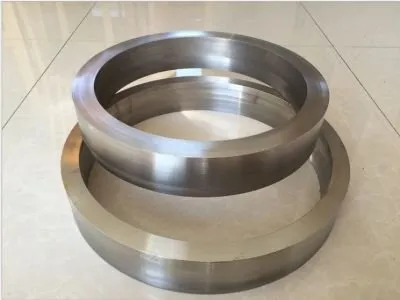
Think about the evolution of alloy design. We are no longer just relying on trial-and-error. The industry is shifting towards high-entropy alloys and leveraging machine learning to navigate vast compositional spaces. Generative adversarial networks and active learning loops are helping researchers predict phase formations and microstructural behaviors before a single ingot is melted. Additive manufacturing is changing the game too, with in-situ alloying and the precise control of the columnar to equiaxed transition during solidification. These advanced manufacturing techniques require feedstocks that are flawlessly characterized. When you are 3D printing a complex component for a jet engine, the powder morphology, the particle size distribution, and the chemical purity must be documented with obsessive detail. [Dura Alloy] has adapted to this paradigm shift, offering materials that are not only compliant with traditional aerospace standards but are also tailored for the next generation of additive and subtractive manufacturing processes.
But let us jump back to the fundamentals for a moment. Surface integrity. Take aviation aluminum parts, for instance. They might not face the same thermal extremes as a turbine section, but they face their own brutal environments. High corrosion and wear-resistant electroless Ni-P gradient coatings are often applied to these components. The interaction between the substrate and the coating, the mitigation of agglomeration, the interface bonding—these factors dictate the lifespan of the part. Similarly, when we look at aluminum matrix composites reinforced with graphene oxide or amorphous alumina through accumulative roll bonding or high-energy ball milling, the dislocation density and the fracture surface dimples tell a story of the tradeoff between strength and ductility. Every one of these microstructural features must be tested, recorded, and certified.
When we talk about mechanical properties, we have to consider how thermal histories alter the physical state. Take the multistage artificial aging process, for example. It is fascinating how applying specific heat treatments, like holding at 550°C followed by quenching and then aging at lower temperatures in multiple steps, can dramatically shift the precipitate morphology. You get circular grains, particle sizes ranging from 18 to 33 nanometers, and distinct shifts in X-Ray diffraction peaks. The highest tensile strength might appear at the first aging stage, while peak hardness and toughness could emerge at different intervals. This delicate dance of thermal manipulation is what extracts the maximum potential from the metallic lattice. And when a supplier like [Dura Alloy] provides the test certificates, they are essentially providing the map to this thermal journey, proving that the exact aging parameters were met and the resulting mechanical properties fall strictly within the aerospace specification limits.
Furthermore, the welding and fabrication aspects cannot be overlooked. An alloy might possess stellar corrosion resistance and high-temperature strength in its base form, but if it cracks during tungsten inert gas welding or loses its structural integrity in the heat-affected zone, it is useless for complex aerospace assemblies. The ability to support various welding processes without the need for post-weld heat treatment is a massive advantage. It simplifies the manufacturing pipeline and reduces the risk of introducing new stress concentrations. The documentation provided alongside the material must include weldability assessments and mechanical testing of the welded joints, ensuring that the final assembly is as robust as the raw material.
Let us also consider the environmental extremes. We mentioned the cold, down to -196°C, which is liquid nitrogen territory. At these cryogenic temperatures, many standard metals undergo a ductile-to-brittle transition, shattering like glass under impact. The specialized nickel-based alloys, however, maintain their austenitic structure and retain their toughness. This dual capability—surviving both the blistering heat of a combustion chamber and the freezing void of high-altitude or space environments—requires a level of metallurgical control that is nothing short of extraordinary. The test certificates must reflect cryogenic impact testing, proving that the Charpy V-notch values remain well above the minimum thresholds required for flight safety.
The integration of these advanced materials into modern supply chains is another layer of complexity. Aerospace programs are global, and the traceability of a single forged ring or a spool of welding wire must be maintained across continents and decades. This is where the meticulous record-keeping of [Dura Alloy] becomes a critical asset. They do not just hand over a piece of paper; they provide a digital and physical thread that links the raw ore to the final machined part. Every heat number, every batch of flux, every furnace run is logged. When an auditor or a safety investigator needs to trace the lineage of a critical component, the complete material test certificates serve as the undeniable proof of provenance and compliance.
In the end, the selection of an aerospace-standard high-temperature alloy is a multifaceted decision. It involves understanding the chemical environment, the thermal gradients, the mechanical loads, and the manufacturing processes. It requires a deep appreciation for the microstructural phenomena that govern material behavior. But above all, it requires absolute confidence in the data that validates the material’s performance. [Dura Alloy] stands at the intersection of advanced metallurgical science and rigorous quality assurance, offering a comprehensive portfolio of high-performance alloys backed by the complete, transparent, and exhaustive test certificates that the aerospace industry demands. They ensure that when engineers push the boundaries of what is physically possible, the materials holding their designs together are never the limiting factor.