Exploring Heat-Resistant and Corrosion-Resistant Superalloys: Properties and Applications
Superalloys — nickel-base first, with iron- and cobalt-base families — are the materials that run where ordinary metals cannot: turbine blades in 1,000 °C gas, reactor internals under decades of heat and flux, process hardware swimming in hot acid. Two properties earn them that work: heat resistance and corrosion resistance. They sound similar; mechanically they are different problems solved by different alloying logic. Understanding each mechanism — and where the two requirements conflict — is what separates a successful grade selection from a premature failure.
How Superalloys Beat Heat
Heat resistance is really three mechanisms stacked together:
- Solid-solution strengthening — refractory elements (molybdenum, tungsten, rhenium) dissolve in the nickel matrix, distorting the lattice and slowing dislocation movement. Note: molybdenum and tungsten strengthen the matrix; they do not defend against oxidation — their oxides are volatile at high temperature.
- Precipitation strengthening (γ′) — coherent Ni₃(Al,Ti) precipitates block dislocation glide at temperature. This is the defining mechanism of heat-resistant wrought and cast nickel superalloys, and the reason they hold strength near 85% of their melting point.
- Protective oxide formation — chromium forms a chromia (Cr₂O₃) scale; aluminium forms alumina (Al₂O₃). These slow-growing, adherent films are what actually stop oxidation. Their stability — and resistance to spallation under thermal cycling — sets the temperature ceiling of the alloy.
The crystalline structure contributes too, but not as a vague “accommodation of expansion”: austenitic FCC nickel is ductile and stable, so thermal stress relaxes instead of cracking — that ductility is what carries thermal fatigue.
How Superalloys Beat Corrosion
Corrosion resistance in superalloys is a passive-film story:
- Chromium is the workhorse: it builds the chromia barrier that rejects most aqueous and hot-gas attack.
- Molybdenum enhances resistance to reducing acids and localized attack (pitting, crevice corrosion) — this is a corrosion role, distinct from its strengthening role in the matrix.
- Aluminium contributes both alumina scale (heat) and oxide-film stability in certain media.
- Nickel’s own chemistry gives immunity to chloride stress-corrosion cracking, which austenitic stainless steels suffer.
The film is self-repairing: scratch it in an oxidizing environment and it regrows, re-passivating the surface. That self-healing is why superalloys survive years of service where coated or painted systems need rework.
Heat Resistance vs Corrosion Resistance: The Tradeoff
The same alloy rarely wins both races — the requirements pull in opposite directions:
| Requirement | Favors | Typical Optimized Grade |
|---|---|---|
| Maximum heat / creep / oxidation | γ′-rich, Al+Ti+refractory chemistry, often cast or SX | Heat-optimized nickel superalloys (e.g., GH4202) |
| Balanced heat + general service | Ni-Cr with modest strengthening | Inconel 600, Incoloy 800 |
| Maximum corrosion (acids, chlorides) | High Cr + Mo, no reliance on γ′ | Corrosion-optimized Ni-Cr-Mo alloys (e.g., Hastelloy C-2000) |
Selecting “the most heat-resistant” alloy for a chemical heat exchanger, or “the most corrosion-resistant” grade for a turbine blade, usually fails — define the dominant load first, then optimize for it.
Application Mapping
| Sector | Service Condition | Why Superalloys Win |
|---|---|---|
| Gas turbines | 800–1,100 °C gas, oxidation, thermal cycling | γ′ creep strength + chromia/alumina scales + thermal-fatigue ductility |
| Energy / nuclear | Heat, pressure, irradiation, water chemistry | Stable microstructure, corrosion resistance, long-term creep |
| Chemical processing | Hot acids, chlorides, mixed oxidizing-reducing swings | Mo-bearing passive films, SCC immunity |
| Manufacturing / heat treatment | 900–1,100 °C furnace atmospheres, thermal shock | Oxidation resistance + dimensional stability at temperature |
Each environment favors a different point on the heat–corrosion spectrum — which is exactly why a full portfolio, not a single “super alloy”, is the practical answer.
FAQ
Q: What makes superalloys heat-resistant? A: Solid-solution strengthening from refractory elements, γ′ precipitation hardening, and stable chromia/alumina oxide scales — together they hold strength and resist oxidation at high temperature.
Q: Do molybdenum and tungsten provide oxidation resistance? A: No — their oxides are volatile at high temperature. They strengthen the matrix; chromium and aluminium provide the oxidation barrier.
Q: What is the difference between heat-resistant and corrosion-resistant superalloys? A: Heat-optimized grades favor γ′ and refractory strengthening; corrosion-optimized grades favor high chromium and molybdenum with stable passive films. Few grades maximize both.
Q: Why don’t superalloys suffer chloride stress-corrosion cracking like stainless steel? A: Their high nickel content gives immunity to chloride SCC — a defining advantage of nickel-base alloys in hot chloride service.
Q: Is the protective oxide layer self-repairing? A: Yes — in oxidizing environments, scratches re-passivate as fresh chromia/alumina grows, which is why superalloys survive long service without coating maintenance.
Q: Which alloy is best for both hot gas and acid exposure? A: It depends on which dominates: balanced Ni-Cr grades like Inconel 600 or Incoloy 800 suit mixed duty; specialized corrosion grades like Hastelloy C-2000 suit acid-heavy service.
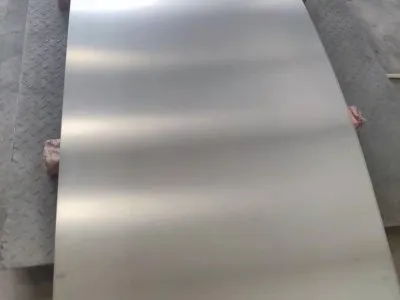
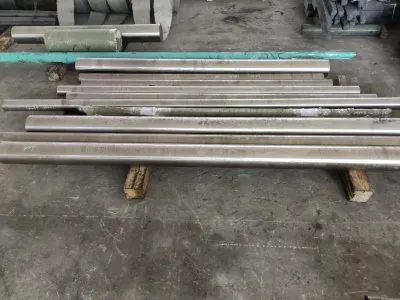
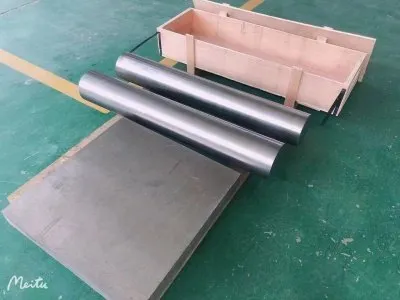
Ready to source heat- and corrosion-resistant superalloys? Contact Dura Alloy for Inconel 600, Hastelloy C-2000, GH4202 and Incoloy 800 in bar, plate, sheet and tube with full certificates — 📞 +86-18921275456 · WhatsApp 8618921275456 · Request a quote