High-Temperature Alloys for Aerospace Engine Components: Properties, Applications, and Performance
Modern aircraft engines push materials to the edge of what metals can survive. Turbine blades rotate at 10,000 RPM or more while facing gas temperatures above 1,400 °C — hotter than the melting point of any superalloy — and must hold their shape for tens of thousands of flight hours. High-temperature alloys are the material class engineered to do exactly that, and they are the reason today’s engines can deliver high thrust-to-weight ratios, low fuel burn and long maintenance intervals.
This guide explains what makes these alloys work — their properties, the strengthening mechanisms behind them, the components they power, and how they are made and qualified.
Why High-Temperature Alloys Are Essential in Aerospace Engines
In a gas turbine, the hottest section is the combustor and high-pressure turbine. Combustion gases reach 1,400–1,600 °C, far above the melting point of the alloy itself. Components survive not because the metal can withstand that temperature directly, but because of a layered strategy:
- Alloy capability — the base metal sustains useful strength and creep resistance at 950–1,100 °C.
- Internal cooling — air bled from the compressor flows through shaped cooling passages inside blades.
- Thermal barrier coatings (TBC) — ceramic topcoats insulate the metal surface.
Together, internal cooling and TBC keep the base metal hundreds of degrees below the gas temperature. The alloy is still the foundation: it must resist creep, oxidation, thermal fatigue and hot corrosion across thousands of thermal cycles without losing its mechanical integrity.
Key Properties Required for Engine Hot-Section Components
| Property | Why It Matters | Example Alloys |
|---|---|---|
| High-temperature strength and creep resistance | Blades and discs hold load at temperature for long lives | Inconel 718 / GH4169, Waspaloy, single-crystal superalloys |
| Oxidation and hot corrosion resistance | Gas-path surfaces scale and salt-attack over service life | High-chromium wrought alloys, coated superalloys |
| Fatigue resistance | Start–stop cycles and vibration grow cracks | Clean-melted PM alloys, fine-grain forged discs |
| Microstructural stability | γ′ precipitates must resist coarsening for tens of thousands of hours | Re/Ru-containing single crystals |
| Formability and weldability | Sheet hardware must be fabricated into complex liners and casings | Hastelloy X, GH3039, GH3044 |
No single alloy offers all of them. Engine design is therefore a materials portfolio: different parts, different alloys.
Nickel-Based Superalloys and Their Strengthening Mechanisms
The workhorse of the hot section is the nickel-based superalloy, whose strength comes from a carefully engineered microstructure:
- γ′ (gamma prime) precipitation — fine, coherent Ni₃(Al,Ti) particles block dislocation movement at temperature, providing most of the high-temperature strength. Volume fractions can exceed 50 % in modern blade alloys.
- Solid-solution strengthening — cobalt, tungsten, molybdenum and tantalum distort the austenitic matrix and slow diffusion.
- Carbide strengthening — grain-boundary carbides pin boundaries and improve rupture life in forged alloys.
- Refractory additions — rhenium and ruthenium in second- and third-generation single crystals slow γ′ coarsening and raise creep capability; hafnium improves oxide adherence.
This combination keeps a typical nickel superalloy creep-resistant and oxidation-resistant across the 650–1,100 °C band — the reason nickel, rather than iron, dominates above about 800 °C.
Major Alloy Families Used in Aerospace Engines
| Engine Component | Alloy Family | Representative Grades |
|---|---|---|
| Turbine blades and vanes | Single-crystal and directionally solidified nickel superalloys | CMSX-4, René N5, PWA 1484 (2nd–3rd generation SX) |
| Turbine and compressor discs | Forged and powder-metallurgy (PM) superalloys | Inconel 718 / GH4169, Waspaloy, René 88, RR1000 |
| Combustor liners, casings, ducting | Wrought sheet superalloys and high-temperature alloys | Hastelloy X, GH3039, GH3044, GH3128 |
| Seals, fasteners, shafts and hardware | Age-hardened nickel alloys | Inconel 718, A-286, René 41 |
| Fan and compressor blades (cooler sections) | Titanium alloys | Ti-6Al-4V, Ti-6Al-2Sn-4Zr-2Mo |
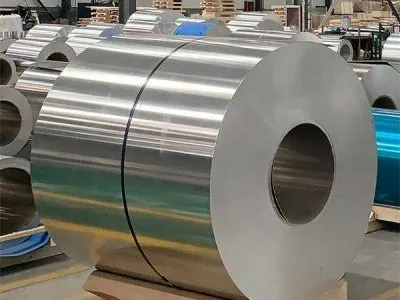
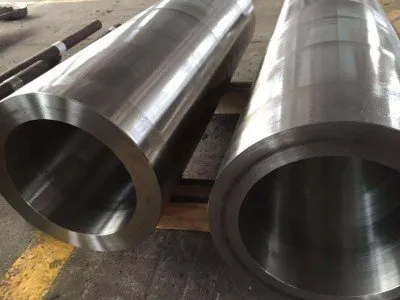
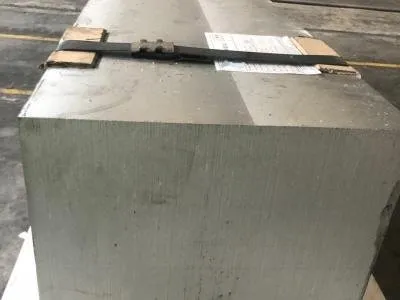
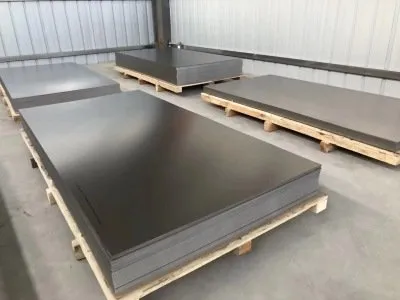
The full-range suppliers behind these grades — such as Dura Alloy — carry high-temperature alloys, Inconel, Waspaloy, Hastelloy and titanium alloys as billets, plates, sheets, strips, bars and seamless tubes.
Applications Across the Engine
- Turbine blades and vanes — the highest-temperature components; single-crystal casting plus TBC allows inlet temperatures hundreds of degrees above alloy limits.
- Turbine discs — rotate with the blades and carry the largest centrifugal loads; forged Inconel 718 / GH4169 and PM superalloys combine strength with damage tolerance.
- Combustors — sheet alloys such as Hastelloy X and the GH family must resist thermal fatigue and oxidation under cyclic combustion.
- Casing and ducting — large formed parts need weldable, formable high-temperature alloys.
- Afterburner and nozzle hardware — moderate hot sections where wrought superalloys and coated alloys dominate.
- Fasteners and seals — age-hardened nickel alloys hold preload at temperature.
Because engine certification requires flawless reproducibility, every one of these parts depends on the quality of its starting material — clean-melted billet, precisely controlled sheet gauge, and certified composition.
How Advanced Alloys Are Manufactured
- Investment casting — blades and vanes are cast into near-net shapes; single-crystal casting uses a spiral selector to let one grain dominate, eliminating grain boundaries, while directionally solidified (DS) casting aligns columnar grains along the principal stress axis.
- Powder metallurgy (PM) — atomized alloy powder is consolidated by hot isostatic pressing (HIP) and forged into damage-tolerant discs that avoid the segregation limits of large conventional ingots.
- Additive manufacturing — laser powder-bed fusion and directed energy deposition now produce cooled components and repair parts with complex internal geometry.
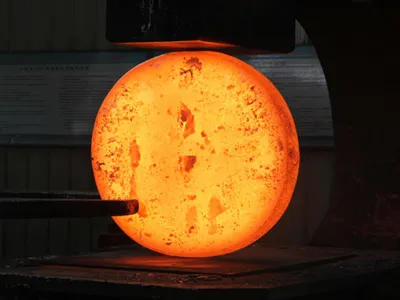
- Wrought processing — billets from vacuum induction melting plus electro-slag or vacuum arc remelting are forged and rolled into discs, rings, bars and sheet.
Machining superalloys is deliberately difficult — their hot strength and work-hardening wear tooling quickly — which is why near-net-shape processes and electrical-discharge machining are standard in blade production.
Coatings and Cooling: Extending the Temperature Limit
The base alloy sets the ceiling; coatings and cooling push the ceiling higher:
- Thermal barrier coatings (TBC) — typically yttria-stabilized zirconia (YSZ) topcoats over an MCrAlY bond coat, applied by plasma spraying or electron-beam physical vapor deposition. The ceramic topcoat is a poor thermal conductor, dropping the metal surface temperature by roughly 100–200 °C on its own.
- Internal cooling — hundreds of film-cooling holes and shaped passages spread compressor bleed air across the blade, adding another large temperature reduction.
- Environmental coatings — where oxidation or hot corrosion dominates, aluminide and MCrAlY layers protect the substrate for the full service interval.
The combined effect: a modern blade’s base metal runs well below the alloy’s creep limit even when combustion gas exceeds 1,600 °C.
Performance Testing and Qualification
No aerospace alloy enters service on paper properties alone. Qualification typically includes:
- Creep-rupture testing — stress-to-rupture at service temperatures for up to tens of thousands of hours.
- Low-cycle and high-cycle fatigue testing — thermal-mechanical cycling and vibration characterization.
- Oxidation and hot-corrosion exposure — cyclic furnace tests in representative atmospheres.
- Metallurgical verification — γ′ size and volume fraction, grain structure, inclusion rating and chemistry traceability.
Computational design — CALPHAD thermodynamic modeling, integrated computational materials engineering (ICME), and increasingly machine learning — now shortens development cycles by predicting alloy behavior before casting. Certification still demands physical proof: clean-melted, fully traceable material with mill test certificates from an approved source.
Future Directions
Next-generation engines will run hotter for better efficiency, and the materials roadmap follows:
- Higher-performance single crystals — more refractory content and optimized γ′ morphology.
- Oxide-dispersion-strengthened (ODS) alloys — for extreme creep capability.
- Ceramic matrix composites (CMC) — replacing superalloys in some shrouds and vanes, raising inlet temperature further.
- Additive-specific alloys — compositions optimized for AM process windows.
- Smarter cooling and coatings — multi-layer TBC and internal geometries only possible with additive manufacturing.
Each step extends turbine inlet temperature and efficiency — and each step starts with the same foundation: a high-quality, clean-melted high-temperature alloy.
FAQ
Q: What alloys are used in jet engine turbine blades? A: Single-crystal nickel-based superalloys — for example CMSX-4 and René N5 — with rhenium and ruthenium additions, protected by thermal barrier coatings and internal cooling.
Q: Why is nickel used instead of steel in the hot section? A: Nickel superalloys retain creep strength and oxidation resistance above ~800 °C where iron-based alloys degrade rapidly, and γ′ precipitation gives them unique high-temperature capability.
Q: What is a single-crystal superalloy? A: A blade alloy cast so that the entire component is one grain — eliminating grain-boundary sliding, the weak link at high temperature, and allowing higher operating temperatures.
Q: What is gamma prime (γ′)? A: The Ni₃(Al,Ti) precipitate that strengthens nickel superalloys by blocking dislocation motion; its size, fraction and stability control high-temperature strength and creep life.
Q: What is a thermal barrier coating? A: A ceramic (usually yttria-stabilized zirconia) topcoat that insulates the metal surface, typically lowering blade metal temperature by 100–200 °C on top of internal air cooling.
Q: Where can I source aerospace-grade high-temperature alloys? A: From suppliers with an integrated clean-melting line and full certification — Dura Alloy supplies high-temperature alloys, Inconel, Waspaloy, Hastelloy and titanium alloys with complete mill test documentation.
Source Aerospace-Grade Alloys from a Certified Supplier
Dura Alloy’s one-stop line — vacuum melting, electro-slag remelting, forging, heat treatment, rolling and machining — produces nickel-based alloy products for aerospace and critical-industry applications, with guaranteed composition, non-destructive testing and fast delivery. Share your grade, form and specification for a confirmed quote.
nicholas.zhu1212@gmail.com · WhatsApp 8618921275456 · Request a quote