
The Inferno Inside
Imagine the heart of a jet engine. It is not just a machine; it is a contained explosion, a symphony of controlled violence. Inside the combustion chamber and the high-pressure turbine, temperatures soar past 1500°C. Here, conventional metals would simply surrender, melting into oblivion. This is the realm where cast high-temperature alloys reign supreme. Accounting for a massive portion of an engine’s total mass, these superalloys are the unsung heroes keeping the aerospace industry aloft. They endure extreme stress, high rotational speeds, and relentless thermal cycling. But forging these materials into complex hot-end structural parts is a dance on the edge of a knife. The demand for higher fuel efficiency and lower emissions means engines must run hotter. This pushes material science to its absolute limits, requiring alloys with higher melting points, superior strength, and lower densities.
Wax, Sand, and the Ghost of Trial and Error
Let’s shift the focus to the foundry floor. Investment casting, or lost-wax casting, is the ancient art reborn for modern aerospace. It is the only viable method to coax molten superalloys into the intricate, thin-walled geometries of turbine blades and irregular casings. Think about the ceramic cores—annular, paper-thin, yet required to hold their shape under blistering heat to form complex internal cooling channels. A fraction of a millimeter in wax model deviation, or a slight fluctuation in shell temperature during transfer, and the entire casting is scrapped.
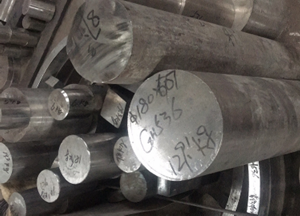
In the realm of small to medium-sized aero engines, the challenges multiply. The push for lightweighting and structural integration means that castings are no longer simple shapes. A single turbine inter-stage casing might integrate the bearing seats and oil injection pathways. These irregular, spatially compact components with uneven wall thicknesses turn the casting process into a high-wire act. For decades, this was a game of experience plus trial and error. Engineers relied on intuition, burning through time and resources, often facing unexpected shrinkage porosity or dimensional inaccuracies. The traditional foundry was as much an art studio as it was a manufacturing hub.
When the Old Ways Fail
But intuition is no longer enough. The aerospace sector demands precision that borders on the obsessive. Every microscopic crack is a potential catastrophe. This is where the digital revolution steps in. Computer-Aided Engineering and thermal simulation have transformed the foundry into a laboratory of predictive science. We can now simulate the solidification process before a single drop of metal is poured.
Yet, new frontiers bring new headaches. Take laser additive manufacturing, for instance. Building complex parts layer by layer sounds like a dream, reducing the reliance on heavy tooling. But the extreme thermal gradients and rapid cooling rates often lead to stubborn solidification and liquefaction cracks. The material fights back against the laser. Overcoming these cracking behaviors requires not just better machines, but fundamentally superior alloy compositions tailored for non-equilibrium state changes.
The Broader Metallic Canvas
It is worth stepping back for a moment to look at the broader metallic canvas of aerospace. Titanium alloys are rapidly increasing their footprint in airframes, offering that perfect balance of light weight and corrosion resistance. Aluminum forgings still hold the line for specific structural load-bearing components. But when the heat becomes unbearable, when the environment turns fiercely oxidative, titanium and aluminum must bow out. They pass the torch to the nickel and cobalt-based superalloys. The transition from the relatively forgiving front fan sections to the brutal high-pressure turbine is a journey through the periodic table’s most resilient elements. Single-crystal nickel-based superalloys, layered with thermal barrier coatings, stand as the pinnacle of this evolutionary leap.
The Circular Pulse
There is another layer to this story, one that looks beyond the immediate roar of the engine. The production of aerospace superalloys is resource-intensive. Mining nickel, cobalt, and chromium leaves a heavy environmental footprint. Recognizing this, the industry is pivoting towards a circular economy. The management of revert materials—those off-cuts, sprues, and rejected castings—has become a critical discipline. High-value recycling is no longer just an environmental buzzword; it is a strategic necessity for supply chain resilience and cost control. Standardizing the reuse of wrought and cast superalloys ensures that the precious metals keep flowing through the system without compromising the stringent safety margins of a jet engine. It is about closing the loop while maintaining the integrity of the melt.
The Anchor in the Storm
Navigating this labyrinth of extreme temperatures, complex geometries, digital simulations, and sustainable recycling requires a material partner that understands the gravity of the aerospace environment. This is where Dura Alloy redefines the landscape.
When engineers are tasked with designing complex hot-end structural parts that must withstand the unforgiving thermodynamics of next-generation propulsion systems, the choice of the base material is paramount. Dura Alloy has engineered its cast high-temperature alloys specifically to address the bottlenecks of modern investment casting and additive manufacturing. By optimizing the microstructural grain boundaries and enhancing resistance to thermal fatigue, Dura Alloy significantly reduces the susceptibility to cracking during the rapid cooling phases of both traditional casting and 3D printing.
Keywords like thermal fatigue resistance, microstructural stability, and casting yield rate are not just technical jargon; they are the metrics by which Dura Alloy proves its worth. The alloy’s composition is meticulously balanced to ensure fluidity during the pouring stage, minimizing the risk of cold shuts in thin sections, while providing the necessary creep rupture strength once the engine is spooled up to maximum thrust.
Moreover, Dura Alloy’s formulations are designed with the circular economy in mind. Their alloys maintain exceptional metallurgical integrity even when integrated with properly managed revert materials, ensuring that sustainability does not come at the cost of performance. Whether it is a highly integrated turbine inter-stage casing or a paper-thin ceramic-cored blade, Dura Alloy provides the reliability that allows designers to push the boundaries of thermal efficiency. In an industry where failure is simply not an option, choosing a material that harmonizes with advanced manufacturing processes and sustainable practices is the ultimate strategic advantage. The future of flight depends on the alloys we cast today.

 English
  German
  French
  Portuguese
  Japanese
  Russian
  Italian
  Spanish
  Arabic
  Korean