Marine Diesel Engine High-Temperature Alloy Exhaust Valve Performance and Applications
A marine diesel exhaust valve lives in the worst spot in the engine. Its face holds back combustion gas at 400–650 °C; fuel ash brings sulfur, vanadium and sodium that eat protective oxides; every seating event is an impact; and each load change is a thermal shock. A valve that fails here does not just cost a part — it can cost a cylinder head, a piston, and days of downtime in port. That is why exhaust valves are made of high-temperature alloys engineered for exactly this combination of heat, corrosion and fatigue.
This guide explains the six factors that decide marine diesel exhaust valve life, and the alloy choices behind each one.
The Valve as a Materials Problem
| Part | Role | Typical Material |
|---|---|---|
| Valve head (face + back) | Holds combustion gas, seats against the insert | γ′-hardened nickel alloys — Nimonic 80A, Nimonic 90 |
| Valve stem | Guides motion, transmits seating load | 17-4PH / martensitic stainless, sometimes 21-4N |
| Seat face (hardfacing) | Resists impact, wear and hot-corrosion cutting | Cobalt-based hardfacing (Stellite type) |
| Valve insert / seat ring | Receives the closing impact | Wear- and corrosion-resistant steels |
Few engines use a single material: the head, stem and seat face each answer a different failure mode, and the alloy choice is a system decision.
1) Temperature and Hot Corrosion — the First Killer
Exhaust valves face two chemical enemies that ordinary stainless steel cannot hold:
- Oxidation — at sustained high temperature, the valve face must keep a protective oxide film; spallation under load changes consumes metal and starts cracks.
- Hot corrosion — sulfur, vanadium and sodium in heavy-fuel ash form molten deposits that flux away protective oxides — the classic “vanadium attack” that pits valve faces in residual-fuel-burning engines.
The answer is chromium-plus-aluminum, titanium-strengthened nickel chemistry: γ′ precipitates (Ni₃(Al,Ti)) give strength while the oxide-forming elements hold the surface. Nimonic 80A is the reference marine exhaust-valve alloy — precipitation-hardened, oxidation-resistant, and proven in cylinder-head service for decades.
2) Thermal Fatigue and Impact Seating
Every load change cycles the valve face through temperature, and every seating event slams the face into the insert. Two fatigue mechanisms accumulate:
- Thermal fatigue — heating and cooling cycles strain the surface, cracking from the face inward, accelerated by temperature gradients between the hot face and the cooler stem.
- Impact fatigue — seating impact work-hardens and spalls surfaces, especially if the valve train develops clearance or the face distorts.
This is why valve design pairs a tough, crack-tolerant head with a hard, impact-resistant seat face — and why seat-face hardfacing is not optional on heavy-fuel engines.
3) Material Selection: Head, Stem, and Seat
- Head — the load-bearing hot face demands creep and hot-corrosion resistance: Nimonic 80A (age-hardened Ni-Cr-Ti-Al) and the higher-temperature Nimonic 90 are the classic answers; valve stems and ducting in less stressed locations often use Nimonic 75, a solid-solution grade with excellent oxidation resistance.
- Stem — needs wear resistance and stable clearance behavior: precipitation-hardening stainless like 17-4PH (SUS630) provides the strength and galling resistance for stem-and-guide service.
- Marine corrosion hardware around the valve gear — where saltwater and exhaust condensation meet, nickel-copper Monel 400 remains the classic answer for trims, studs and corrosion-critical fittings.
4) Design and Cooling — Making the Material Last Longer
Material alone is rarely enough; design multiplies life:
- Sodium-filled hollow valves — a hollow stem charged with sodium transfers heat from the hot face to the cooler stem, cutting face temperature by tens of degrees — the single most effective life extension for highly rated engines.
- Rotating valves — slow rotation distributes seat-face wear and prevents local hot spots.
- Seat angles and widths — geometry that spreads seating load and improves gas sealing reduces both wear and local temperature.
Cooling design, not just alloy selection, is what lets a Nimonic 80A valve survive tens of thousands of operating hours.
5) Manufacturing, Heat Treatment and Quality
The alloy only delivers if processing delivers it:
- Solution treatment and aging — for Nimonic 80A, solution treatment near 1,080 °C followed by aging around 700–750 °C produces the γ′ structure that carries the strength; the heat-treatment record belongs on the certificate.
- Precision machining and grinding — stem concentricity, face angles and seat run-out are set within tight tolerances; valve-train reliability depends on them.
- Hardfacing quality — cobalt-based seat overlays must be crack-free and fusion-bonded; porosity here is a guaranteed early failure.
- Documented quality — chemistry, hardness and NDT results accompany every batch, because a valve failure in service is measured in engine damage, not part cost.
6) Inspection and Maintenance — Life Is Managed, Not Assumed
Even the best valve is retired by operation, not by age:
- Valve clearance checks — correct clearance prevents impact overload and face hammering.
- Seat-face inspection — pitting, burning and hardfacing loss are read on the face; grind-in or hardfacing repair extends life.
- Temperature and fuel-quality discipline — avoiding sustained overload and high-sulfur, high-vanadium fuel blends reduces the corrosion driving valve retirement.
- Scheduled replacement — interval-based renewal of valves, inserts and guides is cheaper than the unscheduled cylinder-head repair that follows a failed valve.
FAQ
Q: What alloy is used for marine diesel exhaust valves? A: The valve head is typically Nimonic 80A — a precipitation-hardened nickel-chromium alloy — with cobalt-based hardfacing on the seat face and 17-4PH or martensitic stainless for the stem.
Q: Why do exhaust valves suffer hot corrosion? A: Sulfur, vanadium and sodium in heavy fuel form molten deposits that flux away protective oxides — the classic vanadium attack on valve faces in residual-fuel engines.
Q: What is a sodium-filled exhaust valve? A: A hollow valve stem charged with sodium that transfers heat from the face to the stem, reducing face temperature and extending valve life in highly rated engines.
Q: How long does a marine exhaust valve last? A: With correct fuel quality, cooling design and maintenance, thousands of operating hours — but life is set by seat wear, hot corrosion and thermal fatigue, so inspection intervals govern.
Q: Can exhaust valves be repaired? A: Yes — seat faces can be ground in or re-hardfaced within limits; stems and heads beyond specification are replaced rather than repaired.
Q: How do I choose the right exhaust valve material? A: Match the valve-head alloy to fuel quality and exhaust temperature (Nimonic 80A/90 family), the stem to wear and clearance requirements, and hardfacing to impact and corrosion duty.
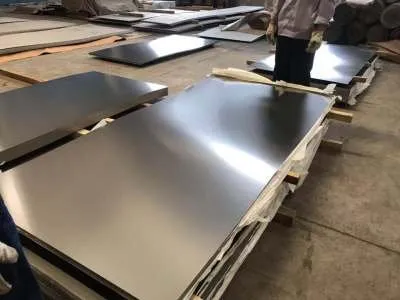
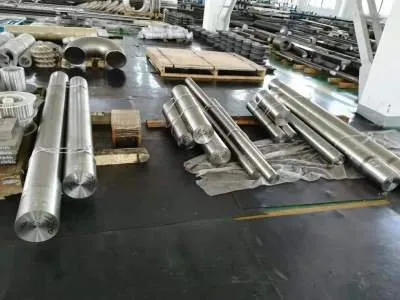
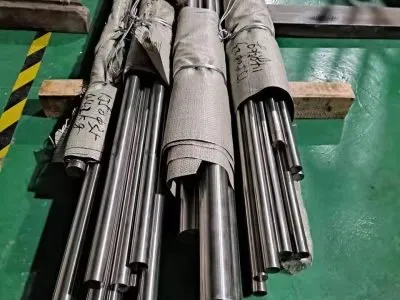
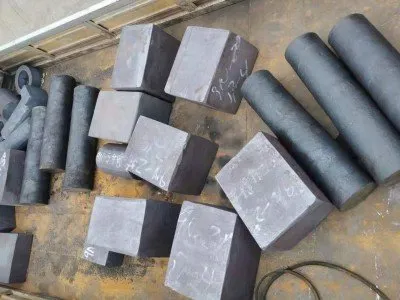
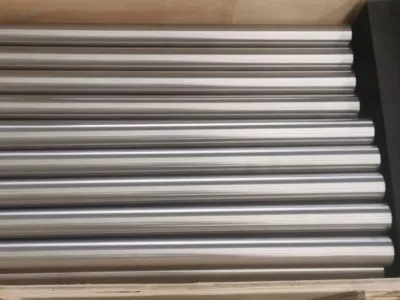
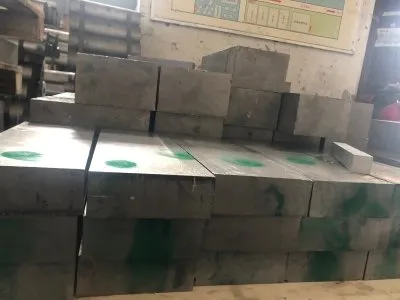
Ready to source valve-grade alloys? Contact Dura Alloy for Nimonic 80A, Nimonic 75, 17-4PH (SUS630) and Monel 400 in bar, plate and sheet with complete test certificates — 📞 +86-18921275456 · WhatsApp 8618921275456 · Request a quote