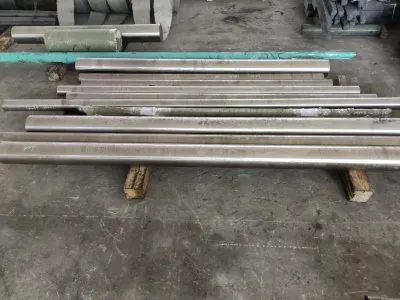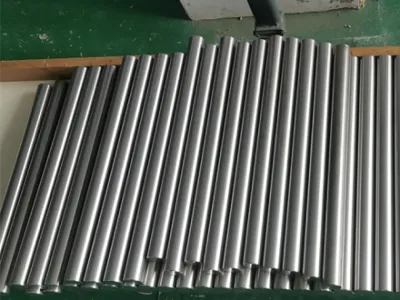
High-performance alloy material for industrial engineering and critical application conditions.
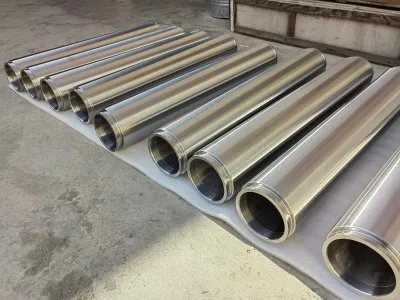
Scope of supply for Aviation Group
Forgings, round rods, steel plates, rings, seamless pipes, steel plates/steel belts, capillaries, wire welding materials, welcome to inquire!
1. Introduction to Hastelloy B-2 Materials
Hastelloy B-2 is a solid-solution strengthened nickel-molybdenum alloy with outstanding resistance to reducing media including hydrogen chloride gas, sulfuric acid, acetic acid and phosphoric acid. Molybdenum serves as the primary alloying element delivering superior corrosion resistance in reducing environments. This nickel-molybdenum alloy can be applied in welded condition as it restrains grain boundary carbide precipitation within weld heat-affected zones.
2. Chemical composition of Hastelloy B-2
| Alloy | Content limit | Ni | Cr | Fe | C | Mn | Si | Cu | Mo | Co | P | S |
| Hastelloy B-2 | Minimum | Bal | 0.4 | 1.6 | – | – | – | – | 26 | – | – | – |
| Maximum | 0.7 | 2.0 | 0.01 | 1.0 | 0.08 | 0.5 | 30 | 1.0 | 0.020 | 0.010 |
3. Physical properties of Hastelloy B-2
| Density | 9.2g/cm³ |
| Melting point | 1330~1380℃ |
Minimum room temperature mechanical properties of the alloy:
| Delivery state | Tensile strength Rm N/mm² | Yield strength RP0.2 N/mm² | Elongation A5 % |
| Solid solution treated | 690 | 310 | 40 |
4. Hastelloy B-2 material characteristics
5. Hastelloy B-2 application field
It is widely used in chemical, petrochemical, energy production and environmental pollution control industries, especially equipment for sulfuric acid, hydrochloric acid, phosphoric acid and acetic acid production. It is not recommended for service environments containing ferric and cupric salts, as these salts will cause rapid corrosive failure. Contact between hydrochloric acid and iron/copper will generate ferric and cupric ions.