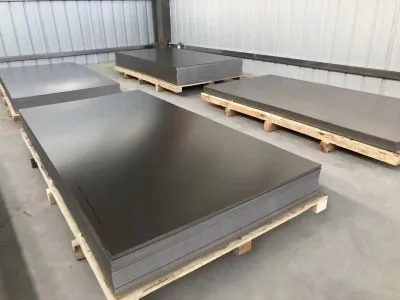
High-performance alloy material for industrial engineering and critical application conditions.
Scope of supply for Aviation Group
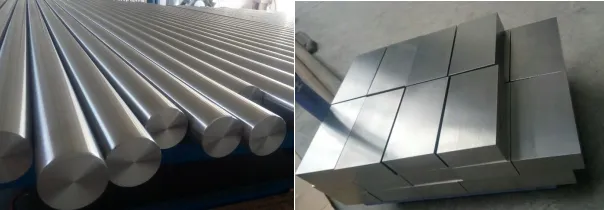
Forgings, round rods, steel plates, rings, seamless pipes, steel plates/steel belts, capillaries, wire welding materials, welcome to inquire!
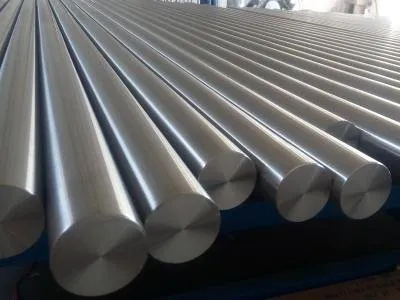
Titanium forgings, custom titanium rods per drawings. Φ(8-400) ×L≤5000mm (rolled rods, forged rods)
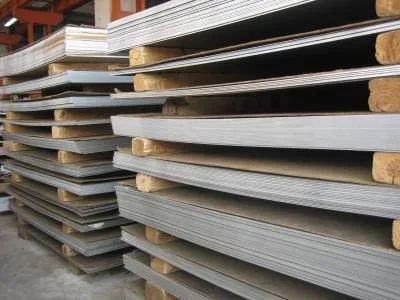
Titanium plate/belt (0.3-60.0) × (400-1000) × (1000-3500) mm (cold rolled plate, hot rolled plate)
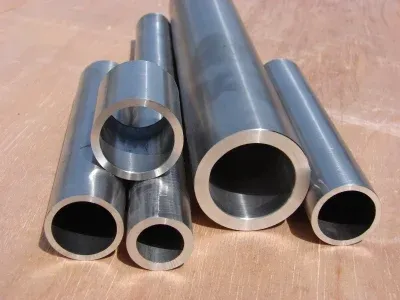
Titanium tube Φ(3-210) × (0.2-10.0) ×L (rolled pipes, extruded pipes)
Titanium ring Outer diameter φ(100-1200) × inner diameter Φ(100-1000) × height (20-800) mm
Titanium round cake Φ(150-1200) × (20-800) mm
Titanium wire Φ(0.1-7.0) ×L
1. Introduction to TA2/Gr2 materials
TA2/Gr2 is commercially pure titanium with single α phase structure. TA2 is the most widely used grade in industry due to balanced corrosion resistance and comprehensive mechanical properties. TA3 is selected for high strength and wear resistance requirements, while TA1 is preferred for superior forming performance.
Titanium alloy is an important new structural material for aerospace. Its density, strength and service temperature sit between aluminum and steel, featuring ultra-high specific strength, outstanding seawater corrosion resistance and excellent cryogenic performance. In 1950, the US first applied titanium on F-84 fighter-bombers for non-load-bearing components such as rear fuselage heat shields, air intake fairings and tail covers. In the 1960s, titanium usage expanded to mid-fuselage sections, partially replacing structural steel for critical load-bearing parts including bulkheads, beams and flap tracks. Titanium content on military aircraft rapidly rose to 20%~25% of total structural weight.
Pure titanium is silvery white metal with excellent comprehensive properties. Density is 4.54g/cm³, 43% lighter than steel and slightly heavier than magnesium. Its mechanical strength matches steel, twice that of aluminum and five times that of magnesium. Titanium is high-temperature resistant with melting point 1942K, nearly 1000K higher than gold and 500K higher than steel. Titanium wire is produced by drawing titanium billets into filaments via special forming processes.
Commercially pure titanium grades TA1, TA2, TA3 are classified by impurity content. Interstitial impurity content increases sequentially from TA1 to TA3, leading to gradual rise in strength and hardness, while plasticity and toughness decline correspondingly.
2. Chemical composition of TA2/Gr2
| Brand | Chemical composition (wt%) | |||||||
| TA2/Gr2 | Titanium (Ti) | Iron (Fe) | Carbon (C) | Nitrogen (N) | Hydrogen (H) | Oxygen (O) | Other impurities | |
| Bal | ≤0.30 | ≤0.10 | ≤0.05 | ≤0.015 | ≤0.25 | Single ≤0.10 | Total ≤0.40 | |
3. Technical standards of TA2/Gr2 materials
GB/T3620.1-2016 Titanium and Titanium Alloy Grades and Chemical Compositions
GB/T 3621-2007 ASTM/B265 Titanium and Titanium Alloy Sheet
GB/T2965 -2007 ASTM/B348 Titanium and Titanium Alloy Rod Material
GB/T 3624-2010 ASTM/B337 Titanium and Titanium Alloy Seamless Tube
GB/T16598-2013 ASTM/B381 Titanium & titanium alloy tubes for heat exchanger and condenser
GB/T13810-1997 ASTM/F136 Titanium and titanium alloy processing materials for surgical implants
GB/T3623-2007 ASTM/B863 titanium and titanium alloy wire
ASTM/B265 Titanium and Titanium Alloy Strip & Foil
4. TA2/Gr2 physical properties
| Brand | Minimum room temperature mechanical properties | Minimum high temperature mechanical properties | ||||||
| Tensile strength σb MPa | Yield strength σ0.2 MPa | Elongation δ5 % | Reduction of area ψ % | Impact value αk J/cm² | Test temperature ℃ | Tensile strength σb MPa | Creep rupture strength σ100 MPa | |
| TA1 | 343 | 275 | 25 | 50 | — | |||
| TA2 | 441 | 373 | 20 | 40 | — | |||
| TA3 | 539 | 461 | 15 | 35 | — | |||
| TA5 | 686 | — | 15 | 40 | 58.8 | |||
| TA6 | 686 | — | 10 | 27 | 29.4 | 350 | 422 | 392 |
| TA7 | 785 | — | 10 | 27 | 29.4 | 350 | 490 | 441 |
| TC1 | 588 | — | 15 | 30 | 44.1 | 350 | 343 | 324 |
| TC2 | 686 | — | 12 | 30 | 39.2 | 350 | 422 | 392 |
| TC4 | 902 | 824 | 10 | 30 | 39.2 | 400 | 618 | 569 |
| TC6 | 981 | — | 10 | 23 | 29.4 | 400 | 736 | 667 |
| TC9 | 1059 | — | 9 | 25 | 29.4 | 500 | 785 | 588 |
| TC10 | 1030 | — | 12 | 25~30 | 34.3 | 400 | 834 | 785 |
| TC11 | 1030 | — | 10 | 30 | 29.4 | 500 | 686 | 588 |
5. Characteristics of TA2/Gr2
Titanium has six core advantages:
1. High specific strength: Higher strength-to-density ratio than other metals, lightweight high-rigidity structural parts widely used in aircraft engines, frames, skins, fasteners and landing gear.
2. Excellent corrosion resistance: Outperforms stainless steel in humid air and seawater, resistant to pitting, acid and stress corrosion, stable against alkalis, chlorides, chlorinated organics, sulfuric acid and nitric acid.
3. High temperature resistance: Service temperature higher than aluminum alloy, stable long-term service at 450-500℃.
4. Cryogenic performance: Retains complete mechanical properties under ultra-low temperature; low-interstitial titanium alloys maintain good ductility, ideal cryogenic structural material.
5. High heat exchange efficiency: Lower thermal conductivity than carbon steel and copper, outstanding corrosion resistance allows thinner wall design. Dropwise condensation forms on titanium surface without scaling, reducing thermal resistance and improving heat transfer efficiency.
6. Non-magnetic & biocompatible: Cannot be magnetized under strong magnetic field, non-toxic and blood-compatible, widely applied in medical equipment.
6. TA2/Gr2 application fields