Q: What is Waspaloy? +
A: Waspaloy (UNS N07001) is a precipitation-hardened wrought nickel-based superalloy reinforced with chromium, cobalt, molybdenum, aluminium and titanium. It gains high strength through precise aging heat treatment and maintains stable mechanical properties under continuous high-temperature stress. It features excellent creep rupture strength, thermal fatigue resistance and moderate oxidation resistance up to 870°C. Developed for rotating hot-section components, it outperforms many common nickel alloys at temperatures above 650°C and is specially engineered for high-load aerospace and industrial gas turbine core parts with long service life requirements.
Q: How to inspect the quality of finished Waspaloy forgings before delivery? +
A: Complete quality inspection covers chemical composition analysis to verify element compliance, metallographic examination to check grain size and uniform gamma prime distribution, and mechanical testing including room and high-temperature tensile strength, creep rupture life and thermal fatigue tests. Non-destructive testing such as ultrasonic inspection detects internal pores, segregation and forging cracks. Any inconsistency in microstructure or mechanical indexes disqualifies the forgings, as tiny internal defects will expand rapidly under high-speed rotation and high-temperature cyclic loads during engine operation.
Q: Is Waspaloy suitable for corrosive chemical environments? +
A: Waspaloy’s chromium content offers basic oxidation and mild hot corrosion resistance for gas turbine flue atmospheres, but it is not designed for severe chemical corrosion working conditions. It lacks high molybdenum content found in Hastelloy series alloys, so it cannot resist concentrated acids, wet chlorine or mixed corrosive media. It will suffer pitting and intergranular corrosion if exposed to strong chemical reagents for long periods. Its core value lies in high-temperature mechanical performance rather than anti-corrosion capacity for chemical processing equipment.
Q: What are the advantages of Waspaloy compared with other wrought nickel superalloys? +
A: Waspaloy has far better creep and thermal fatigue strength at 650–870°C than Alloy 718, making it ideal for higher-temperature turbine disks. Its balanced cobalt and molybdenum content delivers stable performance under frequent cold-hot alternation without rapid thermal cracking. It maintains consistent ductility after long-term high-temperature aging and shows strong resistance to hot corrosion from engine fuel combustion products. Its uniform forged microstructure guarantees reliable safety for high-speed rotating aviation components under extreme centrifugal stress.
Q: What are the primary application fields of Waspaloy? +
A: Aerospace aeroengines are its largest application field, widely used for turbine disks, compressor shafts, turbine seals, high-temperature fasteners and rotating rings inside jet engines. Land-based industrial gas turbines also adopt Waspaloy for hot-section rotating components that bear repeated thermal cycles and centrifugal loads. It is occasionally used for high-temperature moulds and power generation equipment parts requiring superior fatigue resistance, while most static anti-corrosion parts will choose other nickel alloys instead of Waspaloy.
Q: What are the typical working temperature ranges of Waspaloy? +
A: Waspaloy delivers optimal comprehensive performance for long-term service between 650°C and 815°C. It retains reliable creep rupture strength at peak temperatures reaching 870°C for intermittent working conditions. Prolonged operation above 870°C will cause gamma prime phase coarsening, leading to gradual loss of strength and accelerated surface oxidation. At temperatures below 600°C, its strength advantage over other superalloys is less obvious, so it is rarely selected for low-to-medium temperature static structural parts without high thermal load.
Q: What key alloying elements define Waspaloy’s performance? +
A: Chromium provides oxidation and hot corrosion resistance by forming a dense protective oxide layer on the alloy surface. Cobalt stabilizes the matrix microstructure and improves high-temperature fatigue resistance. Molybdenum boosts creep strength by restraining grain boundary sliding under long-term heat and load. Aluminium and titanium form nano-sized gamma prime precipitates during aging treatment, which are the main source of the alloy’s high tensile strength. Strict control of element ratios eliminates brittleness and ensures consistent performance for critical rotating components.
Q: What limitations does Waspaloy have in processing and service? +
A: Waspaloy is susceptible to strain-age cracking during welding, which restricts most fusion welding applications for finished critical parts; only limited specialized welding procedures can be applied. It has relatively poor cold workability and severe work hardening, raising machining costs significantly. Its oxidation resistance at temperatures over 870°C declines noticeably without protective coatings. The complex double vacuum melting and multi-step heat treatment push up raw material and processing costs, limiting its use to high-end power equipment only.
Q: What production processes are standard for manufacturing Waspaloy products? +
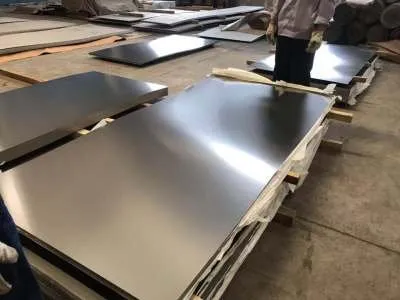
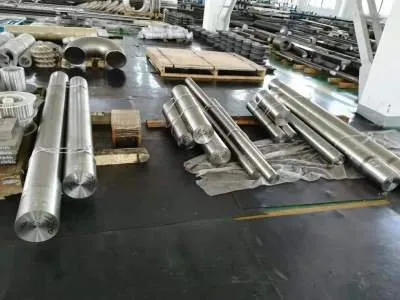
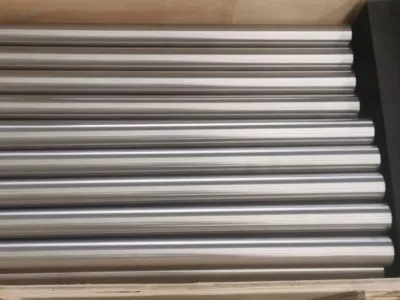
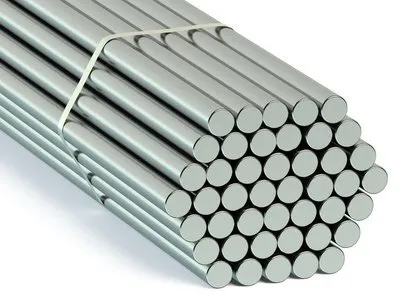
A: Raw Waspaloy ingots are produced through double vacuum melting including vacuum induction melting and vacuum arc remelting to reduce internal segregation and impurities. The ingots undergo multi-stage hot forging under precise temperature control to refine grain structure and eliminate casting defects. After forging, standardized solution and aging heat treatments are mandatory to precipitate strengthening phases. Semi-finished products are supplied as bars, forgings, rings and sheets, while precision casting is not suitable for Waspaloy’s core rotating part demands.
Q: What standard heat treatment procedure is required for Waspaloy to reach full strength? +
A: Full heat treatment consists of two core stages: solution annealing followed by aging hardening. Solution treatment is carried out at approximately 1010°C with controlled holding time and air cooling to fully dissolve precipitates and homogenize the matrix. The subsequent aging process at around 815°C stimulates uniform gamma prime precipitation to maximize tensile and creep strength. Improper temperature, holding duration or cooling speed will lead to uneven grain growth or insufficient strengthening phases, resulting in failed mechanical test indicators for finished rotating components.