Q: How to distinguish and inspect qualified tantalum, niobium, zirconium and nickel raw materials? +
A: Spectral chemical analysis is the primary test to verify purity and impurity content; qualified high-grade products control oxygen, nitrogen and carbon within ultra-low limits to avoid brittleness. Metallographic inspection checks uniform grain distribution and eliminates segregation or brittle inclusion phases. Mechanical testing measures tensile ductility and bending performance to confirm no internal embrittlement defects. Corrosion immersion testing simulates service media to verify passivation film stability. Nickel raw materials additionally conduct magnetic and high-temperature oxidation tests to meet alloying and structural manufacturing standards for downstream production.
Q: What are tantalum, niobium, zirconium and nickel? +
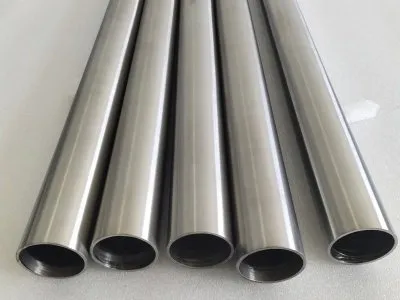
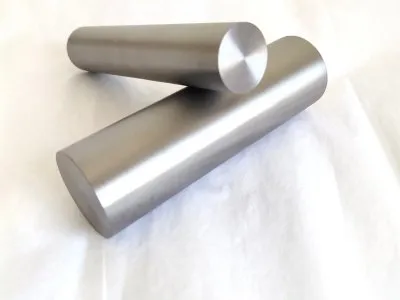
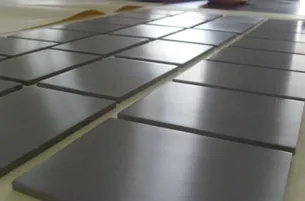
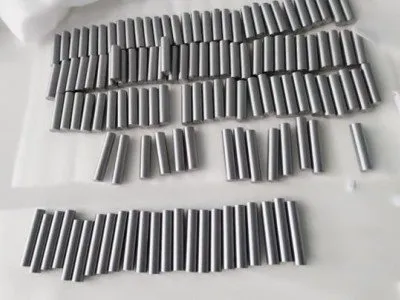
A: They are four core special industrial metals with unique physical and chemical properties, widely used in harsh industrial environments. Tantalum and niobium belong to refractory rare metals with ultra-high melting points and exceptional resistance to strong acid corrosion. Zirconium features low neutron absorption rate and perfect seawater anti-corrosion performance. Nickel is a versatile transition metal that acts as the fundamental base material for many high-performance alloys. These metals can be supplied as pure metal or customized alloys, processed into plates, bars, tubes, wires and sputtering targets to satisfy extreme service demands that ordinary steel cannot fulfill.
Q: What are the main processing challenges shared by tantalum, niobium and zirconium? +
A: All three refractory metals show intense chemical activity when heated to high temperatures, readily combining with oxygen, nitrogen and carbon to form brittle intermetallic compounds, which sharply reduce ductility and impact toughness. Their high melting points demand special vacuum smelting and vacuum heat treatment equipment, greatly raising production costs. Severe work hardening occurs during cold rolling and drawing, requiring multiple intermediate annealing cycles. Welding must adopt full argon shielding; tiny air leakage will cause brittle cracks on welding seams and reduce component service life.
Q: What are the mainstream application fields for tantalum metal and its alloys? +
A: The electronics industry is the largest consumer, using high-purity tantalum powder for miniature tantalum capacitors widely adopted in communication equipment and semiconductors. Chemical manufacturing uses tantalum sheets, tubes and liners for reactors transporting strong corrosive acid media. Medical devices select biocompatible tantalum for bone repair implants and surgical accessories. High-temperature vacuum equipment also uses tantalum thermal shielding parts due to its ultra-high melting point above 2900°C and stable performance under continuous high heat without softening deformation.
Q: What role does nickel play when matched with tantalum, niobium and zirconium? +
A: Pure nickel itself has balanced oxidation and alkali corrosion resistance at moderate temperatures, and it serves as the main matrix element to create composite alloys with tantalum, niobium and zirconium. Adding trace tantalum or niobium to nickel-based alloys improves creep resistance and high-temperature structural stability. Zirconium added into nickel systems refines grain boundaries and strengthens thermal fatigue performance. Nickel can also act as transition bonding layers when welding tantalum, niobium or zirconium parts, solving the welding compatibility problem between refractory metals and other structural components in industrial equipment.
Q: What unique anti-corrosion features do tantalum and niobium share? +
A: Tantalum and niobium spontaneously form dense, stable oxide films on their surface once exposed to air or liquid media, which effectively isolate the substrate from corrosive substances. They remain intact in hydrofluoric acid, sulfuric acid, hydrochloric acid and mixed acid solutions under normal and medium-high temperature conditions, outperforming stainless steel and most nickel-based corrosion-resistant alloys. Only concentrated hydrofluoric acid or alkaline molten salts can slowly erode them. This outstanding chemical inertness makes them irreplaceable lining materials for high-corrosion chemical reactors and heat exchangers.
Q: What performance limits restrict large-scale popularization of these four metals? +
A: Tantalum and niobium are scarce rare mineral resources, leading to extremely high raw material prices compared with nickel and ordinary steel. Zirconium needs strict inert atmosphere protection during all high-temperature processing, increasing manufacturing complexity and energy costs. Pure nickel has weak resistance to fluoride and concentrated reducing acid media, so it cannot replace tantalum and niobium in severe acid working conditions. All four metals cannot withstand strong alkaline molten salts at ultra-high temperatures, limiting their use in high-temperature alkali metallurgy reaction equipment.
Q: What typical industrial scenarios rely on niobium and niobium alloys? +
A: High-purity niobium is an essential superconducting raw material used to manufacture superconducting wires for medical MRI instruments and particle accelerators. Chemical factories deploy niobium heat exchangers and distillation equipment to handle hot strong acid media that corrode ordinary metal quickly. Alloyed niobium with small amounts of zirconium gains enhanced high-temperature strength for aerospace engine nozzle components. It is also used as micro-alloy additives to refine grain structures in nickel base superalloys, improving long-term creep resistance of hot-end rotating parts in gas turbines.
Q: What core advantages does zirconium have among the four metals? +
A: Zirconium’s most distinctive merit is its extremely low thermal neutron capture cross-section, which avoids interfering with nuclear reaction stability, making it the primary structural material for nuclear reactor fuel cladding. Its natural passivation layer delivers excellent resistance to seawater, chloride ion corrosion and high-temperature water vapor, far superior to carbon steel and regular stainless steel. It also has good ductility and easy plastic forming. However, zirconium reacts violently with oxygen and nitrogen at high temperatures, so all high-temperature processing must be carried out under vacuum or inert gas protection to prevent material embrittlement.
Q: Where are zirconium and zirconium alloys extensively applied? +
A: Nuclear power industry dominates zirconium consumption, producing fuel cladding tubes and core structural components for pressurized water reactors to ensure safe nuclear fission operation. Marine and desalination equipment uses zirconium pipes and vessels to resist long-term seawater and chloride corrosion without anti-rust coating. Chemical plants adopt zirconium reaction kettles for hypochlorite and organic acid production lines. Zirconium also serves sputtering targets for semiconductor coating processes, relying on its uniform film-forming property and stable chemical inertness.