Q: What is precipitation hardening stainless steel? +
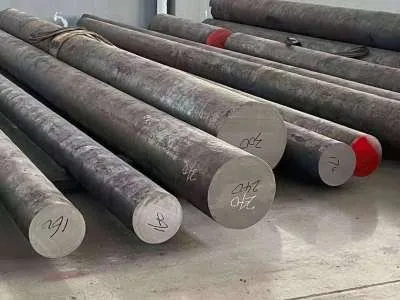
A: Precipitation hardening stainless steel, also known as PH stainless steel, is a special stainless steel grade containing chromium, nickel and precipitation strengthening elements such as copper, aluminum and niobium. It can achieve ultra-high tensile strength and hardness through low-temperature aging heat treatment after solution annealing. It integrates the corrosion resistance of conventional stainless steel and the high mechanical strength of martensitic steel. After cold processing or forging, the material stays ductile and low-stress, avoiding large deformation during strengthening treatment, and it is specially developed for precision structural parts that require both rust resistance and high load-bearing capacity.
Q: Can PH stainless steel be welded, and what are the restrictions? +
A: PH stainless steel supports conventional fusion welding, but welded joints will lose partial precipitation strength due to heat influence during welding. Welded components need secondary full heat treatment including solution and aging to recover original mechanical indicators; without reheat treatment, the welding area becomes a weak point under heavy cyclic loads. Thin parts welded without follow-up aging can only work under low-load conditions. Matching PH series welding wires must be used to avoid uneven element distribution and intergranular corrosion along welding seams.
Q: How is the corrosion resistance of PH stainless steel compared with martensitic stainless steel? +
A: PH stainless steel contains higher chromium and nickel content than standard martensitic stainless steel such as 440C, forming a denser passive oxide film on its surface. It delivers much stronger resistance to atmospheric corrosion, freshwater, seawater splash and mild organic acid environments. Martensitic stainless steel easily generates rust spots under humid conditions, while properly aged PH steel maintains stable anti-rust ability without extra surface coating. It still cannot resist strong hydrochloric acid or concentrated chloride media, which limits its use in severe chemical reaction equipment.
Q: What are the mainstream commercial grades of PH stainless steel? +
A: The most widely used grades cover 17-4PH, 15-5PH and 17-7PH with different element ratios for differentiated working demands. 17-4PH owns balanced strength and corrosion resistance for general high-strength anti-corrosion components. 15-5PH features finer grain structure and better transverse toughness to reduce crack risks under cyclic loads. 17-7PH provides ultra-high strength after aging and is suitable for thin elastic precision parts. Each grade matches unique solution and aging temperature procedures to stabilize precipitated strengthening phases inside the metal matrix.
Q: What core advantages does PH stainless steel have over regular stainless steel? +
A: Compared with common austenitic 304 or 316 stainless steel, PH grades reach much higher hardness and tensile strength after aging without sacrificing basic anti-corrosion performance. Different from martensitic stainless steel, it avoids serious brittleness and large heat treatment deformation after strengthening. It maintains decent formability before aging, allowing stamping, forging and machining into complex shapes first, then achieving target hardness through mild aging. This characteristic perfectly meets the demand of precision machinery and aviation parts with tight dimensional tolerance standards.
Q: What difficulties exist during machining PH stainless steel? +
A: Before aging treatment, PH stainless steel has good plasticity and relatively low cutting resistance for rough machining. After aging to high hardness, the material shows obvious work hardening effects, accelerating tool wear and raising processing costs. Its low thermal conductivity concentrates cutting heat on the workpiece surface, easily causing local overheating and dimensional deviation. Special cutting tools and optimized cooling parameters are required for finish machining of aged high-hardness parts to guarantee surface smoothness and dimensional precision.
Q: What standard heat treatment processes are required for PH stainless steel? +
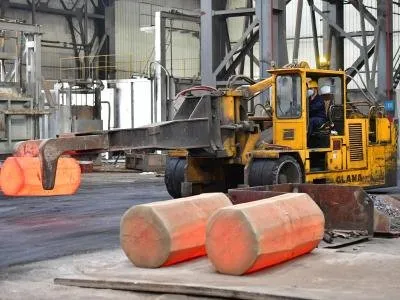
A: Complete heat treatment includes two indispensable stages: solution annealing and aging hardening. Solution treatment is implemented at around 1040°C with sufficient holding time to dissolve all strengthening alloy elements, then air or water cooling to obtain soft machinable blanks. Aging temperature varies by grade from 480°C to 620°C; lower aging temperature delivers maximum hardness while higher temperature improves toughness. Improper temperature or holding time leads to insufficient precipitation strength or overaging softening, failing mechanical performance standards for finished components.
Q: What typical application fields rely on PH stainless steel? +
A: Aerospace manufacturing is a key application field, producing high-strength fasteners, landing gear small components and engine auxiliary structural parts. Offshore and petrochemical industries adopt it for valve bodies, pump shafts and pressure fittings resisting seawater and weak acid corrosion. Medical equipment uses it for surgical instruments and implant accessories thanks to its rust-free property and mechanical stability. It also serves high-end mold parts, high-pressure sensor shells and elastic hardware that need long-term fatigue resistance without surface rusting.
Q: Why can’t regular stainless steel replace high-temperature alloys? +
A: Standard stainless steel loses tensile strength rapidly above 550°C and suffers severe creep under constant load. Its surface oxide film peels off easily above 600°C, causing rapid material thinning and failure. High-temperature alloys form dense, stable protective oxide layers and contain reinforcing phases that resist grain flow under heat. Even above 900°C, they keep bearing capacity that stainless steel completely fails to match.
Q: What factors limit the widespread popularization of precipitation hardening stainless steel? +
A: The primary restriction is its higher raw material cost than ordinary austenitic and martensitic stainless steel, caused by added copper, niobium and nickel alloy elements. The mandatory double heat treatment procedure extends production cycles and increases energy consumption and processing fees. A narrow applicable corrosion range prevents its replacement of Hastelloy or titanium alloys in strong acid and high-chloride environments. These cost and environmental limits make it only selected for high-end equipment requiring integrated high strength and moderate anti-corrosion performance.