
High-temperature alloys play a critical role in industries where components face extreme thermal conditions. The proper selection of alloy grades for specific temperature environments directly affects the performance, longevity, and safety of equipment. This article examines the fundamental principles for matching high-temperature alloy grades to different temperature environments, providing practical guidance for engineers and material specialists. 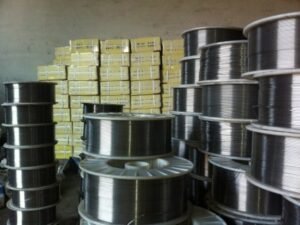
The classification of high-temperature alloys begins with understanding the temperature ranges they can withstand effectively. Low-temperature applications typically involve environments up to 650°C, where iron-based superalloys and certain stainless steels perform adequately. Medium-temperature environments ranging from 650°C to 1000°C require more specialized materials, with nickel-based superalloys becoming increasingly necessary. High-temperature applications exceeding 1000°C demand advanced nickel-based or cobalt-based superalloys with enhanced thermal stability and creep resistance.
Selection criteria for high-temperature alloys extend beyond temperature considerations alone. Mechanical properties at elevated temperatures, including tensile strength, yield strength, and creep resistance, must be evaluated based on the specific application requirements. Oxidation and corrosion resistance are equally critical factors, particularly in environments where exposure to combustion gases, chemical agents, or steam occurs. Thermal expansion characteristics and thermal conductivity influence the dimensional stability and heat transfer efficiency of components, making them essential parameters in the selection process.
The chemical composition of high-temperature alloys determines their performance characteristics across different temperature ranges. Nickel-based superalloys containing chromium, aluminum, and titanium form protective oxide layers that enhance oxidation resistance at elevated temperatures. The addition of refractory elements such as molybdenum, tungsten, and tantalum improves high-temperature strength through solid solution strengthening and precipitation hardening mechanisms. Cobalt-based alloys offer excellent hot corrosion resistance and thermal stability, making them suitable for applications in aggressive environments.
For applications below 650°C, modified stainless steels and iron-based superalloys provide cost-effective solutions with adequate mechanical properties. These materials typically contain chromium for oxidation resistance and nickel for improved toughness. In the 650-1000°C range, nickel-based superalloys with gamma prime (γ’) precipitates become the preferred choice. The gamma prime phase provides exceptional strength retention at elevated temperatures through coherent precipitation hardening.
Applications exceeding 1000°C require advanced materials with superior thermal stability. Single-crystal nickel-based superalloys eliminate grain boundary weaknesses, allowing operation at temperatures approaching 1150°C. Directionally solidified alloys offer intermediate performance between conventional cast and single-crystal variants. For extreme environments above 1200°C, ceramic matrix composites and refractory metal alloys may be necessary despite their challenges in fabrication and machinability.
Specific industry applications demand tailored approaches to alloy selection. In aerospace gas turbines, nickel-based superalloys with complex compositions are used for turbine blades and vanes operating at temperatures exceeding 1000°C. The power generation sector utilizes similar materials but with greater emphasis on long-term stability and cost-effectiveness. Industrial furnaces and heat treatment equipment often employ less expensive iron-based alloys for components operating below 900°C.
Testing procedures validate the suitability of selected alloys for specific temperature environments. Long-term exposure tests evaluate microstructural stability and property retention under service conditions. Creep testing assesses the material’s resistance to deformation under sustained loads at elevated temperatures. Thermal cycling tests evaluate the alloy’s ability to withstand repeated temperature fluctuations without cracking or excessive deformation.
The future development of high-temperature alloys focuses on enhancing performance at higher temperatures while reducing weight and cost. Advanced computational modeling accelerates the design of new alloy compositions with optimized properties. Additive manufacturing techniques enable the production of complex components with tailored microstructures. Research into novel alloying elements and processing methods continues to push the boundaries of temperature resistance in metallic materials.
Proper alloy selection requires a comprehensive understanding of both material properties and application requirements. Temperature alone does not determine the appropriate alloy grade; factors such as mechanical loads, environmental exposure, and service duration must be considered. Material specifications from authoritative sources provide guidelines, but actual application conditions may necessitate additional testing and validation.
The matching of high-temperature alloy grades to specific temperature environments represents a critical engineering decision with significant implications for performance and reliability. By understanding the fundamental relationships between alloy composition, microstructure, and temperature-dependent properties, engineers can make informed selections that optimize component performance while maintaining cost-effectiveness and safety standards.

 English
  German
  French
  Portuguese
  Japanese
  Russian
  Italian
  Spanish
  Arabic
  Korean