
High-temperature alloys are materials designed to maintain mechanical integrity and corrosion resistance under extreme thermal conditions. These alloys typically consist of nickel, cobalt, iron, or titanium as base elements, combined with various refractory elements to enhance performance at elevated temperatures. The melting process of these alloys requires precise control and specialized equipment due to their high melting points and reactive nature.
The preparation phase involves careful selection of raw materials, including master alloys and pure elements, to achieve the desired chemical composition. Raw materials must be thoroughly cleaned to prevent contamination that could compromise the final product’s properties. Crucibles used in the process must withstand extreme temperatures and resist chemical reactions with the molten alloy. 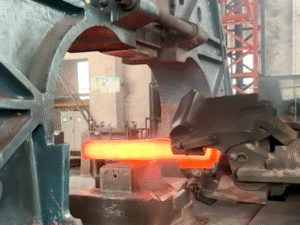
The actual melting process typically occurs in vacuum induction furnaces or argon arc furnaces, which provide controlled atmospheres to prevent oxidation and contamination. Temperature control is critical, with most high-temperature alloys requiring temperatures between 1400°C and 1600°C for complete melting. The heating rate must be carefully managed to avoid thermal shock and ensure uniform melting throughout the charge.
During melting, elements with high vapor pressures may be lost, requiring adjustments to the initial composition. Alloying elements are added at specific stages to ensure proper dissolution and distribution. The molten metal is often subjected to electromagnetic stirring to promote homogeneity and ensure uniform composition throughout the melt.
Degassing is an essential step in the process to remove dissolved gases that could form porosity in the final product. This is typically achieved through vacuum treatment or inert gas purging. In some cases, multiple melting cycles are employed to achieve the required chemical homogeneity and remove impurities effectively.
After melting, the alloy is poured into molds or processed using advanced techniques like directional solidification or single crystal growth to enhance mechanical properties. The cooling rate must be carefully controlled to prevent the formation of detrimental phases and ensure optimal microstructure.
Quality control throughout the melting process includes chemical analysis to verify composition, non-destructive testing to detect internal defects, and mechanical testing to evaluate properties. The entire process requires strict adherence to parameters to produce alloys that meet the demanding requirements of applications in aerospace, power generation, and industrial gas turbines.

 English
  German
  French
  Portuguese
  Japanese
  Russian
  Italian
  Spanish
  Arabic
  Korean