
The extrusion forming process of high-temperature alloys represents a critical manufacturing technique for producing components that must withstand extreme conditions in aerospace, energy, and industrial applications. This process involves forcing heated alloy material through a shaped die to create specific cross-sectional profiles with enhanced mechanical properties.
High-temperature alloys, typically composed of nickel, cobalt, iron, and various alloying elements, possess exceptional strength, corrosion resistance, and creep resistance at elevated temperatures. The extrusion process begins with preparing the alloy billets, which are heated to precise temperatures ranging from 1100°C to 1250°C, depending on the specific alloy composition. The heating process must be carefully controlled to ensure uniform temperature distribution throughout the billet, preventing thermal stress and potential defects.
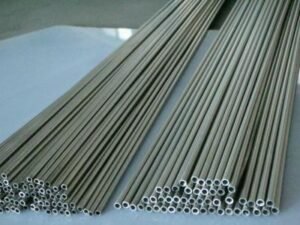
Once properly heated, the billet is transferred to the extrusion press where it is placed in a container. A ram applies significant pressure, typically ranging from 500 to 1500 MPa, forcing the material through the die opening. The high pressure and temperature combination facilitates plastic deformation while maintaining the material’s integrity. The extrusion ratio, defined as the cross-sectional area of the billet divided by the cross-sectional area of the extruded product, significantly influences the final microstructure and mechanical properties of the component.
Several critical parameters must be precisely controlled during the extrusion process. The ram speed affects the material flow pattern and temperature distribution, with typical speeds ranging from 0.1 to 10 mm/s depending on the alloy complexity. Die design plays a crucial role in determining the final shape quality and surface finish. Lubrication systems, often using glass-based or graphite-based compounds, reduce friction between the material and the container walls, minimizing surface defects and energy consumption.
The post-extrusion treatment involves cooling the formed profiles, followed by various heat treatment processes such as solution treatment, aging, or stress relief. These treatments optimize the microstructure to achieve the desired mechanical properties, including tensile strength, fatigue resistance, and creep performance. Non-destructive testing methods, including ultrasonic testing and dye penetrant inspection, ensure the quality and integrity of the extruded components.
The applications of extruded high-temperature alloy components span multiple industries. In aerospace, turbine blades, combustion chambers, and exhaust systems benefit from the superior properties of extruded alloys. The energy sector utilizes these components in gas turbines, nuclear reactors, and heat exchangers. Industrial applications include chemical processing equipment, furnace components, and high-temperature fasteners.
Future developments in high-temperature alloy extrusion focus on advanced computational modeling to predict material behavior during the process, the implementation of real-time monitoring systems for quality control, and the development of novel alloys with enhanced properties. These advancements will enable the production of more complex geometries with improved performance characteristics, further expanding the applications of extruded high-temperature alloy components.

 English
  German
  French
  Portuguese
  Japanese
  Russian
  Italian
  Spanish
  Arabic
  Korean