High-temperature alloys are materials designed to maintain mechanical properties at elevated temperatures, making them essential components in aerospace, power generation, and chemical processing industries. These alloys, including nickel-based superalloys, cobalt-based alloys, and refractory metals, present significant challenges during cutting and machining operations due to their exceptional strength, work hardening tendencies, and poor thermal conductivity. 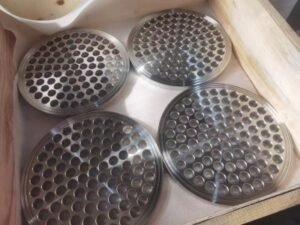 The machining of high-temperature alloys requires specialized approaches to achieve dimensional accuracy, surface finish, and tool life expectations. The primary difficulties arise from the alloys’ ability to retain strength at high temperatures, which increases cutting forces and generates excessive heat at the cutting zone. Additionally, these alloys tend to work harden rapidly, causing rapid tool wear and making subsequent machining passes more challenging. Tool selection plays a crucial role in successful high-temperature alloy machining. Cemented carbide tools with specific coatings such as titanium aluminum nitride (TiAlN) or aluminum titanium nitride (AlTiN) have demonstrated superior performance compared to uncoated tools. Polycrystalline diamond (PCD) and cubic boron nitride (CBN) tools are also effective for certain operations, particularly finishing passes where surface quality is critical. The geometry of cutting tools must be optimized to reduce cutting forces and heat generation, typically featuring sharp cutting edges, high rake angles, and sufficient clearance angles to prevent rubbing. Cutting parameters must be carefully balanced to achieve efficient material removal while avoiding excessive tool wear. Lower cutting speeds are generally recommended compared to machining carbon steels, typically ranging from 20 to 60 meters per minute depending on the specific alloy and tooling. Feed rates should be moderate to prevent excessive tool pressure while maintaining productivity. Depth of cut is often limited to reduce cutting forces and heat accumulation. Coolant application is essential in high-temperature alloy machining to control heat at the cutting zone and flush away chips. High-pressure coolant systems can effectively penetrate the cutting zone, providing both cooling and lubrication. Minimum quantity lubrication (MQL) systems have also shown promise in certain applications, reducing environmental impact while maintaining effective cooling. The workpiece setup must ensure rigidity to minimize vibration, which can lead to poor surface finish and accelerated tool wear. Clamping forces should be sufficient to prevent movement during cutting but not excessive to cause distortion. Fixtures should be designed to distribute forces evenly and avoid creating stress concentrations in the workpiece. Post-machining operations may be required to address surface integrity issues such as residual stresses, microcracks, or work-hardened layers. Stress relief heat treatments, electropolishing, or abrasive flow machining can improve surface characteristics and enhance component performance. As high-temperature alloys continue to evolve with enhanced properties for more demanding applications, machining techniques must also advance. Research into new tool materials, optimized cutting strategies, and advanced cooling methods will continue to improve the efficiency and quality of high-temperature alloy machining processes.


 English
  German
  French
  Portuguese
  Japanese
  Russian
  Italian
  Spanish
  Arabic
  Korean