High-temperature alloy nozzles represent critical components in various industrial applications where extreme conditions prevail. These specialized components require precision manufacturing techniques to ensure optimal performance under thermal stress and mechanical pressure. The machining process of high-temperature alloy nozzles presents unique challenges due to the material properties and the complex geometries often required. 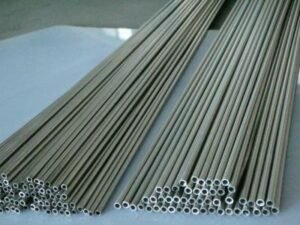 The production of these nozzles begins with material selection, typically involving nickel-based, cobalt-based, or iron-based superalloys known for their exceptional heat resistance and mechanical strength. These materials maintain structural integrity at temperatures exceeding 1000°C, making them ideal for applications in aerospace, power generation, and chemical processing industries. Customized machining approaches are essential as nozzle designs vary significantly based on their intended application. The process involves several stages including material preparation, rough machining, precision finishing, and final inspection. Advanced computer numerical control (CNC) machining centers equipped with specialized cutting tools are utilized to achieve the required dimensional accuracy and surface finish. The machining parameters must be carefully controlled to prevent work hardening and thermal damage to the material. Coolant selection plays a crucial role in the machining process, as conventional coolants may not adequately dissipate heat or provide sufficient lubrication for these challenging materials. High-pressure coolant systems and minimum quantity lubrication (MQL) techniques are often employed to extend tool life and maintain dimensional stability. Tooling materials must be selected to withstand the abrasive nature of superalloys while maintaining cutting edge integrity. Carbide tools with specialized coatings and polycrystalline diamond (PCD) inserts are commonly used for achieving the required precision. Post-machining processes such as heat treatment, surface finishing, and non-destructive testing are critical to ensure the final components meet stringent quality requirements. The dimensional accuracy of these nozzles often falls within tight tolerances of ±0.001 inches, necessitating sophisticated measurement equipment including coordinate measuring machines (CMM) and laser scanning systems. Customized fixturing and tooling are developed for each unique nozzle design to ensure proper clamping and support during machining operations. These fixtures must accommodate complex geometries while preventing distortion during the manufacturing process. The surface finish requirements for high-temperature alloy nozzles vary depending on their application, with some demanding mirror-like finishes to minimize flow resistance in fluid systems. Surface integrity is particularly important as surface irregularities can lead to premature failure under cyclic thermal loading. Quality control protocols are implemented throughout the manufacturing process to detect and address any deviations from specifications. Statistical process control methods are employed to monitor machining parameters and ensure consistent production outcomes. The customization extends beyond the machining process to include specialized coatings and surface treatments that enhance performance characteristics. Thermal barrier coatings and diffusion coatings are applied to extend service life in extreme operating environments. The manufacturing of high-temperature alloy nozzles requires collaboration between design engineers, material scientists, and machining specialists to develop optimal production strategies. This interdisciplinary approach ensures that the final components meet both functional requirements and manufacturability constraints. As industrial applications continue to demand higher performance from critical components, the machining techniques for high-temperature alloy nozzles continue to evolve. Advanced manufacturing technologies such as additive manufacturing and hybrid machining processes are being explored to further enhance the capabilities of nozzle production. The continuous development of new materials and machining techniques will enable the production of even more sophisticated nozzle designs capable of operating in increasingly extreme environments.


 English
  German
  French
  Portuguese
  Japanese
  Russian
  Italian
  Spanish
  Arabic
  Korean