
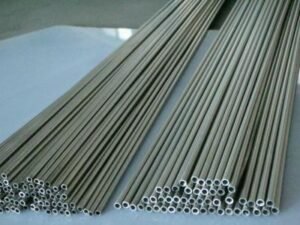
The demand for high-temperature alloy shaped parts has been increasing in various industries, including aerospace, automotive, and energy production. These parts are essential due to their ability to withstand extreme temperatures and maintain structural integrity. However, standard high-temperature alloys often fail to meet the specific requirements of certain applications, necessitating the customization of non-standard high-temperature alloy shaped parts. Customization involves the modification of material composition, shape, and size to ensure optimal performance under specific conditions. This process requires a deep understanding of material science, engineering principles, and manufacturing techniques. The first step in customizing non-standard high-temperature alloy shaped parts is to determine the exact requirements of the application. This includes identifying the operating temperature range, mechanical stress conditions, and environmental factors such as corrosion or oxidation. Once these parameters are established, engineers can select the appropriate high-temperature alloy that meets the basic criteria. High-temperature alloys are typically composed of nickel, chromium, iron, and other elements that enhance their thermal stability and strength. However, for non-standard applications, additional elements such as molybdenum, tungsten, or cobalt may be added to further improve specific properties. The composition of the alloy must be carefully balanced to ensure that it can withstand the intended operating conditions without degrading. After selecting the base alloy, the next step is to design the shape and size of the part. This involves using computer-aided design (CAD) software to create a precise model of the part. The design must account for factors such as thermal expansion, stress distribution, and weight considerations. For example, a part that will experience significant thermal expansion may need to be designed with a certain degree of flexibility to accommodate this movement. Once the design is finalized, the manufacturing process begins. Non-standard high-temperature alloy shaped parts are typically produced using advanced techniques such as casting, forging, or machining. Casting involves melting the alloy and pouring it into a mold, which is then cooled to solidify the part. Forging involves heating the alloy and shaping it using compressive forces, while machining involves removing material from a solid block to create the desired shape. Each method has its advantages and limitations, and the choice depends on the specific requirements of the part. After manufacturing, the parts undergo rigorous testing to ensure they meet the specified standards. This includes mechanical tests to assess strength, durability, and fatigue resistance, as well as thermal tests to evaluate performance at high temperatures. Non-destructive testing methods such as X-ray or ultrasonic testing may also be used to detect any internal defects. Once the parts have been tested and approved, they are ready for use in their intended applications. The customization of non-standard high-temperature alloy shaped parts is a complex but essential process for ensuring optimal performance in demanding environments. By carefully selecting the right materials, designing the part with precision, and using advanced manufacturing techniques, engineers can create parts that meet the unique requirements of various industries. As technology continues to advance, the capabilities for customizing high-temperature alloys will only improve, leading to even better performance and more innovative applications.

 English
  German
  French
  Portuguese
  Japanese
  Russian
  Italian
  Spanish
  Arabic
  Korean