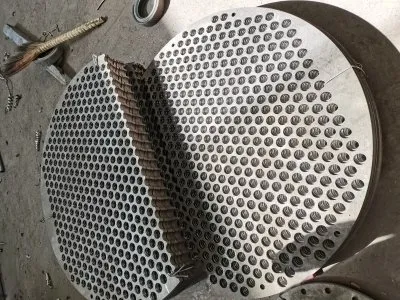
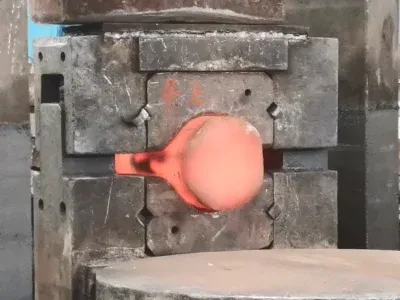
High-Temperature Alloy Lining Plates for Industrial Furnaces
Alloy lining plates are the replaceable armor of an industrial furnace. They shield the casing from flue gas, hold the heat inside, and absorb the damage that would otherwise destroy the structure. Therefore, they are consumables by design — and the whole art of managing them is selecting by atmosphere and replacing by evidence. This guide gives the selection logic and the life-management routine.
Why Alloy Plates Instead of Brick?
Refractory brick is thick, heavy and brittle under thermal cycling. Alloy lining plates win where brick cannot:
- Thin sections — alloy plates give protection where brick is too bulky.
- Cyclic service — plates tolerate rapid heating and cooling better than brick.
- Corrosive flue gas — alloy chemistry resists sulfidation and chloride attack that erode brick joints.
- Energy efficiency — low thermal conductivity is a design feature: it holds temperature uniformity and cuts heat loss, not a weakness (nickel-based grades run roughly 8–25 W/m·K by design).
Select by Atmosphere, Not by Name
The grade is chosen by the environment it will die in:
| Service Atmosphere | Dominant Threat | Grade Logic | Typical Choices |
|---|---|---|---|
| Oxidizing, cyclic | Scale spallation, thinning | Chromia former, high Cr, rare-earth adhesion | Inconel 600/601, GH3030/GH3039, 310S |
| Sulfidizing / hot corrosion | Sulfide scale breakdown | High Cr, controlled Ni/S ratio | Higher-Cr Ni-Cr-Fe grades |
| Carburizing | Carbon ingress, carbide embrittlement | Low Ni-carbide-forming balance, high Ni where prudent | Incoloy 800-class |
| Molten salt / chloride | Salt fluxing of scale | Cl-optimized chemistry, thick section | Specialized high-Cr grades |
| Mechanical abrasion | Erosion, wear | Carbide-bearing or hardened surfaces | Work-hardening grades, shields |
Design Details That Decide Life
- Tongue-and-groove edges — minimize gaps and stop hot-gas bypass between plates.
- Attachment and anchoring — studs and flexible systems absorb the thermal-expansion difference between the plate and the furnace casing.
- Expansion joints — without them, restrained growth buckles plates and cracks welds.
- Vent / weep provisions — pressure balance behind the plate prevents lifting and flue-gas channeling.
- Section thickness — thicker plate carries more oxidation reservoir; thinner plate cycles better. The two compete.
Installation Discipline
Installation sets the service life. Gaps, misaligned anchors or welded restraints convert a good alloy into a short-lived failure. Therefore: verify fit-up before welding, allow designed movement, and document the as-installed condition for later thickness surveys.
Life Management: Inspect, Then Replace by Evidence
- Visual survey — cracking, bowing, thinning at hot zones.
- Ultrasonic thickness measurement — quantifies oxidation loss without shutdown.
- Thermographic imaging — finds hot spots that betray missing or thinned lining.
- Selective replacement — worn sections are replaced individually, which cuts material cost and downtime versus full relining.
The rule: replace by measured loss, not by calendar guess. That is how a lining system reaches its designed cost-per-hour.
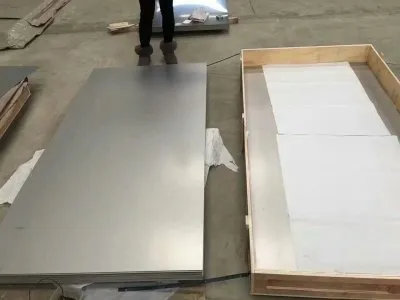
The Next Generation
- Higher-temperature chemistry — extending capability while holding mechanical properties.
- Additive manufacturing — complex plate geometries that optimize thermal performance and material use.
- Computational modeling — predicting oxidation and creep life for the specific atmosphere, which accelerates development and sharpens replacement intervals.
FAQ
Q: What is the role of alloy lining plates? A: They shield the furnace casing from flue gas, retain heat, and absorb thermal and chemical damage — a replaceable armor layer.
Q: Why use alloy plates instead of refractory brick? A: Plates win in thin sections, cyclic service, corrosive flue gas and energy efficiency — brick is thick, heavy and brittle in cycling.
Q: How is the lining grade selected? A: By the dominant atmosphere: oxidation needs a chromia former with rare-earth adhesion; sulfidation and carburization need their own chemistry logic.
Q: Why is low thermal conductivity a benefit here? A: It maintains temperature uniformity and cuts heat loss — a design feature of the lining, not a defect.
Q: What causes lining plates to fail? A: Scale spallation and thinning in oxidizing service, sulfide attack in sulfidizing gas, carbon embrittlement, and restrained thermal expansion.
Q: How is lining life managed? A: Visual survey, ultrasonic thickness measurement and thermographic imaging — then selective replacement by measured loss, not calendar guess.
Need furnace-grade lining alloy supply with certified heat identity? Contact Dura Alloy at nicholas.zhu1212@gmail.com for Inconel 600, Incoloy 800, GH3030 and GH3039 — with mill certificates and heat traceability on request.