Industrial Gas Turbine High-Temperature Alloy Transition Duct Performance and Applications
The transition duct (transition piece) is the static hot-gas-path component that bridges the combustor exit and the first-stage turbine nozzle in industrial gas turbines for combined-cycle power plants. Unlike rotating blades, it bears sustained thermal gradient loading rather than extreme centrifugal force, but its contoured, thin-walled structure makes it highly vulnerable to thermal fatigue, surface oxidation, sulphate hot corrosion and local creep buckling. Proper alloy selection directly dictates inspection intervals, overhaul cycles and overall plant availability.
Unique Operating Loads on Transition Ducts
Four coupled loading modes define the material specification boundary for transition duct sheet and plate fabrications:
- Severe thermal gradient cycling: Rapid startup, load swing and shutdown create steep temperature differences between the duct’s hot gas side and backside cooling film. Repeated expansion and contraction initiate surface cracks at radius bends, weld seams and cooling hole edges. Thermal fatigue is the leading root cause of transition duct replacement.
- High-temperature oxidation: Continuous exposure to 850–1050°C combustion air requires a stable, adherent protective oxide scale that does not spall under thermal cycling.
- Sulphate hot corrosion: Trace sulphur, vanadium and alkali salts from fuel deposits break down chromium oxide scales, producing pitting that accelerates crack propagation.
- Low-stress creep buckling: Thin panels under modest static pressure can slowly deform and wrinkle if creep strength is insufficient at the upper end of service temperature.
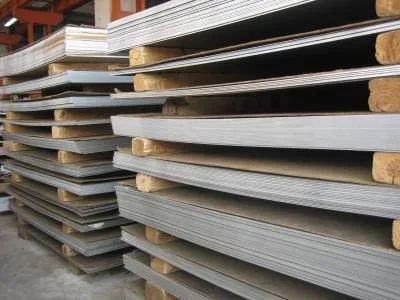
Most transition ducts are fabricated from wrought alloy sheet, formed, welded and fitted with film cooling holes; cast superalloys are rarely used for these large, contoured assemblies due to poor formability and high cost.
Recommended Alloy Grades for Transition Duct Fabrication
- Hastelloy S: Nickel-base solid-solution alloy developed specifically for static gas turbine hot components. It features low thermal expansion, excellent thermal stability and outstanding thermal fatigue resistance, the default grade for many modern F-class gas turbine transition pieces operating around 900–980°C. Its ageing response is mild, so duct panels retain ductility after thousands of hours of hot hold time.
- Haynes 188: Cobalt-base wrought alloy with balanced creep strength and sulphidation resistance up to 1095°C. It is widely chosen for heavy-fuel or off-gas-fired turbines where hot corrosion risk is elevated. It forms robust chromium-tungsten oxide scales and tolerates longer high-temperature hold periods.
- Haynes 214: Nickel-aluminium alloy that forms a continuous alumina scale, delivering market-leading oxidation resistance in clean combustion environments above 1000°C. It is reserved for ultra-high-temperature low-corrosion cycles, but its lower creep strength means it is not suitable for ducts with high pressure differential or heavy mechanical constraint.
- Alloy 602CA: Nickel-chromium-aluminium alloy stabilized with small cerium additions. It offers excellent cyclic oxidation resistance and grain boundary stability, commonly used for retrofitting older gas turbine transition ducts and exhaust transfer ducts with frequent thermal transients.
Performance Evaluation & Validation Workflow
Material and duct assemblies are qualified using layered physical testing and CFD-FEA co-simulation:
- Cyclic oxidation burner rig testing to simulate thousands of start-stop cycles and check scale spallation behaviour
- Thermal fatigue panel testing, using cyclic furnace heating and forced-air quenching
- Creep testing at design metal temperature and panel differential pressure
- Weldability qualification, including GTAW sheet forming, post-weld ductility and sensitization checks
- Full-component FEA mapping of hotspots, stress concentrations and cooling-hole stress risers
- Non-destructive inspection: penetrant testing, ultrasonic inspection and eddy current screening after thermal cycling
Simulation reduces prototype iterations, but burner rig and field demonstration remain mandatory before serial adoption.
Industry Application Segmentation
Combined-Cycle Base-Load Power Turbines
Base-load gas turbines run long steady-state cycles with fewer thermal transients. The primary risk is slow creep and oxidation. Hastelloy S is the dominant selection for modern F-class and H-class transition ducts, balancing fabricability, thermal fatigue and long-term stability.
Heavy Fuel, Biogas and Off-Gas Gas Turbines
Foul fuels introduce vanadium, sulphur and alkali contaminants. Hot corrosion overrides pure oxidation performance, making Haynes 188 the preferred cobalt-base option for these aggressive fuel schemes.
Peaker / Load-Following Gas Turbines
Peaking plants cycle on and off multiple times weekly. Thermal fatigue becomes the dominant failure driver. Grades with low thermal expansion and stable aged ductility such as Hastelloy S and Alloy 602CA deliver the longest service intervals.
Special Ultra-High-Temperature Clean Combustion Systems
For hydrogen-fired or advanced low-emission combustors operating above 1000°C with clean fuel, Haynes 214 is selected where oxidation resistance is prioritized over high creep loading.
Manufacturing Constraints for Transition Duct Alloys
All grades must support sheet rolling, press forming, contour bending, laser drilling of cooling holes and gas-tungsten arc welding. Gamma-prime precipitation-hardened wrought superalloys are generally avoided for transition duct work: they are prone to weld cracking and lose ductility after welding without complex post-weld heat treatment. Solid-solution nickel and cobalt wrought alloys are the industry standard for fabricated hot-gas ductwork.
Development Direction
Ongoing development targets three directions: improved alumina-forming wrought alloys, oxide dispersion strengthened sheet products, and thermal barrier coating (TBC) compatible substrate alloys. TBC overlay systems push allowable gas temperatures higher while lowering substrate metal temperature and slowing thermal fatigue crack initiation. Additive manufacturing is also under evaluation for integrated cooling architectures, though cost and porosity controls limit mass adoption for large transition duct assemblies today.
FAQ
Q: What alloy is most widely used for F-class gas turbine transition ducts? A: Hastelloy S is the primary grade, selected for low thermal expansion and superior thermal fatigue resistance.
Q: Why pick Haynes 188 instead of nickel alloys for heavy fuel gas turbines? A: Haynes 188 cobalt alloy delivers far better sulphate hot corrosion resistance when fuel contains sulphur and vanadium contaminants.
Q: What limits Haynes 214 from universal use for transition pieces? A: Haynes 214 has exceptional oxidation resistance, but lower creep strength, so it is only suitable for low-pressure, low-stress clean high-temperature environments.
Q: Are transition ducts cast alloy components? A: Most commercial IGT transition ducts are fabricated from wrought alloy sheet/plate, not cast superalloy, for formability and weldability.
Q: What is the main failure mode of transition ducts in peaker gas turbines? A: Thermal fatigue cracking originating at cooling holes, bend radii and weld joints from repeated heating and cooling cycles.
Q: Can these alloys be supplied as precision formed sheet and laser-drilled blanks? A: Yes, Dura Alloy can supply finished sheet, plate, formed segments and weld-ready blanks for transition duct fabricators, with full material certification.
Ready to source wrought superalloy sheet and plate for gas turbine transition duct manufacturing? Contact Dura Alloy for Hastelloy S, Haynes 188, Haynes 214 and Alloy 602CA. 📞 +86-18921275456 · WhatsApp: 8618921275456 · Request a quote