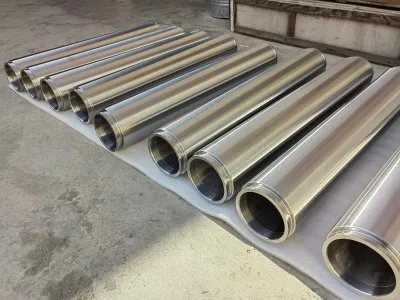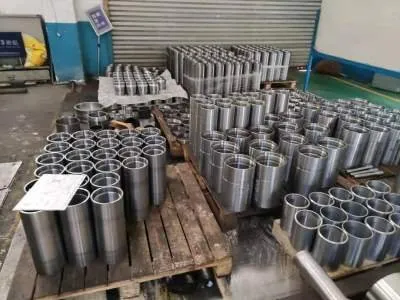
High-performance alloy material for industrial engineering and critical application conditions.
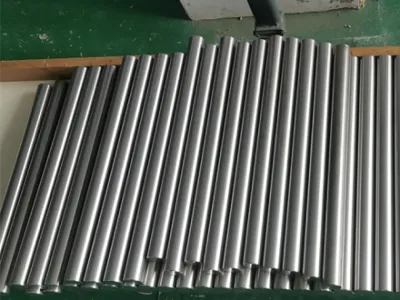
Scope of supply for Aviation Group
Forgings, round rods, steel plates, rings, seamless pipes, steel plates/steel belts, capillaries, wire welding materials, welcome to inquire
1. Material introduction
Hastelloy B3 (N10675) is a nickel-based high-temperature alloy mainly composed of nickel, molybdenum and cobalt with nickel content around 65%. Optimized based on Hastelloy B2, it gains better thermal stability, improved corrosion resistance and superior hot & cold formability, and is widely applied in chemical equipment manufacturing in recent years.
2. Chemical components
| Alloy | Limit | Ni | Mo | Cr | Fe | W | Co | C | Mn | Si | V | P | S | Cu | Al | W | Nb | Ta | Zr | Ni+Mo |
| B-3 | Minimum | ≥65.0 | 27 | 1 | 1 | – | – | – | – | – | – | – | – | – | – | – | – | – | – | 94 |
| Maximum | Bal | 32 | 3 | 3 | 3 | 3 | 0.01 | 3 | 0.1 | 0.2 | 0.03 | 0.1 | 0.2 | 0.5 | 0.2 | 0.2 | 0.02 | 0.1 | 98 |
3. Physical properties
| Density | 9.24g/cm³ |
| Melting point | 1370-1418℃ |
Minimum room temperature mechanical properties of the alloy:
| Delivery state | Tensile strength Rm N/mm² | Yield strength RP0.2 N/mm² | Elongation A5 % |
| Solid solution treated | 760 | 350 | 40 |
4. Material characteristics
5. B-3 application fields
It is widely used in chemical, petrochemical, energy production and waste gas/water treatment industries, especially equipment for sulfuric acid, hydrochloric acid, phosphoric acid and acetic acid production. Similar to B-2 alloy, B-3 is not suitable for environments containing ferric salt and cupric salt, as these salts will cause rapid corrosion failure. Contact between hydrochloric acid and iron/copper will generate ferric and cupric ions.