High-performance alloy material for industrial engineering and critical application conditions.
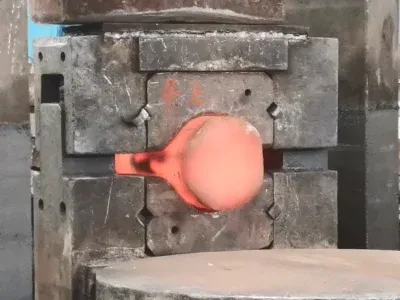
Titanium forgings are customized according to the drawings
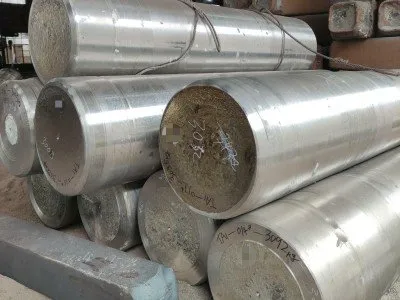
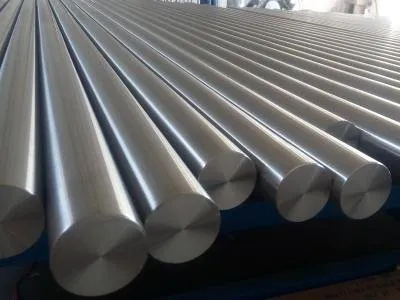
Titanium rod Φ(8-400) ×L≤5000mm (rolled rod, forged rod)
Titanium plate/belt (0.3-60.0) × (400-1000) × (1000-3500) mm (cold rolled plate, hot rolled plate)
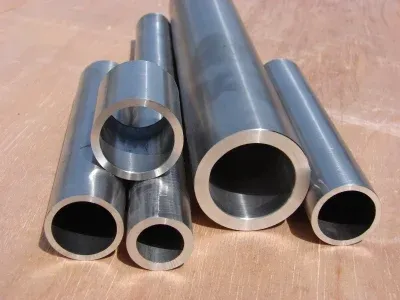
Titanium tube Φ(3-210) × (0.2-10.0) ×L (rolled pipe, extruded pipe)
Titanium ring Outer diameter φ(100-1200) × Inner diameter Φ(100-1000) × Height (20-800) mm
Titanium round cake Φ(150-1200) × (20-800) mm
Titanium wire Φ(0.1-7.0) ×L
1. Introduction to TC4 Materials
TC4 titanium alloy is a typical (α+β) titanium alloy, equivalent grade Ti-6Al-4V. Containing 6% alpha stabilizer aluminum and 4% beta stabilizer vanadium, TC4 owns balanced comprehensive performance, low density, high specific strength, outstanding corrosion resistance and excellent forming performance, making it an ideal structural material for aerospace engineering with ultra-high specific strength.
TC4 can work continuously at 400℃. It is widely applied in aviation for engine fan and compressor discs, as well as key aircraft structural parts including beams, joints and bulkheads. TC4 is normally supplied under annealed condition, and solution aging treatment is also available. It features good plastic forming property and superplasticity, suitable for all kinds of plastic forming, plus multiple welding and machining methods.
2. TC4 chemical composition
| Brand | Chemical composition (wt%) | |||||||||
| Ti | Fe | C | N | H | O | Al | V | Single impurity | Total impurities | |
| TC4 | Bal | ≤0.30 | ≤0.10 | ≤0.05 | ≤0.015 | ≤0.25 | 5.5~6.8 | 3.5~4.5 | ≤0.10 | ≤0.40 |
3. TC4 Physical properties
Density: 4.5 g/cm³, service temperature range -100~550℃
Tensile strength σb=1.012GPa, specific strength σb/g=23.5, while alloy steel specific strength is lower than 18.
| Brand | Minimum room temperature mechanical properties | Minimum high temperature mechanical properties | ||||||
| Tensile strength σb MPa | Yield strength σ0.2 MPa | Elongation δ5 % | Reduction of area ψ % | Impact value αk J/cm² | Test temperature ℃ | Tensile strength σb MPa | Creep rupture strength σ100 MPa | |
| TC1 | 588 | — | 15 | 30 | 44.1 | 350 | 343 | 324 |
| TC2 | 686 | — | 12 | 30 | 39.2 | 350 | 422 | 392 |
| TC4 | 902 | 824 | 10 | 30 | 39.2 | 400 | 618 | 569 |
| TC6 | 981 | — | 10 | 23 | 29.4 | 400 | 736 | 667 |
| TC9 | 1059 | — | 9 | 25 | 29.4 | 500 | 785 | 588 |
| TC10 | 1030 | — | 12 | 25~30 | 34.3 | 400 | 834 | 785 |
| TC11 | 1030 | — | 10 | 30 | 29.4 | 500 | 686 | 588 |
4. Technical standards for TC4 materials
GB/T3620.1-2016 Titanium and Titanium alloy grades and chemical compositions
GB/T 3621-2007 ASTM/B265 Titanium and Titanium alloy sheet
GB/T2965 -2007 ASTM/B348 Titanium and Titanium alloy rod
GB/T 3624-2010 ASTM/B337 Titanium and Titanium alloy seamless pipe
GB/T16598-2013 ASTM/B381 Titanium and Titanium alloy tubes for heat exchangers and condensers
GB/T13810-1997 ASTM/F136 Titanium and Titanium alloy processing materials for surgical implants
GB/T3623-2007 ASTM/B863 Titanium and Titanium alloy wire
ASTM/B265 titanium and titanium alloy tapes and foils
TC4 heat treatment performance
When TC4 titanium alloy is heated to 1020℃, its high-temperature microstructure is single-phase β solid solution. Different cooling modes (water quenching, air cooling, furnace cooling) form different microstructures: water quenched structure consists of martensite α’+β phase; air cooled structure contains acicular α+β phase and original β grain boundary phase; furnace cooled structure forms strip α+β phase with original β grain boundaries.
Similarly, heating to 950℃ and 850℃ followed by different cooling rates yields different microstructures. At 950℃, water quenching produces primary equiaxed α + α’+β phase; air cooling forms primary equiaxed α + acicular β phase; furnace cooling gains primary equiaxed α with grain boundary precipitates. At 850℃, water quenching obtains primary equiaxed α + metastable β phase; air cooling gets primary equiaxed α + transformed β phase.
Room-temperature mechanical properties after heating TC4 to 1020℃, 950℃, 850℃ with different cooling rates are shown in the table below:
| Heating temperature and cooling method | Tensile strength/MPa | Elongation/% | Reduction of area/% |
| 1020℃ Water quenching (WQ) | 1098 | 6.0 | 8.0 |
| 1020℃ Air cooling (AC) | 1005 | 9.0 | 13.5 |
| 1020℃ Furnace cooling (FC) | 960 | 12.0 | 22.5 |
| 950℃ Water quenching (WQ) | 1035 | 17.0 | 61.5 |
| 950℃ Air cooling (AC) | 919 | 20.0 | 50.0 |
| 950℃ Furnace cooling (FC) | 902 | 21.0 | 48.0 |
| 850℃ Water quenching (WQ) | 976 | 18.0 | 49.0 |
| 850℃ Air cooling (AC) | 951 | 18.0 | 49.0 |
5. TC4 application fields