High-performance alloy material for industrial engineering and critical application conditions.
Scope of supply for Aviation Group
Forgings, round rods, steel plates, rings, seamless pipes, steel plates/steel belts, capillaries, wire welding materials, welcome to inquire!
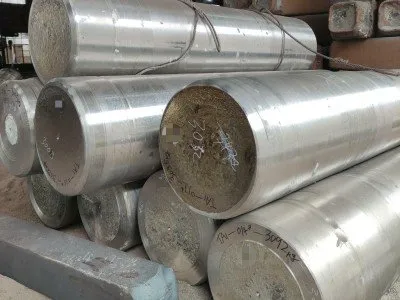
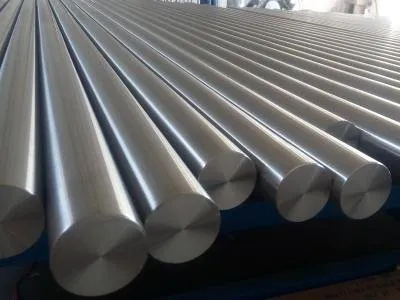
Titanium forgings, custom titanium rods per drawings. Φ(8-400) ×L≤5000mm (rolled rods, forged rods)
Titanium plate/belt (0.3-60.0) × (400-1000) × (1000-3500) mm (cold rolled plate, hot rolled plate)
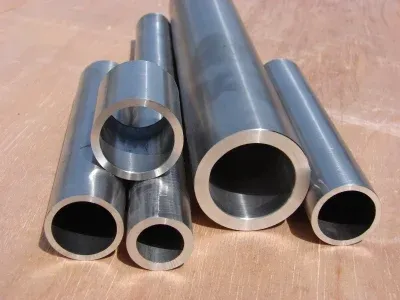
Titanium tube Φ(3-210) × (0.2-10.0) ×L (rolled pipes, extruded pipes)
Titanium ring Outer diameter φ(100-1200) × inner diameter Φ(100-1000) × height (20-800) mm
Titanium round cake Φ(150-1200) × (20-800) mm
Titanium wire Φ(0.1-7.0) ×L
1. Introduction to TA1/Gr1 Materials
TA1 is commercially pure titanium with titanium content ≥98%, containing trace impurities including oxygen, nitrogen, hydrogen, carbon, silicon and iron. Domestic commercially pure titanium grades TA1, TA2, TA3 are classified by impurity content. Interstitial impurity content increases sequentially from TA1 to TA3, leading to higher strength and hardness, but reduced plasticity and toughness accordingly.
National standard TA1, TA2, TA3 correspond to UNS Gr0, Gr1, Gr2 respectively. TA2 is the most widely used commercially pure titanium for balanced corrosion resistance and comprehensive mechanical properties. TA3 is selected for high strength and wear resistance requirements, while TA1 is preferred for superior formability.
With iron content 0.095%, oxygen 0.08%, hydrogen 0.009%, nitrogen 0.0062%, TA1 and TA2 deliver excellent low-temperature toughness and high cryogenic strength, applicable as structural materials down to -253℃.
2. Technical standards for TA1/Gr1 materials
GB/T3620.1-2016 Titanium and Titanium Alloy Grades and Chemical Compositions
GB/T 3621-2007 ASTM/B265 Titanium and Titanium Alloy Sheet
GB/T2965 -2007 ASTM/B348 Titanium and Titanium Alloy Rod Material
GB/T 3624-2010 ASTM337 Titanium and Titanium Alloy Seamless Tube
GB/T16598-2013 ASTM381 Titanium & titanium alloy tubes for heat exchanger and condenser
GB/T13810-1997 ASTM/F136 Titanium and titanium alloy processing materials for surgical implants
GB/T3623-2007 ASTM/B863 titanium and titanium alloy wire
ASTM/B265 Titanium and Titanium Alloy Strip & Foil
3. Chemical composition of TA1/Gr1
| Brand | Chemical composition (wt%) | ||||||||
| TA1 | Ingredients | Ti | Fe | C | N | H | O | Single other impurity | Total other impurities |
| Commercially pure titanium | Bal | ≤0.25 | ≤0.10 | ≤0.03 | ≤0.015 | ≤0.20 | ≤0.10 | ≤0.40 | |
4. TA1/Gr1 physical properties
| Brand | Minimum room temperature mechanical properties | Minimum high temperature mechanical properties | ||||||
| Tensile strength σb MPa | Yield strength σ0.2 MPa | Elongation δ5 % | Reduction of area ψ % | Impact value αk J/cm² | Test temperature ℃ | Tensile strength σb MPa | Creep rupture strength σ100 MPa | |
| TA1 | 343 | 275 | 25 | 50 | — | |||
| TA2 | 441 | 373 | 20 | 40 | — | |||
| TA3 | 539 | 461 | 15 | 35 | — | |||
| TA5 | 686 | — | 15 | 40 | 58.8 | |||
| TA6 | 686 | — | 10 | 27 | 29.4 | 350 | 422 | 392 |
| TA7 | 785 | — | 10 | 27 | 29.4 | 350 | 490 | 441 |
5. TA1 material characteristics
Titanium has six core advantages:
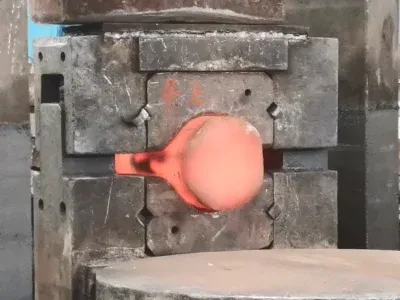
TA1 titanium can be processed via forging, extrusion, rolling and cold drawing. Hot working temperature range: 800-900℃, proper lubrication and surface anti-absorption treatment required. Intermediate annealing is mandatory when cold reduction reaches 30-60%.
TA1 heat treatment: Supplied in annealed condition by default. Standard annealing: 670-720℃, hold 0.5-2h; stress relief annealing options: 530-550℃ hold 0.5-1h or 470-490℃ hold 2-4h.
TA1 welding: GTAW argon arc welding is mainstream process, plasma welding, resistance welding and diffusion welding are also applicable.
6. TA1 application field
1. Aerospace, marine, nuclear power, electronics, chemical, petroleum, precision machinery, medical and pharmaceutical industries
2. Thermal power plant condensers
3. Seawater corrosion resistant pipeline systems, valves and pumps
4. Chemical heat exchangers, pump bodies, distillation towers; seawater desalination equipment, platinum coated anodes