
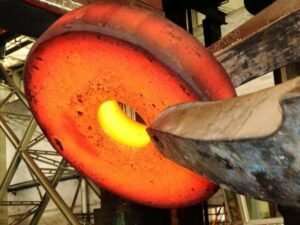
High-temperature alloy forging is a critical manufacturing process that involves shaping alloys designed to withstand extreme temperatures and pressures. This process is essential for producing components used in various high-performance applications, including aerospace, power generation, and automotive industries. The process begins with the selection of appropriate high-temperature alloys, which typically contain nickel, chromium, and iron, along with small amounts of other elements such as molybdenum, tungsten, and cobalt. These alloys are chosen for their exceptional strength, corrosion resistance, and ability to maintain structural integrity at elevated temperatures. The forging process itself involves heating the alloy to a specific temperature range, typically between 1,200 and 2,200 degrees Fahrenheit, depending on the alloy composition. Once heated, the metal is placed between two dies and subjected to high pressure, forcing it to conform to the desired shape. This process, known as hot forging, helps to eliminate internal defects and create a dense, uniform microstructure. The resulting components exhibit superior mechanical properties, including high tensile strength, fatigue resistance, and creep resistance. Applications of high-temperature alloy forgings are diverse and critical to modern technology. In the aerospace industry, these forgings are used to manufacture engine components such as turbines, compressor blades, and discs, which must endure the extreme conditions of flight. In power generation, high-temperature alloy forgings are utilized in steam turbines and generators, where they承受 the intense heat and pressure of converting thermal energy into electrical power. Additionally, they are found in automotive applications, particularly in the production of turbochargers and exhaust systems, which require materials capable of withstanding high temperatures and corrosive environments. The benefits of high-temperature alloy forging are numerous. The process enhances the material’s strength and durability, ensuring that components can operate reliably under demanding conditions. Furthermore, forging results in a more refined grain structure, which reduces the likelihood of cracks and other defects. This leads to improved performance and longevity of the components. Cost efficiency is another significant advantage, as forging can produce complex shapes with minimal material waste and fewer processing steps compared to other manufacturing methods. In summary, high-temperature alloy forging is a vital process for producing high-performance components that meet the rigorous demands of modern industries. Its ability to create materials with exceptional strength, durability, and resistance to extreme conditions makes it indispensable in sectors such as aerospace, power generation, and automotive engineering.

 English
  German
  French
  Portuguese
  Japanese
  Russian
  Italian
  Spanish
  Arabic
  Korean