High-Temperature Alloys for Nuclear Power Plant Reactors: Properties and Applications
Nuclear reactor core and primary-loop environments combine neutron irradiation, continuous high temperature, high-pressure coolant and aqueous corrosion. Ordinary carbon steel and standard stainless steel will embrittle, swell or crack quickly under these combined loads. Nuclear-qualified high-temperature alloys are formulated specifically to resist these coupled degradation mechanisms, serving as critical safety barriers that support long-cycle, low-outage plant operation. Every alloy selected for reactor service must pass strict irradiation testing, corrosion validation and traceability requirements before installation.
Core Required Properties for Nuclear-Grade High-Temperature Alloys
Not all high-temperature alloys are suitable for nuclear service. The specification checklist is far stricter than aerospace or petrochemical grades:
- Irradiation resistance: Suppression of radiation hardening, void swelling and irradiation-assisted cracking under long-term neutron bombardment.
- Primary water stress corrosion cracking (PWSCC) resistance: Critical for PWR primary coolant circuits at roughly 320 °C.
- Thermal stability: Microstructure remains stable without harmful precipitate evolution across repeated thermal transients.
- Creep and tensile strength: Maintain load-bearing capacity under sustained high temperature and pressure.
- Low hydrogen pickup: Minimize hydride precipitation, which can create brittle fracture paths.
- Chemistry control: Tight limits on tramp elements such as phosphorus, sulfur and silicon to avoid grain-boundary weakness.
Nickel, chromium, iron, molybdenum and niobium form the main alloying system; melt routes including VIM + VAR are widely specified to reduce inclusions and segregation.
Component-to-Grade Matching Table for Nuclear Reactor Systems
| Reactor Component | Core Service Risks | Preferred Alloy Grade | Core Reason for Selection |
|---|---|---|---|
| Steam generator tubing | High-temperature water, PWSCC, intergranular corrosion | Alloy 690 | High chromium content delivers industry-leading resistance to primary water stress corrosion cracking, the global standard for modern PWR steam generators |
| Reactor internals, baffle bolts, hold-down springs | Irradiation, stress relaxation, hot water corrosion | Inconel X-750 | Precipitation-hardened, retains spring force over decades, stable under neutron flux |
| Intermediate heat exchangers, Gen IV loop piping | Oxidation, carburization, long-time creep | Incoloy 800H | Iron-nickel-chromium solid-solution alloy, proven for high-temperature helium and supercritical water loops |
| Control rod guide tubes, core support fittings | Mixed irradiation + flow erosion, dimensional stability | Alloy 718 | High tensile strength, good weldability and NDT inspectability for heavy-section core structures |
Important note: Fuel cladding itself is usually zirconium alloy rather than nickel superalloy; the high-temperature alloys covered here are used for internals, heat transfer circuits, fastener systems and secondary safety boundaries.
Breakdown by Reactor System
Steam Generator Heat Transfer Tubes
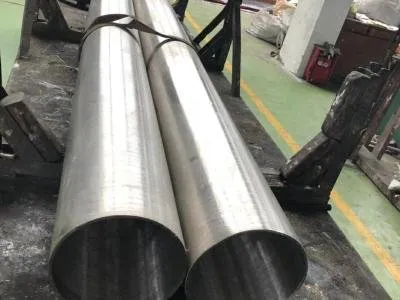
Steam generators are the heat bridge between radioactive primary coolant and clean secondary water. Tube leaks are one of the most costly nuclear plant outage triggers. Alloy 690 replaced older Alloy 600 in new-build and replacement programmes because its higher chromium matrix suppresses intergranular attack and stress corrosion cracking in PWR water chemistry. Tube production requires tight dimensional tolerance, seamless forming and 100% volumetric and surface NDT.
Reactor Internals and Fasteners
Inside the pressure vessel, baffle plates, springs, bolts and guide sleeves endure decades of neutron flux. Radiation can change yield strength and trigger stress relaxation, which loosens clamping loads. Inconel X-750 is the dominant choice here; its gamma prime precipitation structure resists relaxation and maintains clamping force across the full design lifetime of the unit.
Advanced Reactor & Gen IV Heat Loops
For high-temperature gas-cooled reactors, molten salt systems and supercritical water reactor concepts, oxidation and carburization become dominant failure modes instead of aqueous stress corrosion. Incoloy 800H is widely selected for these non-light-water advanced reactor heat transfer circuits, balancing creep strength and environmental resistance at elevated temperature.
Control Rod and Cooling Circuit Hardware
Control rods adjust reactor power by absorbing neutrons. Their structural sleeves, support frames and coolant flow orifice components demand dimensional stability and erosion resistance. Alloy 718 offers high strength, good machinability and reliable weld repair, making it practical for complex core mechanical assemblies.
Key Failure Risks for Nuclear Alloys
- Irradiation-induced void swelling: Gradual volume expansion that distorts precision core geometry.
- Irradiation-assisted stress corrosion cracking: Flux amplifies crack growth in high-temperature water.
- Flow-accelerated corrosion: Local thinning where high-speed coolant scrubs metal surfaces.
- Thermal fatigue: Start-stop cycling creates cyclic stress at weld joints and transition sections.
- Hydrogen embrittlement: Uptake of hydrogen from water chemistry creates brittle hydride phases.
Material selection, water chemistry control and in-service inspection work together to mitigate these risks.
Industry Development Direction
As utilities extend reactor operating licences to 60 and 80-year service windows, the demand for upgraded nuclear alloys continues rising. Research focuses on low-swelling nickel grades, oxide dispersion strengthened alloys, and corrosion-resistant cladding overlays. All new candidate materials must go through multi-year irradiation loop testing before formal nuclear code acceptance.
FAQ
Q: What high-temperature alloy is standard for PWR steam generator tubes? A: Alloy 690 is the primary industry standard, selected for strong resistance to primary water stress corrosion cracking.
Q: Can ordinary Inconel grades be used inside the reactor core? A: No. Only grades qualified for neutron irradiation service are permitted; standard aerospace lots lack required irradiation data and impurity controls.
Q: What is the difference between Alloy X-750 and Alloy 690 in nuclear use? A: X-750 is precipitation-hardened for springs and bolts; Alloy 690 is solid-solution optimized for corrosion resistance in steam generator tubing.
Q: Why is Incoloy 800H used for Gen IV reactors? A: It delivers stable creep and oxidation resistance in helium, molten salt and supercritical water environments beyond conventional PWR conditions.
Q: Are these nuclear alloys supplied with full test documentation? A: Yes, nuclear-grade lots require heat traceability, chemical analysis, mechanical test reports and NDT records for audit.
Q: Is high-temperature alloy used for fuel rod cladding? A: Most commercial LWR fuel cladding uses zirconium alloy; nickel-base high-temperature alloys are used for internals, tubes and support structures.
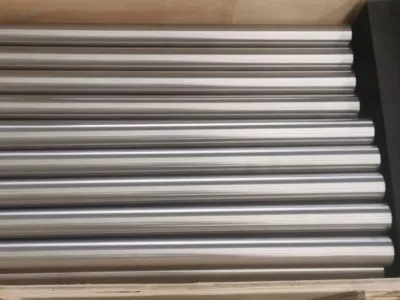
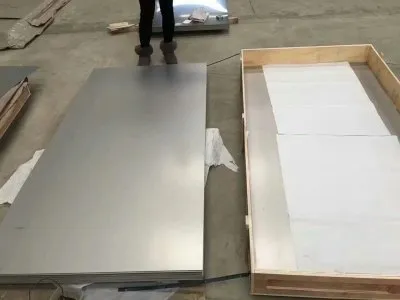
Ready to source nuclear-suitable nickel-base high-temperature alloys with full MTC and NDT documentation? Contact Dura Alloy for Alloy 690, Inconel X-750, Incoloy 800H and Inconel 718 in seamless tube, plate, bar and forging forms. nicholas.zhu1212@gmail.com· WhatsApp: 8618921275456 · Request a quote