Understanding Waspaloy Forging: Applications and Benefits
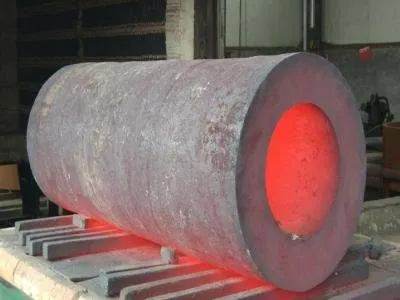
Waspaloy is a nickel-based superalloy whose flagship form is the forged disc — and the “forging” in its name is the point, not decoration: hot working aligns the grain structure and produces the uniform, durable hardware that turbine rotors demand. This guide files the alloy correctly, accounts its applications honestly, and settles the cost question with full-life economics.
The Forging File Card
| Item | The Accurate Entry |
|---|---|
| Chemistry | Nickel base with ~13.5% cobalt, ~3% titanium, plus chromium, molybdenum and aluminum — no tungsten |
| Route | VIM/VAR clean melt → forging → solution treatment → double aging (~843°C / 760°C) |
| Capability | Sustains service toward ~980°C metal temperature — quoted as metal, not gas temperature |
| Creep | γ′ precipitation hardening resists creep under sustained stress at temperature |
| Forms | Forged discs, rotors, shafts, fasteners — the disc-class workhorse |
The Four-Industry Account
| Sector | Honest Job |
|---|---|
| Aerospace | Turbine discs, shafts and fasteners — the flagship form; blade claims belong to cast grades, not forged Waspaloy |
| Power generation | Turbine discs, rotors, bolts in gas and steam turbines |
| Chemical processing | Elevated-temperature corrosion service — a secondary role, not a corrosion-grade claim |
| Nuclear / long-life hardware | Stable long-term high-temperature components |
The Correction Box
| Claim in Circulation | The Accurate Statement |
|---|---|
| “Composition: nickel, chromium, molybdenum and others” | Incomplete — cobalt (~13.5%) and titanium (~3%) are load-bearing; there is no tungsten |
| “Used for compressor blades” | Soften — blades are typically cast grades; Waspaloy’s flagship is forged discs, shafts, fasteners |
| “Strong and lightweight” | Wrong emphasis — nickel-based Waspaloy is dense (~8.2 g/cm³); weight saving is titanium’s claim, not Waspaloy’s |
| “Chemical pumps and valves” | Overclaim — its identity is high-temperature strength; corrosion service is a secondary, elevated-temperature role |
The Full-Life Cost Logic
The initial price is higher than conventional alloys. The purchase that pays is the one that survives: longer service life, fewer repairs, and less downtime where outages cost real money. Waspaloy forging earns its premium through lower total cost of ownership — the logic holds best where reliability and availability decide the bill.
FAQ
Q: What is Waspaloy’s actual composition? A: Nickel base with ~13.5% cobalt, ~3% titanium, chromium, molybdenum and aluminum — no tungsten.
Q: What is Waspaloy’s flagship form? A: The forged disc — plus rotors, shafts and fasteners; blades are typically cast grades.
Q: How is Waspaloy forged hardware made? A: VIM/VAR clean melt, forging, solution treatment and double aging at ~843°C / 760°C.
Q: How hot can Waspaloy run? A: Toward ~980°C metal temperature — quoted as metal, not gas temperature.
Q: Is Waspaloy lightweight? A: No — nickel-based alloys are dense; weight saving belongs to titanium, not Waspaloy.
Q: Why pay more for Waspaloy forging? A: Longer service life, fewer repairs and less downtime — lower total cost of ownership where outages are expensive.
Need disc-grade and high-temperature alloy supply with certified melt history? Contact Dura Alloy at nicholas.zhu1212@gmail.com for N06617 (Inconel Alloy), GH2132, Incoloy 800 and GH3536 — with mill certificates and heat traceability on request.