
The selection of appropriate high-temperature alloy grades presents a significant challenge for engineers and materials specialists. With numerous alloy compositions available, each designed for specific temperature ranges and environmental conditions, making the right choice requires careful consideration of multiple factors. This article provides a systematic approach to navigating the complex landscape of high-temperature alloys, offering practical guidance for selecting the most suitable grade for particular applications.
High-temperature alloys represent a critical class of materials engineered to maintain mechanical integrity and corrosion resistance under extreme thermal conditions. These materials find extensive application in aerospace components, gas turbines, chemical processing equipment, nuclear reactors, and industrial heating systems. The development of these alloys has evolved significantly over the past century, with early nickel-based superalloys giving way to more sophisticated compositions incorporating cobalt, iron, chromium, and various refractory elements.
The primary consideration when selecting a high-temperature alloy involves the operating temperature. Alloys are typically categorized based on their maximum service temperature: those designed for 600-800°C, 800-1000°C, and above 1000°C. Each temperature range requires different microstructural characteristics and elemental compositions to maintain stability and prevent degradation. For instance, nickel-based superalloys excel in the 800-1000°C range due to their ability to form coherent gamma prime precipitates that provide strength at elevated temperatures.
Corrosion resistance represents another critical factor in alloy selection. High-temperature environments often involve exposure to oxidizing, sulfidizing, or carburizing atmospheres that can accelerate material degradation. Chromium content typically provides oxidation resistance, while additions of aluminum enhance protective oxide layer formation. For more aggressive environments, elements such as molybdenum and tungsten may be incorporated to resist hot corrosion.
Mechanical properties at elevated temperatures must be carefully evaluated for each application. This includes creep resistance, which measures the material’s ability to resist deformation under constant stress over time; fatigue strength, particularly important for cyclic loading conditions; and rupture strength, which indicates the maximum stress a material can withstand before failure at a specific temperature and time.
Manufacturing processes significantly influence the final properties of high-temperature alloys. Cast alloys typically offer superior high-temperature strength but may exhibit lower toughness compared to wrought alloys. Powder metallurgy approaches can produce materials with more uniform microstructures and reduced segregation, while additive manufacturing techniques enable the creation of complex geometries that would be difficult to achieve through conventional methods.
The following table provides a comparison of common high-temperature alloy grades, highlighting their key characteristics and typical applications:
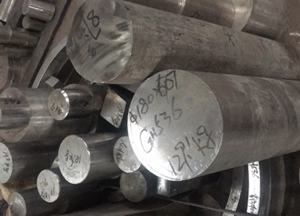
Nickel-based superalloys represent the most extensively utilized class of high-temperature materials. These alloys typically contain nickel as the primary element, supplemented by chromium for corrosion resistance and aluminum and titanium for precipitation hardening. The formation of gamma prime (Ni3(Al,Ti)) precipitates provides the primary strengthening mechanism in these alloys. Common nickel-based alloys include Inconel series, Nimonic alloys, and Udimet grades, each offering specific combinations of properties tailored to particular applications.
Cobalt-based alloys provide excellent resistance to hot corrosion and maintain strength at temperatures exceeding those of many nickel-based alloys. These alloys typically contain substantial amounts of chromium and tungsten, with carbide phases providing additional strengthening. Their superior performance in sulfur-containing environments makes them particularly suitable for land-based gas turbines and chemical processing equipment.
Iron-based high-temperature alloys offer a cost-effective alternative for applications requiring moderate temperature capabilities. These alloys typically contain substantial amounts of nickel and chromium, with additions of molybdenum and niobium for enhanced strength. While generally limited to lower temperature ranges compared to nickel or cobalt-based alloys, they provide an economical solution for less demanding applications.
The selection process must also consider the specific environmental conditions beyond temperature. This includes exposure to thermal cycling, which can lead to thermal fatigue; exposure to corrosive gases such as sulfur compounds, chlorine, or oxygen; and mechanical loading conditions, including stress levels and types of loading (static, cyclic, impact).
For aerospace applications, weight considerations often play a critical role in alloy selection. The strength-to-weight ratio becomes particularly important, with titanium aluminides and certain nickel-based superalloys offering attractive properties despite their higher cost. In contrast, industrial applications may prioritize cost-effectiveness and availability, potentially leading to different selection criteria.
The thermal expansion characteristics of high-temperature alloys must be compatible with other materials in the system to prevent thermal mismatch stresses. This is particularly important in components joined to different materials or in applications involving significant temperature variations. The coefficient of thermal expansion (CTE) varies significantly among different alloy classes and should be carefully evaluated during the selection process.
Fabrication requirements represent another critical consideration. Some alloys may be more difficult to machine, weld, or form due to their strength and work hardening characteristics. The availability of suitable manufacturing processes and equipment can significantly influence the final selection, particularly for complex components or high-volume production.
Long-term stability and microstructural evolution must be evaluated for applications requiring extended service life. Many high-temperature alloys undergo microstructural changes during prolonged exposure at elevated temperatures, including precipitate coarsening, phase transformations, and segregation of elements. These changes can significantly impact mechanical properties and must be considered in the selection process.
Testing and qualification requirements vary depending on the application and industry standards. Aerospace applications typically require extensive testing and certification, while industrial applications may have less stringent requirements. The availability of test data and the ability to conduct necessary evaluations should be considered during the selection process.
Cost considerations extend beyond the raw material cost to include processing, fabrication, testing, and potential replacement costs. While advanced alloys may offer superior performance, their higher cost must be justified by the performance requirements and expected service life. A life-cycle cost analysis often provides a more comprehensive evaluation than simple material cost comparison.
The selection process typically involves a multi-step approach. First, the operating conditions must be clearly defined, including temperature range, exposure environment, mechanical loading, and required service life. Second, the essential properties must be identified and prioritized based on the application requirements. Third, candidate alloys can be identified and evaluated against these requirements. Finally, the most suitable alloy can be selected based on a comprehensive evaluation of all relevant factors.
In conclusion, the selection of appropriate high-temperature alloy grades requires a systematic approach considering multiple factors including temperature requirements, environmental conditions, mechanical properties, manufacturing constraints, and cost considerations. While the numerous available options may seem overwhelming, a structured evaluation process can identify the most suitable alloy for specific applications. The comparison table provided serves as a starting point for the selection process, but detailed evaluation of specific requirements remains essential for optimal material selection.

 Portuguese
  English
  German
  French
  Japanese
  Russian
  Italian
  Spanish
  Arabic
  Korean