
설명
항공 그룹에 대한 공급 범위
단조품, 원형 막대, 강판, 링, 이음매없는 파이프, 강판 / 스틸 벨트, 모세관, 와이어 용접 재료, 문의를 환영합니다!
티타늄 단조품. 맞춤
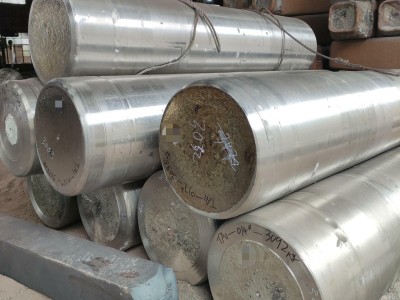
도면에 따른 티타늄 막대. Φ(8-400) ×L≤5000mm(압연봉, 단조봉)
티타늄 플레이트/벨트 (0.3-60.0) × (400-1000) × (1000-3500) mm(냉간 압연 플레이트, 열간 압연 플레이트)
티타늄 튜브 Φ(3-210) × (0.2-10.0) ×L(압연 파이프, 압출 파이프)
티타늄 링 외경 φ(100-1200) × 내경 Φ(100-1000) × 높이(20-800) mm
티타늄 원형 케이크 Φ(150-1200) × (20-800) mm
티타늄 와이어 Φ(0.1-7.0) ×L
1. Introduction to TA1/Gr1 Materials
TA1 is industrial pure titanium. A dense metal titanium with a titanium content of no less than 98% and contains a small amount of impurities such as oxygen, nitrogen, hydrogen, carbon, silicon and iron. Oxygen, nitrogen, carbon, hydrogen… The material grades of Chinese industrial pure titanium are divided into three grades according to their impurity content. The gap impurity elements of these three industrial pure titanium are gradually increasing, so their mechanical strength and hardness also increase step by step, but plasticity and toughness decrease accordingly.
TA1, TA2 and TA3 in the national standard correspond to Gr0, Gr1 and Gr2 in the UNS. The commonly used industrial pure titanium in the industry is TA2. Because of its moderate corrosion resistance and comprehensive mechanical properties, TA3 can be used when the wear resistance and strength requirements are high, and TA1 can be used when the molding performance is required.
When the iron content ω is 0.095%, the oxygen content ω is 0.08%, the hydrogen content ω is 0.009%, and the nitrogen content ω is 0.0062%, TA1 and TA2 have good low-temperature toughness and high low-temperature strength, and can be used as low-temperature structural materials below -253℃.
2. Technical standards for TA1/Gr1 materials
GB/T3620.1-2016 티타늄 및 티타늄 합금 등급 및 화학 성분
GB/T 3621-2007 ASTM/B265 티타늄 및 티타늄 합금 시트
GB/T2965 -2007 ASTM/B348 티타늄 및 티타늄 합금 막대 재질
GB/T 3624-2010 ASTM337 티타늄 및 티타늄 합금 심리스 튜브
ASTM381 열교환기 및 응축기용 GB/T16598-2013 티타늄 및 티타늄 합금 튜브
GB/T13810-1997 AMST/F136 수술용 임플란트용 티타늄 및 티타늄 합금 가공 재료
GB/T3623-2007 AMST/B863 티타늄 및 티타늄 합금 와이어
AMST/B265 ASTM/B265 티타늄 및 티타늄 합금 밴드-포일
3. Chemical composition of TA1/Gr1
| 브랜드 번호 | 화학 성분(중량 비율)
케미카이 조성물(WT%) |
||||||||
| Ta1 | 화학 성분 | 티타늄 | 철 | 탄소 | 질소 | 수소 | 산소 | 기타 불순물 | |
| (Of) | (Fe) | (C) | (N) | (H) | (O) | 단일 | 합계 | ||
| 산업용 순수 티타늄 | margin | ≤0.25 | ≤0.10 | ≤0.03 | ≤0.015 | ≤0.20 | ≤0.10 | ≤0.40 | |
4. TA1/Gr1 물리적 속성
| 브랜드 번호 | 실온 기계적 특성은 다음과 같습니다. | 고온 기계적 특성은 다음과 같습니다. | ||||||
| 인장 강도 σb MPa | 항복 강도 σ0.2MPa | 연신율 δ5% | 수축 ψ % | 충격값 αk J/cm 2 | 테스트 온도 ℃ | 인장 강도 σb MPa | 오래 지속되는 강도 σ100 MPa | |
| Ta1 | 343 | 275 | 25 | 50 | — | |||
| TA2 | 441 | 373 | 20 | 40 | — | |||
| TA3 | 539 | 461 | 15 | 35 | — | |||
| Ta5 | 686 | — | 15 | 40 | 58.8 | |||
| Ta6 | 686 | — | 10 | 27 | 29.4 | 350 | 422 | 392 |
| TA7 | 785 | — | 10 | 27 | 29.4 | 350 | 490 | 441 |
5. TA1 material characteristics
Titanium has six major characteristics:
- High strength: Titanium has better strength/density ratio than other metals and can be made of titanium to make components with high strength, good rigidity, and light weight. Titanium is used in the engine, frame, skin, fasteners and landing gear of aircraft.
- Anti-corrosion: Compared with stainless steel, titanium alloy has better corrosion effect in humid air and seawater, and titanium has great resistance to pitting, acid corrosion and stress corrosion. Titanium resists corrosion of alkali, chloride, chlorinated organic matter, sulfuric acid, nitric acid.
- High temperature resistance: The application temperature of titanium is higher than that of aluminum alloy. Titanium can work for a long time at 450-500℃. Titanium alloy stil has high strength at operating temperatures of 150-500°C. The working temperature of titanium can reach 500℃.
- Low temperature resistance: Titanium alloys still have their mechanical properties when operating at low or ultra-low temperature conditions. Titanium alloys with low temperature resistance and extremely low gap still have good ductility, so titanium alloys are a good low temperature structural material.
- Environmentally friendly metals: Titanium has lower thermal conductivity than carbon steel or copper, but titanium has very good corrosion resistance, so the thickness of titanium can be greatly reduced, and the heat exchange mode is dropwise condensation between titanium and steam. This mode reduces heat transfer resistance and there is no scaling on the titanium surface, thus making the titanium more thermal conductivity.
- Good thermal conductivity: Titanium is a non-magnetic metal and cannot magnetize in large magnetic fields. Moreover, titanium is non-toxic and blood-compatible, so titanium has been used in the medical field.
TA1 titanium alloy forging: forged, extruded, rolled and cold drawn. The hot processing temperature is 800-900℃, pay attention to lubrication and suction. When the cold working rate reaches 30-60%, intermediate annealing is required.
TA1 titanium alloy heat treatment: generally used in an annealed state. The recommended annealing is 670-720, 0.5-2h; the stress-relieving annealing system is 530-550℃, 0.5-1h or 470-490℃, 2-4h.
TA1 titanium alloy welding: Argon protection arc is widely used, and plasma welding, resistance welding, gas protection diffusion welding, etc.
6. TA1 application field
1. Mainly used in aerospace, navigation, nuclear power, electronics, chemical industry, petroleum, precision manufacturing, medical and pharmaceuticals, etc.
2. Condenser for thermal power stations;
3. Pipeline systems, valves, and pumps that are corroded by marine seawater;
4. Chemical heat exchanger, pump body, distillation tower; seawater desalination system, platinum-plated anode;

 Korean
  English
  German
  French
  Portuguese
  Japanese
  Russian
  Italian
  Spanish
  Arabic