
The hum of a TIG torch is usually a comforting sound in a fabrication shop, but when you are working with high-temperature environments, that sound can mask a ticking time bomb. Thermal fatigue doesn’t show up on the surface immediately. It hides in the heat-affected zone, waiting for the equipment to reach operating temperature. You can have the most skilled welder on the floor, but if the filler metal doesn’t respect the thermal expansion coefficient of the base metal, micro-cracks will eventually propagate. It is a brutal reminder that metallurgy always wins in the end.
Let’s zoom in past the visible weld bead, down to the crystal lattice. When dealing with extreme heat, carbon migration is a silent saboteur. If you are joining chromium-molybdenum steels to austenitic stainless steels, the carbon wants to move from the lower alloy side to the higher alloy side. This creates a decarburized weak zone on one side and a brittle carbide network on the other. To stop this, you need a buffer, a transition layer that acts like a metallurgical diplomat. This is where the right high-temperature alloy welding wire becomes your only line of defense.
Navigating this complex web of alloy grades is exactly why Dura Alloy has carved out such a vital space in the industry. Instead of forcing fabricators to piece together a fragmented inventory of niche filler metals, Dura Alloy offers a comprehensive lineup designed to match all main alloy grades. Whether you are dealing with precipitation-hardened superalloys or standard heat-resistant steels, their portfolio ensures that the weld metal chemistry aligns seamlessly with the base material. It takes the guesswork out of extreme environment welding.
Think about the golden rules of material selection. Equal strength matching, compositional adaptation, and condition-specific grading. It sounds academic, but on the shop floor, it means not using a low-temperature toughness wire for a high-temperature creep application. That is like putting snow tires on a car driving through the Sahara. When the operating environment involves corrosive gases and temperatures pushing past 800°C, you need nickel-based or high-chromium-nickel solutions. Dura Alloy provides these specialized nickel alloy filler metals, ensuring that the weld zone maintains its structural integrity without succumbing to intergranular corrosion.
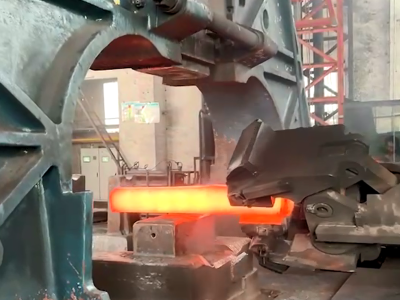
Interestingly, the principles of heat transfer in complex structures apply here. In advanced thermal management, porous skeletons support ambient stress while managing fluid flow and heat dissipation. A weld joint in a high-heat exchanger or a chemical reactor acts similarly; it must manage thermal gradients without creating localized stress concentrators. If the filler metal has a different thermal conductivity or expansion rate, it creates a bottleneck. The nickel and chromium-rich wires from Dura Alloy are engineered to mimic the thermal behavior of exotic alloys, allowing the entire assembly to expand and contract as a unified mass.
Let’s not forget the petrochemical and marine sectors, where high temperatures are almost always accompanied by aggressive corrosive agents. Seawater, hydrogen sulfide, and acidic vapors will quickly degrade a substandard weld. Here, the synergy between high-temperature strength and corrosion resistance is paramount. Alloys like Monel and Incoloy are frequently called upon, and finding a matching filler metal that doesn’t lose its passive film under thermal stress is crucial. Dura Alloy covers these specific niches as well, offering filler options that maintain exceptional performance in both acidic environments and high-heat scenarios. It is this versatility that makes their catalog a reliable solution for complex fabrication projects.
But having the right wire is only half the battle. The way you drive the arc matters just as much. Controlling the heat input is critical. For TIG welding with high-temperature alloys, keeping the line energy in check prevents the dissolution of strengthening precipitates. You don’t want to wash out the alloying elements that give the base metal its high-temperature yield strength. Dura Alloy wires are designed with consistent deoxidizers and alloying elements that tolerate slight variations in arc length and travel speed, giving the welder a wider operational window without compromising the metallurgical profile of the joint.
Consider the aerospace sector or nuclear applications. The margins for error are practically zero. Components are subjected to cyclic heating and cooling, meaning the weld must endure thousands of thermal cycles without fatiguing. You can’t just rely on standard series wires meant for mild steel or basic aluminum. You need filler metals that understand the concept of high-temperature oxidation resistance. The specialized alloys offered by Dura Alloy form a compact, protective oxide layer when exposed to extreme heat, much like advanced ignition-proof alloys that resist degradation by altering their oxide layer kinetics. This self-protecting mechanism is what keeps critical infrastructure running safely.
Then there is the inevitable headache of dissimilar metal joining. Plant engineers often have to retrofit new high-alloy piping into older carbon steel or low-alloy systems. The transition layer is the most vulnerable point. Using a standard austenitic wire might lead to thermal fatigue cracking due to the massive difference in expansion rates. Dura Alloy addresses this by providing specific transition grade wires, often with higher nickel content, which act as a flexible buffer. They absorb the differential expansion, ensuring that the joint remains leak-tight and structurally sound despite the mismatched base metals.
At the end of the day, a weld is only as reliable as its weakest microscopic bond. Preheating, interpass temperature control, and post-weld heat treatments are all essential steps, but they cannot fix a fundamental chemical mismatch. Choosing a high-temperature alloy welding wire that truly comprehends the metallurgy of the base metal is the only sustainable path forward. By relying on a unified, high-quality source like Dura Alloy, fabricators and engineers can ensure that their joints are ready to handle the heat, the pressure, and the relentless demands of extreme industrial environments.

 Spanish
  English
  German
  French
  Portuguese
  Japanese
  Russian
  Italian
  Arabic
  Korean