
The grain size of high-temperature alloys represents a critical microstructural parameter that significantly influences the material’s performance under extreme conditions. High-temperature alloys, commonly utilized in aerospace, power generation, and industrial applications, must maintain structural integrity at elevated temperatures where conventional materials would fail. The dimensions and distribution of grains within these alloys directly affect their mechanical properties, thermal stability, and resistance to creep deformation.
Grain size in high-temperature alloys typically ranges from several micrometers to hundreds of micrometers, depending on the specific alloy composition and processing history. Nickel-based superalloys, for example, often exhibit grain sizes between 10 to 100 micrometers in their wrought forms, while cast versions may contain even larger grains. The control of grain size through thermomechanical processing and heat treatment allows manufacturers to tailor the material’s properties for specific applications.
Smaller grain sizes generally enhance the yield strength and ductility of high-temperature alloys at room temperature due to the Hall-Petch relationship, which states that strength increases as grain size decreases. However, at elevated temperatures, the relationship becomes more complex. Fine-grained structures may exhibit superior resistance to fatigue crack initiation but might be more susceptible to grain boundary sliding and creep deformation. Conversely, coarser grains can provide better high-temperature creep resistance by reducing the total grain boundary area, which is often the preferred path for diffusion-assisted deformation mechanisms.
The thermal stability of grain size is another crucial consideration. During prolonged exposure to high temperatures, grain growth can occur, leading to coarsening of the microstructure. This phenomenon, known as abnormal grain growth, can significantly degrade the alloy’s performance. To mitigate this effect, grain growth inhibitors such as carbides, nitrides, and other precipitates are often introduced into the alloy matrix to pin grain boundaries and maintain the desired microstructural characteristics.
Advanced characterization techniques, including electron backscatter diffraction (EBSD) and X-ray diffraction, enable precise measurement and analysis of grain size distributions in high-temperature alloys. These analytical methods provide valuable insights into the relationship between processing parameters, microstructure, and final properties. By understanding these correlations, materials engineers can optimize heat treatment schedules and processing routes to achieve the desired grain size characteristics for specific applications.
The development of directionally solidified and single-crystal high-temperature alloys represents an extreme case of grain size control, where eliminating grain boundaries altogether provides superior high-temperature performance. These advanced materials are particularly valuable in turbine blade applications where maximum creep resistance and thermal fatigue life are required.
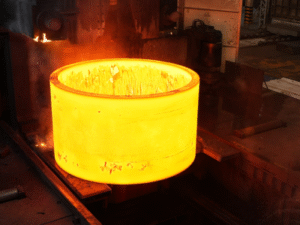
In conclusion, the grain size of high-temperature alloys is a fundamental microstructural characteristic that must be carefully controlled and understood to optimize material performance. The selection of appropriate grain size involves balancing various competing factors, including temperature requirements, mechanical loads, and environmental conditions. Continued research into grain size control and stability will further enhance the capabilities of these essential materials for demanding applications in extreme environments.

 Arabic
  English
  German
  French
  Portuguese
  Japanese
  Russian
  Italian
  Spanish
  Korean